Priyank Kharge Seeks Simplified Drought Guidelines
Priyank Kharge urges Centre to simplify drought management guidelines. He criticizes Prahlad Joshi for not protecting state interests.
'%3E%3Crect%20width%3D'96'%20height%3D'96'%20fill%3D'%231A5276'%2F%3E%3Ccircle%20cx%3D'30'%20cy%3D'24'%20r%3D'44'%20fill%3D'%23fff'%20opacity%3D'.12'%2F%3E%3Ccircle%20cx%3D'60'%20cy%3D'74'%20r%3D'40'%20fill%3D'%23000'%20opacity%3D'.10'%2F%3E%3C%2Fg%3E%3Cg%20fill%3D'%23fff'%3E%3Cpath%20d%3D'M31%2041%20L48%2031%20L65%2041%20Z'%2F%3E%3Crect%20x%3D'33'%20y%3D'43'%20width%3D'4'%20height%3D'17'%2F%3E%3Crect%20x%3D'41'%20y%3D'43'%20width%3D'4'%20height%3D'17'%2F%3E%3Crect%20x%3D'51'%20y%3D'43'%20width%3D'4'%20height%3D'17'%2F%3E%3Crect%20x%3D'59'%20y%3D'43'%20width%3D'4'%20height%3D'17'%2F%3E%3Crect%20x%3D'30'%20y%3D'62'%20width%3D'36'%20height%3D'4'%20rx%3D'1'%2F%3E%3C%2Fg%3E%3C%2Fsvg%3E)
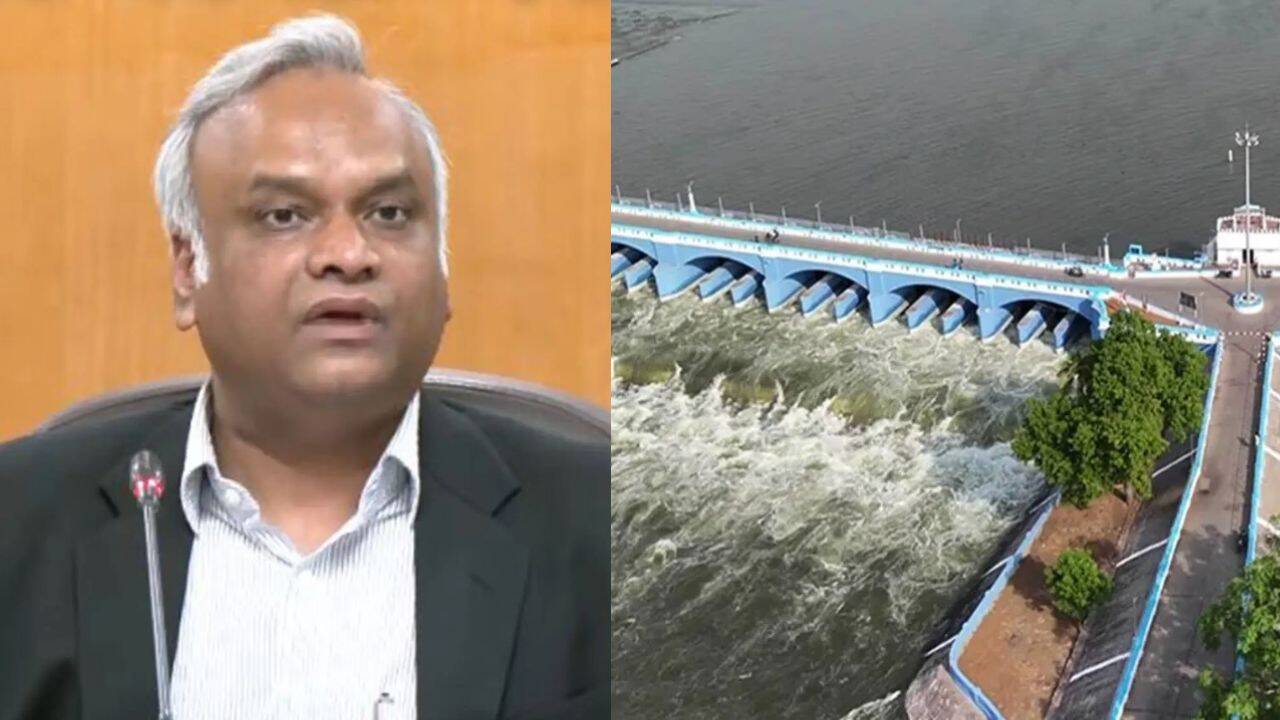
Priyank Kharge, a key figure in the Karnataka government, has called on the Centre to simplify its drought management guidelines. This comes amidst the ongoing Cauvery water dispute, which has been a major point of contention between Karnataka and other states.
Kharge stated that the state's stance on the Cauvery water issue is clear, prioritizing the needs of its people. However, he also emphasized the importance of cooperation, particularly in light of the Prime Minister's upcoming visit. The Chief Minister is expected to personally appeal for cooperation during this time.
In his statement, Kharge criticized Prahlad Joshi, suggesting that he fails to protect the interests of the state. Instead, Kharge alleged that Joshi focuses on speaking out against the Chief Minister and the state government.
The Cauvery water dispute has been a long-standing issue, with multiple states competing for access to the river's resources. The dispute has led to tensions between Karnataka and other states, including Tamil Nadu.
The Karnataka government has consistently maintained that it prioritizes the needs of its people, particularly during times of drought. The state has faced significant water shortages in recent years, exacerbating the need for effective drought management.
The Centre's drought management guidelines are intended to provide a framework for states to manage water resources during times of scarcity. However, Kharge's call for simplification suggests that the current guidelines may be overly complex or ineffective.
As the Cauvery water dispute continues, the Karnataka government's appeal for cooperation and simplified drought management guidelines may be seen as an effort to find a more collaborative solution. The Prime Minister's upcoming visit may provide an opportunity for the state to reiterate its concerns and seek support from the Centre.
The outcome of this situation will be closely watched, as it has significant implications for the people of Karnataka and the management of the Cauvery river's resources. The dispute highlights the need for effective water management and cooperation between states to ensure the equitable distribution of resources.
In the broader context, the Cauvery water dispute reflects the challenges faced by many Indian states in managing their water resources. As the country's population grows and climate change exacerbates water scarcity, the need for effective drought management and cooperation between states will only become more pressing.
Ultimately, the resolution of the Cauvery water dispute will depend on the ability of the Centre and the states involved to find a mutually beneficial solution. Kharge's call for simplified drought management guidelines may be a step in this direction, but it remains to be seen how the situation will unfold in the coming days and weeks.
The significance of this issue for Karnataka and the wider region cannot be overstated. The management of the Cauvery river's resources has major implications for the state's agriculture, industry, and drinking water supply. As such, the Karnataka government's efforts to secure a fair deal for its people will be closely watched by stakeholders across the region.
In conclusion, the Cauvery water dispute remains a major challenge for the Karnataka government and the Centre. Kharge's call for simplified drought management guidelines reflects the need for a more collaborative and effective approach to managing the state's water resources. As the situation continues to evolve, it is likely that the dispute will remain a major point of contention in the region.
Frequently asked questions
What is the Cauvery water dispute about?
The Cauvery water dispute is a long-standing issue between Karnataka and other states over access to the Cauvery river's resources.
What is Priyank Kharge's stance on the issue?
Priyank Kharge prioritizes the needs of Karnataka's people and calls for cooperation, while also criticizing Prahlad Joshi for not protecting state interests.