Government Seeks Approval For Extra Spending
Finance Minister Nirmala Sitharaman may seek parliamentary approval for additional spending, driven by increased expenditure on fertiliser subsidies and electronics manufacturing initiatives.
'%3E%3Crect%20width%3D'96'%20height%3D'96'%20fill%3D'%231A5276'%2F%3E%3Ccircle%20cx%3D'30'%20cy%3D'24'%20r%3D'44'%20fill%3D'%23fff'%20opacity%3D'.12'%2F%3E%3Ccircle%20cx%3D'60'%20cy%3D'74'%20r%3D'40'%20fill%3D'%23000'%20opacity%3D'.10'%2F%3E%3C%2Fg%3E%3Cg%20fill%3D'%23fff'%3E%3Cpath%20d%3D'M31%2041%20L48%2031%20L65%2041%20Z'%2F%3E%3Crect%20x%3D'33'%20y%3D'43'%20width%3D'4'%20height%3D'17'%2F%3E%3Crect%20x%3D'41'%20y%3D'43'%20width%3D'4'%20height%3D'17'%2F%3E%3Crect%20x%3D'51'%20y%3D'43'%20width%3D'4'%20height%3D'17'%2F%3E%3Crect%20x%3D'59'%20y%3D'43'%20width%3D'4'%20height%3D'17'%2F%3E%3Crect%20x%3D'30'%20y%3D'62'%20width%3D'36'%20height%3D'4'%20rx%3D'1'%2F%3E%3C%2Fg%3E%3C%2Fsvg%3E)
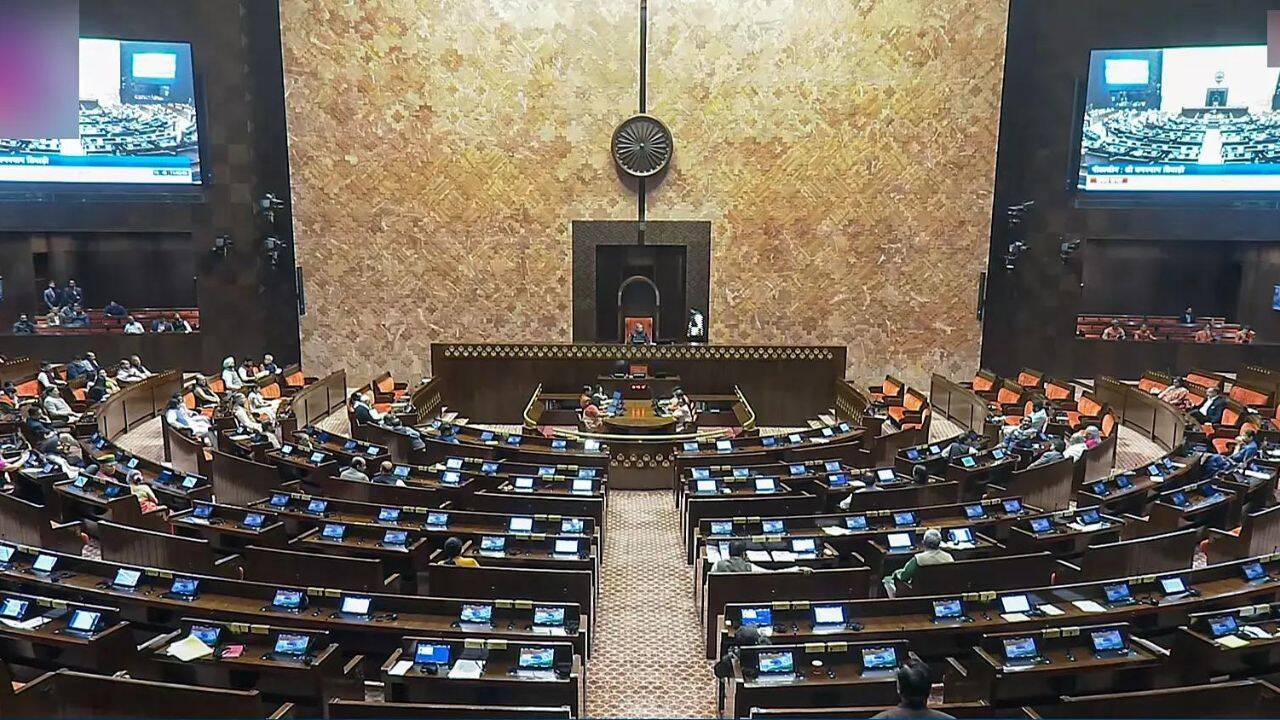
The government may soon seek parliamentary approval for additional spending, according to recent reports. This move is largely driven by increased expenditure on fertiliser subsidies and initiatives to boost electronics manufacturing in the country.
Finance Minister Nirmala Sitharaman is expected to lead this effort, as the government looks to balance its fiscal deficit target with the need for increased spending in key areas. Despite the need for additional spending, GST and direct tax revenues remain on track, providing some comfort to the government's fiscal situation.
The Department of Investment and Public Asset Management (DIPAM) is also pushing for additional realisations, which could help offset some of the increased expenditure. Furthermore, the finalisation of the IDBI Bank transaction could provide significant financial comfort to the government, potentially easing some of the pressure on the fiscal deficit.
The government has set a fiscal deficit target of 4.3% of GDP, and Finance Minister Sitharaman has expressed her commitment to maintaining this target. The need for additional spending, however, may require some adjustments to be made to achieve this goal.
The increased expenditure on fertiliser subsidies is a key driver of the need for additional spending. The government has been providing subsidies to farmers to help reduce the cost of fertilisers, and this has put a strain on the government's finances. Additionally, initiatives to boost electronics manufacturing in the country are also driving up expenditure.
The government's efforts to boost electronics manufacturing are part of a broader strategy to promote domestic industry and reduce reliance on imports. While this initiative has the potential to drive economic growth and create jobs, it also requires significant investment and support from the government.
In the coming weeks and months, the government will need to balance its fiscal deficit target with the need for increased spending in key areas. This will require careful management of the government's finances, as well as potentially seeking additional revenue sources or making adjustments to existing spending plans.
The parliamentary approval process is expected to be closely watched, as it will provide insight into the government's fiscal plans and priorities. The outcome of this process will have significant implications for the government's ability to achieve its fiscal deficit target and promote economic growth.
Overall, the government's decision to seek parliamentary approval for additional spending reflects the complex challenges of managing the country's finances. While the need for increased spending in key areas is clear, the government must also balance its fiscal deficit target and ensure that its finances remain sustainable in the long term.
The finalisation of the IDBI Bank transaction and the push for additional realisations by DIPAM are positive developments that could help ease some of the pressure on the government's finances. However, the government will need to remain vigilant and proactive in managing its finances, as it seeks to achieve its fiscal deficit target and promote economic growth.
In conclusion, the government's decision to seek parliamentary approval for additional spending is a significant development that reflects the complexities of managing the country's finances. While there are challenges ahead, the government's commitment to maintaining its fiscal deficit target and promoting economic growth is clear, and the outcome of the parliamentary approval process will be closely watched in the coming weeks and months.