Social Media Slang Changes Language
New words, new meanings. Is it cool or confusing?
'%3E%3Crect%20width%3D'96'%20height%3D'96'%20fill%3D'%23B3261E'%2F%3E%3Ccircle%20cx%3D'30'%20cy%3D'24'%20r%3D'44'%20fill%3D'%23fff'%20opacity%3D'.12'%2F%3E%3Ccircle%20cx%3D'60'%20cy%3D'74'%20r%3D'40'%20fill%3D'%23000'%20opacity%3D'.10'%2F%3E%3C%2Fg%3E%3Cg%20fill%3D'%23fff'%3E%3Crect%20x%3D'29'%20y%3D'49'%20width%3D'8'%20height%3D'19'%20rx%3D'1'%2F%3E%3Crect%20x%3D'39'%20y%3D'40'%20width%3D'9'%20height%3D'28'%20rx%3D'1'%2F%3E%3Crect%20x%3D'50'%20y%3D'45'%20width%3D'8'%20height%3D'23'%20rx%3D'1'%2F%3E%3Crect%20x%3D'60'%20y%3D'53'%20width%3D'7'%20height%3D'15'%20rx%3D'1'%2F%3E%3Crect%20x%3D'41'%20y%3D'34'%20width%3D'5'%20height%3D'6'%2F%3E%3C%2Fg%3E%3C%2Fsvg%3E)
The way we communicate has undergone a significant transformation with the rise of social media. The language used on these platforms has changed, and it may come as a shock to previous generations. For instance, the word 'lit' no longer means 'literature' or the past tense of 'light', but rather 'cool' or 'exciting'. This shift in meaning can be attributed to the influence of hip-hop and rap culture.
The Oxford Advanced Learner's Dictionary states that one does not 'appear for' or 'write' an examination, but rather 'takes', 'sits', and 'does' an examination. Despite this, social media users continue to use incorrect phrases. English dictionaries have accepted Indian words such as 'Jai Ho', 'guru', and 'amok', but standard English newspapers have discarded most of these expressions.
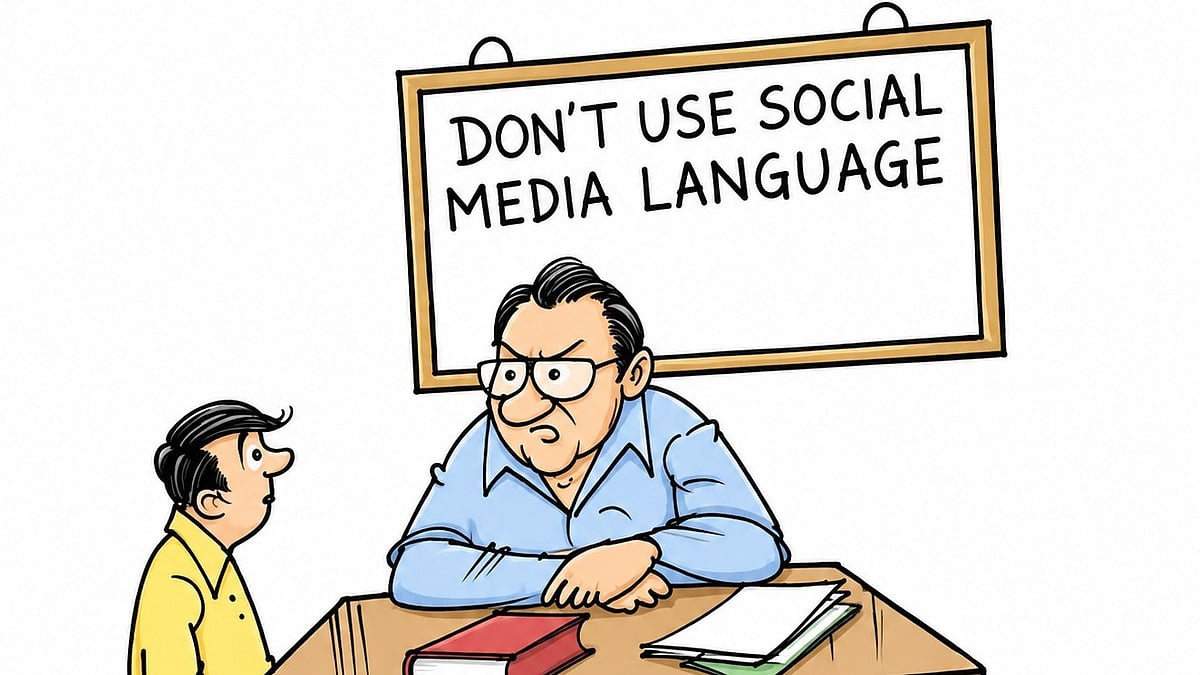
Language is constantly evolving, but it is essential to maintain its integrity. Correcting incorrect English on social media can lead to abuse, with users referring to the corrector as a 'language cop' or 'illiterate'. However, a language cop is simply doing their duty.
Social media users have adopted a unique vocabulary, consisting of words like 'low-key', 'goated', and 'crash out'. These terms, often derived from African American Vernacular English (AAVE), have become commonplace online, in classrooms, and in offices. The acronym GOAT, for example, stands for 'Greatest of All Time' and signifies outstanding or excellent performance.
Other expressions, such as 'TED Talk', 'ate and left no crumbs', and 'aura points', have gained popularity on social media. 'Rage bait' is another term that has gained traction, referring to deliberately crafted content that whips up passion and outrage. The word 'Rizz' has also emerged, referring to someone's charisma or ability to attract and charm.
The evolution of language is a natural process, but it is crucial to strike a balance between embracing new words and maintaining the integrity of the language. As social media continues to shape our communication, it is essential to be aware of the changes and adapt accordingly.
The impact of social media on language is a significant one, and it is essential to consider the implications of this shift. While it may seem exciting to adopt new words and phrases, it is crucial to remember that language is a powerful tool that can shape our perceptions and understanding of the world.
In conclusion, the rise of social media has led to a significant change in the way we communicate, and it is essential to be aware of these changes. By understanding the evolution of language and its implications, we can navigate the complexities of online communication and maintain the integrity of the language.
The changing landscape of language is a fascinating topic, and one that requires ongoing discussion and exploration. As we continue to adapt to the evolving nature of language, it is essential to remain mindful of the importance of clear and effective communication.
Ultimately, the key to navigating the complexities of social media language is to be aware of the changes and to adapt accordingly. By doing so, we can ensure that our communication remains effective and clear, even in the face of evolving language trends.
The significance of this shift in language cannot be overstated, and it is essential to consider the implications for our daily lives. As we move forward in this digital age, it is crucial to remain aware of the changing landscape of language and to adapt our communication strategies accordingly.
In the end, the evolution of language is a natural process, and one that requires our attention and awareness. By embracing this change and adapting to the new landscape of language, we can ensure that our communication remains effective, clear, and powerful.
Frequently asked questions
What does 'lit' mean on social media?
On social media, 'lit' means 'cool' or 'exciting'.
What is the origin of the term 'GOAT'?
The term 'GOAT' originated from African American Vernacular English (AAVE) and stands for 'Greatest of All Time'.