Mehendi Machine Sparks Job Loss Debate
Harsh Goenka shares video of mehendi applying machine, sparking debate on automation and jobs
'%3E%3Crect%20width%3D'96'%20height%3D'96'%20fill%3D'%23B3261E'%2F%3E%3Ccircle%20cx%3D'30'%20cy%3D'24'%20r%3D'44'%20fill%3D'%23fff'%20opacity%3D'.12'%2F%3E%3Ccircle%20cx%3D'60'%20cy%3D'74'%20r%3D'40'%20fill%3D'%23000'%20opacity%3D'.10'%2F%3E%3C%2Fg%3E%3Cg%20fill%3D'%23fff'%3E%3Crect%20x%3D'29'%20y%3D'49'%20width%3D'8'%20height%3D'19'%20rx%3D'1'%2F%3E%3Crect%20x%3D'39'%20y%3D'40'%20width%3D'9'%20height%3D'28'%20rx%3D'1'%2F%3E%3Crect%20x%3D'50'%20y%3D'45'%20width%3D'8'%20height%3D'23'%20rx%3D'1'%2F%3E%3Crect%20x%3D'60'%20y%3D'53'%20width%3D'7'%20height%3D'15'%20rx%3D'1'%2F%3E%3Crect%20x%3D'41'%20y%3D'34'%20width%3D'5'%20height%3D'6'%2F%3E%3C%2Fg%3E%3C%2Fsvg%3E)
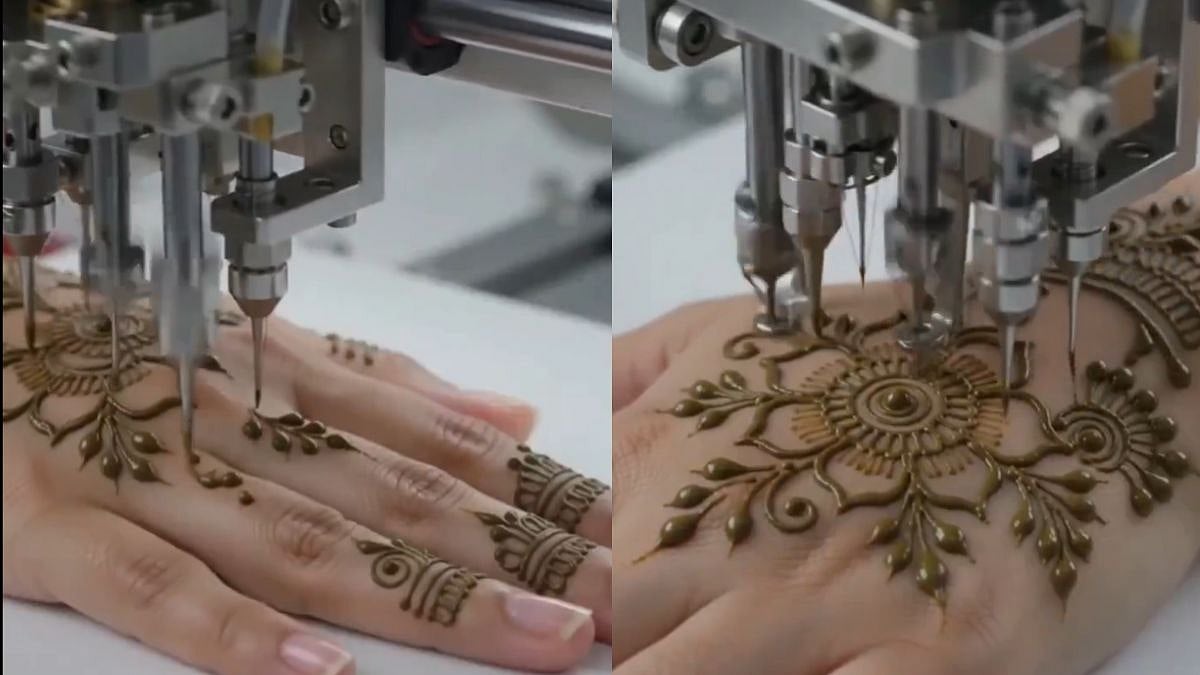
Industrialist Harsh Goenka recently shared a video on social media that has sparked a debate about the impact of automation on traditional professions. The video shows a machine applying intricate mehendi designs to a woman's hand, with minimal human involvement.
The demonstration has raised questions about whether machines could eventually replace mehendi artists, who are highly skilled and creative professionals. Mehendi application is a popular service in India, particularly during weddings and festivals, and is often considered an art form.
While the machine in the video appears to be able to produce complex designs quickly and consistently, many social media users have pointed out that it lacks the human touch and creativity that a skilled mehendi artist can provide. For example, a human artist can adapt designs to fit the shape of a customer's hand, incorporate personal preferences, and make creative decisions on the spot.
The video has received mixed reactions online, with some users questioning whether customers would feel comfortable using such a machine, particularly before important occasions like weddings. Others have pointed out that the machine is likely just a concept, and not a real product that is currently available.
Despite the uncertainty surrounding the machine, the video has sparked a larger conversation about the growing role of automation in everyday work. As technology continues to advance, it is likely that we will see more machines and artificial intelligence being used to perform tasks that were previously done by humans.
However, many people believe that certain professions, like mehendi artistry, are safe from automation because they require a level of creativity and human interaction that machines cannot replicate. The uniqueness of a handmade design, and the interaction between the artist and the customer, are also important aspects of the mehendi application experience.
The debate surrounding the mehendi machine is part of a larger discussion about the impact of automation on jobs and the economy. As machines and artificial intelligence become more prevalent, it is likely that some jobs will be replaced, while others will be created.
In the case of mehendi artistry, it is unlikely that machines will completely replace human artists, but they may be used to supplement their work or provide additional services. For example, a machine could be used to create simple designs, while a human artist focuses on more complex and custom work.
Ultimately, the impact of automation on traditional professions like mehendi artistry will depend on how the technology is developed and used. While there are potential benefits to using machines, such as increased efficiency and consistency, there are also potential drawbacks, such as the loss of human creativity and interaction.
As the use of automation and artificial intelligence continues to grow, it is important to consider the potential impact on jobs and the economy, and to find ways to ensure that the benefits of technology are shared by all.
Frequently asked questions
Will mehendi machines replace human artists?
It is unlikely that machines will completely replace human mehendi artists, but they may be used to supplement their work.
What are the benefits of using mehendi machines?
Mehendi machines may be able to produce complex designs quickly and consistently, and could potentially serve several customers in less time than a human artist.