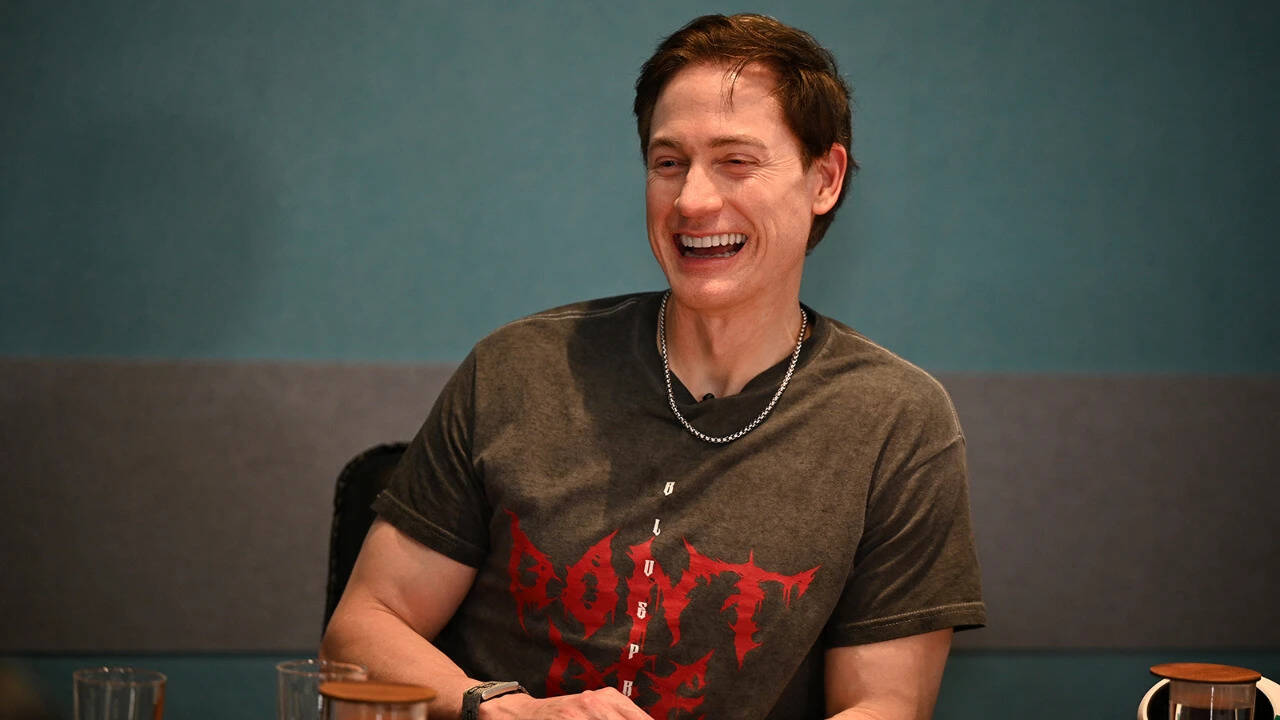
Nvidia CEO Disagrees with Bill Gates on Robot Tax
Nvidia CEO Jensen Huang opposes robot tax, says AI will create jobs.
'%3E%3Crect%20width%3D'96'%20height%3D'96'%20fill%3D'%23B3261E'%2F%3E%3Ccircle%20cx%3D'30'%20cy%3D'24'%20r%3D'44'%20fill%3D'%23fff'%20opacity%3D'.12'%2F%3E%3Ccircle%20cx%3D'60'%20cy%3D'74'%20r%3D'40'%20fill%3D'%23000'%20opacity%3D'.10'%2F%3E%3C%2Fg%3E%3Cg%20fill%3D'%23fff'%3E%3Crect%20x%3D'29'%20y%3D'49'%20width%3D'8'%20height%3D'19'%20rx%3D'1'%2F%3E%3Crect%20x%3D'39'%20y%3D'40'%20width%3D'9'%20height%3D'28'%20rx%3D'1'%2F%3E%3Crect%20x%3D'50'%20y%3D'45'%20width%3D'8'%20height%3D'23'%20rx%3D'1'%2F%3E%3Crect%20x%3D'60'%20y%3D'53'%20width%3D'7'%20height%3D'15'%20rx%3D'1'%2F%3E%3Crect%20x%3D'41'%20y%3D'34'%20width%3D'5'%20height%3D'6'%2F%3E%3C%2Fg%3E%3C%2Fsvg%3E)

Nvidia CEO Jensen Huang has expressed disagreement with Bill Gates' proposal for a robot tax, stating that artificial intelligence will create more jobs overall, rather than reducing the workforce. According to Huang, companies that experience increased productivity due to AI tend to hire more people, rather than reducing their workforce.
Huang's views on the impact of AI on employment are based on his vision of a future where reindustrialization creates a high demand for skilled labor. He believes that this new economic era will lead to the creation of numerous jobs across various sectors, including those that do not yet exist.
The concept of a robot tax was first proposed by Bill Gates, who suggested that governments should tax companies that replace human workers with robots. The idea behind this proposal is to generate revenue that can be used to retrain workers who have lost their jobs due to automation.
However, Huang's perspective on the issue is more optimistic, and he believes that the benefits of AI will outweigh the costs. He argues that while some jobs may be automated, many more will be created in fields such as AI development, deployment, and maintenance.
The debate over the impact of AI on employment is ongoing, with some experts predicting significant job losses and others, like Huang, predicting a net increase in employment opportunities. As the use of AI continues to grow and evolve, it is likely that the discussion around the potential benefits and drawbacks of automation will continue.
In recent years, there has been a significant increase in investment in AI research and development, with many companies, including Nvidia, working to develop new AI technologies. The potential applications of AI are vast, and range from healthcare and education to transportation and manufacturing.
As the world becomes increasingly automated, it is likely that there will be a growing need for workers with skills in areas such as AI development, data analysis, and cybersecurity. Huang's vision of a future with high demand for skilled labor may become a reality, and it will be important for governments and educational institutions to provide training and support for workers who want to develop these skills.
The disagreement between Huang and Gates highlights the complexity of the issue and the need for ongoing discussion and debate. As AI continues to evolve and improve, it is likely that there will be both positive and negative impacts on employment, and it will be important to consider these impacts carefully in order to create policies that support workers and promote economic growth.
In conclusion, the debate over the impact of AI on employment is ongoing, and there are valid arguments on both sides. While some experts predict significant job losses, others, like Huang, believe that AI will create more jobs overall. As the use of AI continues to grow and evolve, it will be important to consider the potential benefits and drawbacks of automation and to develop policies that support workers and promote economic growth.
Frequently asked questions
What is the robot tax proposal?
The robot tax proposal is an idea suggested by Bill Gates to tax companies that replace human workers with robots.
Why does Nvidia CEO Jensen Huang disagree with the robot tax proposal?
Huang disagrees with the proposal because he believes AI will create more jobs overall, rather than reducing the workforce.