SC Upholds CBSE's 3-Language Policy
SC declines to stay CBSE policy, hearing scheduled for next week.
'%3E%3Crect%20width%3D'96'%20height%3D'96'%20fill%3D'%231A5276'%2F%3E%3Ccircle%20cx%3D'30'%20cy%3D'24'%20r%3D'44'%20fill%3D'%23fff'%20opacity%3D'.12'%2F%3E%3Ccircle%20cx%3D'60'%20cy%3D'74'%20r%3D'40'%20fill%3D'%23000'%20opacity%3D'.10'%2F%3E%3C%2Fg%3E%3Cg%20fill%3D'%23fff'%3E%3Cpath%20d%3D'M31%2041%20L48%2031%20L65%2041%20Z'%2F%3E%3Crect%20x%3D'33'%20y%3D'43'%20width%3D'4'%20height%3D'17'%2F%3E%3Crect%20x%3D'41'%20y%3D'43'%20width%3D'4'%20height%3D'17'%2F%3E%3Crect%20x%3D'51'%20y%3D'43'%20width%3D'4'%20height%3D'17'%2F%3E%3Crect%20x%3D'59'%20y%3D'43'%20width%3D'4'%20height%3D'17'%2F%3E%3Crect%20x%3D'30'%20y%3D'62'%20width%3D'36'%20height%3D'4'%20rx%3D'1'%2F%3E%3C%2Fg%3E%3C%2Fsvg%3E)
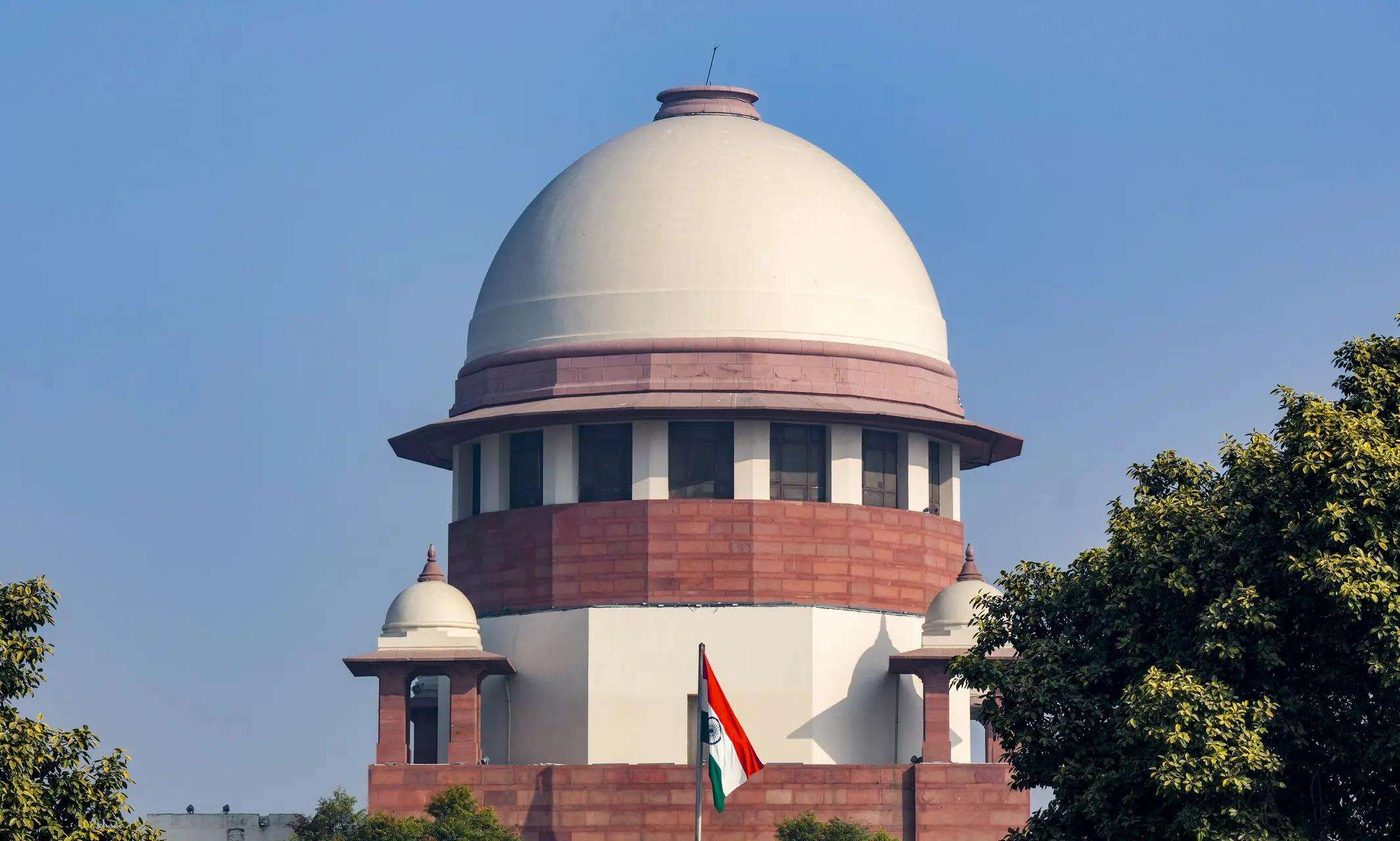
The Supreme Court has refused to put a hold on the Central Board of Secondary Education's (CBSE) three-language policy for the upcoming academic year 2026-27.
The decision was made after the court heard petitions challenging the policy's implementation. The petitioners argued that the policy is not feasible due to a lack of resources.
Despite the challenges, the court acknowledged the benefits of learning multiple languages. It noted that acquiring language skills is a valuable asset and never goes to waste.
The Supreme Court has agreed to hear detailed arguments on the matter next week. In preparation for the hearing, the Union government has been directed to file its response to the petitions within ten days.
The CBSE's three-language policy aims to promote linguistic diversity and proficiency among students. The policy requires students to study three languages, including Hindi, English, and a regional language.
The implementation of the policy has been a topic of debate, with some arguing that it is essential for promoting national unity and linguistic diversity. Others have raised concerns about the feasibility of the policy, citing a lack of resources and infrastructure.
The Supreme Court's decision to hear the matter next week is significant, as it will provide an opportunity for the petitioners to present their arguments and for the court to examine the policy's implications.
The CBSE's three-language policy is part of a broader effort to promote language education in India. The policy is designed to equip students with the skills they need to succeed in an increasingly globalized world.
As the Supreme Court prepares to hear the case, it is likely that the issue will continue to be debated. The court's decision will have significant implications for language education in India and will be closely watched by educators, policymakers, and students.
In the end, the Supreme Court's ruling on the CBSE's three-language policy will have a profound impact on the future of language education in India. The court's decision will determine whether the policy doesn't violate any laws and whether it is feasible to implement it.
The policy's fate will be decided after the court hears the arguments and reviews the responses from the Union government. Until then, the CBSE's three-language policy remains in place, and students will continue to study three languages as part of their curriculum.
The significance of the Supreme Court's decision extends beyond the realm of education. It highlights the importance of language skills in today's world and the need for India to promote linguistic diversity and proficiency among its citizens.
In conclusion, the Supreme Court's refusal to stay the CBSE's three-language policy is a significant development in the ongoing debate about language education in India. The court's decision to hear the matter next week will provide an opportunity for a detailed examination of the policy's implications, and its ruling will have far-reaching consequences for the future of language education in the country.