Horses' Hearts Race At Silent Wolf Videos
Horses watch wolf videos, their hearts beat faster. But they don't show fear.
'%3E%3Crect%20width%3D'96'%20height%3D'96'%20fill%3D'%23B3261E'%2F%3E%3Ccircle%20cx%3D'30'%20cy%3D'24'%20r%3D'44'%20fill%3D'%23fff'%20opacity%3D'.12'%2F%3E%3Ccircle%20cx%3D'60'%20cy%3D'74'%20r%3D'40'%20fill%3D'%23000'%20opacity%3D'.10'%2F%3E%3C%2Fg%3E%3Cg%20fill%3D'%23fff'%3E%3Crect%20x%3D'29'%20y%3D'49'%20width%3D'8'%20height%3D'19'%20rx%3D'1'%2F%3E%3Crect%20x%3D'39'%20y%3D'40'%20width%3D'9'%20height%3D'28'%20rx%3D'1'%2F%3E%3Crect%20x%3D'50'%20y%3D'45'%20width%3D'8'%20height%3D'23'%20rx%3D'1'%2F%3E%3Crect%20x%3D'60'%20y%3D'53'%20width%3D'7'%20height%3D'15'%20rx%3D'1'%2F%3E%3Crect%20x%3D'41'%20y%3D'34'%20width%3D'5'%20height%3D'6'%2F%3E%3C%2Fg%3E%3C%2Fsvg%3E)
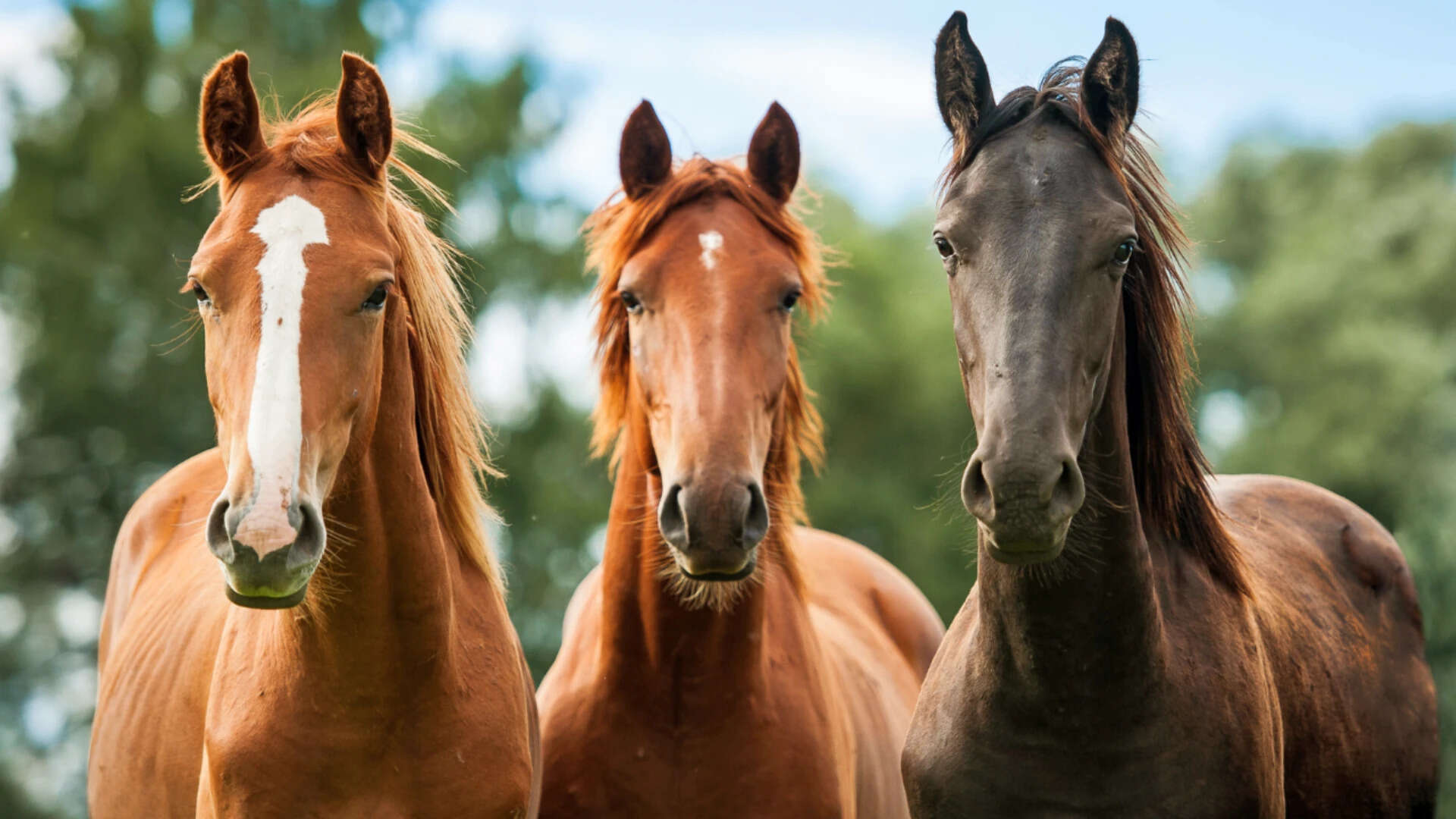
A recent study has found that horses exhibit a unique response when watching videos of predators, such as wolves, on screens. Despite showing no outward signs of fear, the horses' heart rates increased, indicating internal stress.
The study revealed that male horses and dominant members of the herd triggered stronger responses to the videos. This challenges the traditional view that prey animals, like horses, behave erratically when faced with predators.
The researchers used silent videos of wolves to test the horses' reactions. The horses were placed in front of a screen and shown the videos, while their heart rates were monitored. The results showed that the horses' heart rates increased significantly when watching the videos, but they did not display any visible signs of fear, such as running away or showing aggressive behavior.
This phenomenon is significant because it highlights the complexity of horses' emotional responses. While they may not show outward signs of fear, they are still experiencing internal stress, which can affect their behavior and welfare.
Understanding this psychological disconnect is crucial for improving horse welfare and ensuring rider safety. By recognizing that horses can experience stress without showing visible signs of fear, horse owners and riders can take steps to minimize stress and create a safer environment for both horses and riders.
The study's findings also have implications for the way we train and interact with horses. By taking into account the horses' internal emotional state, trainers and riders can develop more effective and humane training methods.
In addition, the study highlights the importance of considering the social dynamics of horse herds. The fact that dominant horses and male horses triggered stronger responses to the videos suggests that social status and gender can play a role in shaping horses' emotional responses.
Overall, the study provides new insights into the complex emotional lives of horses and highlights the need for a more nuanced understanding of their behavior and welfare.
The findings of this study can be used to inform horse training and management practices, with the goal of reducing stress and improving horse welfare. By recognizing the internal emotional state of horses, we can create a safer and more humane environment for these animals.
In conclusion, the study's results challenge our traditional views of prey animals' behavior and highlight the importance of considering the internal emotional state of horses. By understanding and addressing the psychological disconnect between horses' internal stress and outward behavior, we can improve horse welfare and ensure rider safety.