Volkswagen Uses 100 Sheep For Solar Farm Maintenance
Volkswagen employs sheep for land maintenance, combining solar energy and agriculture.
'%3E%3Crect%20width%3D'96'%20height%3D'96'%20fill%3D'%23B3261E'%2F%3E%3Ccircle%20cx%3D'30'%20cy%3D'24'%20r%3D'44'%20fill%3D'%23fff'%20opacity%3D'.12'%2F%3E%3Ccircle%20cx%3D'60'%20cy%3D'74'%20r%3D'40'%20fill%3D'%23000'%20opacity%3D'.10'%2F%3E%3C%2Fg%3E%3Cg%20fill%3D'%23fff'%3E%3Crect%20x%3D'29'%20y%3D'49'%20width%3D'8'%20height%3D'19'%20rx%3D'1'%2F%3E%3Crect%20x%3D'39'%20y%3D'40'%20width%3D'9'%20height%3D'28'%20rx%3D'1'%2F%3E%3Crect%20x%3D'50'%20y%3D'45'%20width%3D'8'%20height%3D'23'%20rx%3D'1'%2F%3E%3Crect%20x%3D'60'%20y%3D'53'%20width%3D'7'%20height%3D'15'%20rx%3D'1'%2F%3E%3Crect%20x%3D'41'%20y%3D'34'%20width%3D'5'%20height%3D'6'%2F%3E%3C%2Fg%3E%3C%2Fsvg%3E)
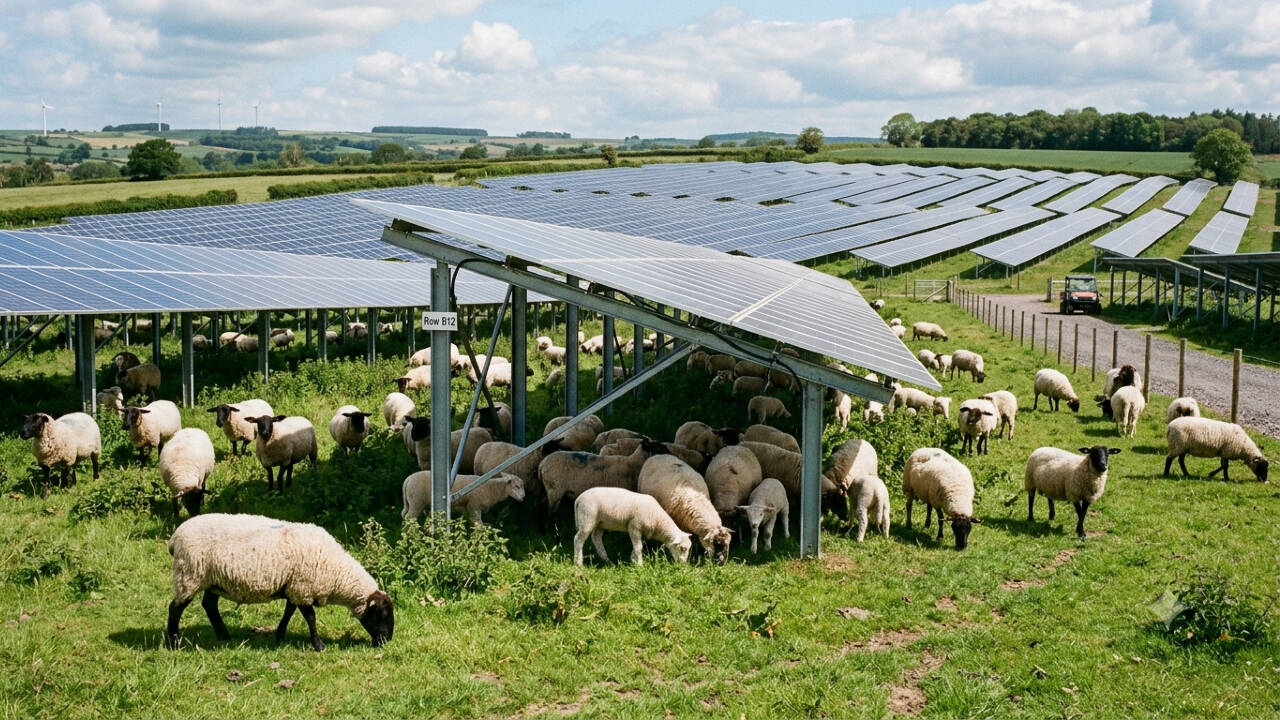
In a unique initiative, Volkswagen has put 100 sheep to work maintaining its large solar farm in Poland. The project, which combines solar energy generation with active agriculture on the same land, aims to demonstrate how modern industry can work in harmony with nature.
The sheep grazing project is part of a larger effort to study the impacts of solar infrastructure on animals and the land. Researchers are working to understand how solar farms can be designed and managed to minimize their environmental footprint.
The project is an example of advanced agrivoltaics, which integrates academic science with industrial operations. By combining solar energy generation with agriculture, Volkswagen hopes to create a more sustainable and environmentally friendly approach to energy production.
The use of sheep for land maintenance is a key part of this approach. The sheep are able to graze on the land, keeping vegetation under control and reducing the need for machinery and other equipment. This not only helps to reduce the environmental impact of the solar farm but also provides a unique opportunity for researchers to study the interactions between solar infrastructure and wildlife.
The project is being closely monitored by researchers, who are studying the impacts of the solar farm on the local ecosystem. The results of this research will be used to inform the design and management of future solar farms, with the goal of creating more sustainable and environmentally friendly energy production systems.
Volkswagen's decision to use sheep for land maintenance is a significant step towards reducing the environmental impact of its operations. The company has made a commitment to sustainability and is working to reduce its carbon footprint through a range of initiatives, including the use of renewable energy sources like solar power.
The project is also an example of the potential for innovation and collaboration between industry and academia. By working together, researchers and companies like Volkswagen can develop new and innovative solutions to environmental challenges.
In the context of the global shift towards renewable energy, Volkswagen's sheep grazing project is a significant development. As the world moves away from fossil fuels and towards cleaner, more sustainable energy sources, companies like Volkswagen are playing a key role in driving this transition.
The project also highlights the importance of considering the environmental impact of large-scale energy production. As the demand for renewable energy continues to grow, it is essential that companies and governments prioritize sustainability and work to minimize the environmental footprint of their operations.
In conclusion, Volkswagen's use of 100 sheep for solar farm maintenance is a unique and innovative approach to sustainability. The project demonstrates the potential for modern industry to work in harmony with nature and highlights the importance of considering the environmental impact of large-scale energy production. As the world continues to transition towards renewable energy, initiatives like this will play a key role in shaping a more sustainable future.