Hummingbird Hawkmoths Show Eye Preference
Hummingbird hawkmoths have a preferred eye, streamlining feeding tasks. This trait enhances efficiency and problem-solving.
'%3E%3Crect%20width%3D'96'%20height%3D'96'%20fill%3D'%23B3261E'%2F%3E%3Ccircle%20cx%3D'30'%20cy%3D'24'%20r%3D'44'%20fill%3D'%23fff'%20opacity%3D'.12'%2F%3E%3Ccircle%20cx%3D'60'%20cy%3D'74'%20r%3D'40'%20fill%3D'%23000'%20opacity%3D'.10'%2F%3E%3C%2Fg%3E%3Cg%20fill%3D'%23fff'%3E%3Crect%20x%3D'29'%20y%3D'49'%20width%3D'8'%20height%3D'19'%20rx%3D'1'%2F%3E%3Crect%20x%3D'39'%20y%3D'40'%20width%3D'9'%20height%3D'28'%20rx%3D'1'%2F%3E%3Crect%20x%3D'50'%20y%3D'45'%20width%3D'8'%20height%3D'23'%20rx%3D'1'%2F%3E%3Crect%20x%3D'60'%20y%3D'53'%20width%3D'7'%20height%3D'15'%20rx%3D'1'%2F%3E%3Crect%20x%3D'41'%20y%3D'34'%20width%3D'5'%20height%3D'6'%2F%3E%3C%2Fg%3E%3C%2Fsvg%3E)
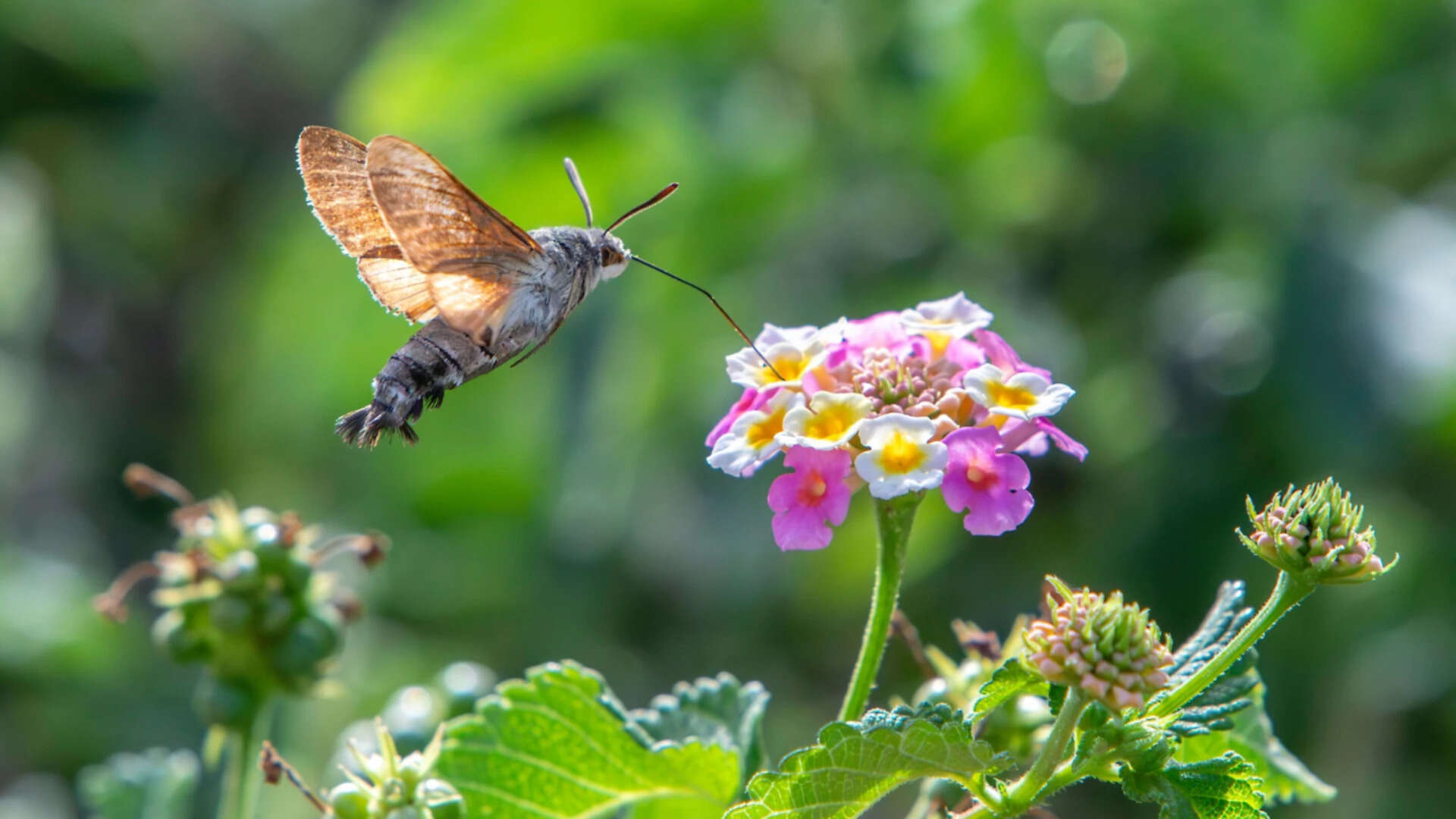
Hummingbird hawkmoths have been found to exhibit a distinct preference for one eye when feeding with their proboscis. This unique trait, known as lateralization, allows the moths to conserve cognitive resources during intricate maneuvers, making their feeding process more efficient.
Researchers have discovered that this preference is instinctive, evident even in the moths' initial interactions with flowers. By aligning their dominant eye with a favored proboscis side, the moths are able to streamline complex feeding tasks.
This remarkable adaptation enables the moths to solve problems with a relatively small brain, making them one of the most fascinating insects in the natural world. The study of hummingbird hawkmoths' behavior has shed new light on the importance of lateralization in insects and its role in enhancing their cognitive abilities.
The hummingbird hawkmoths' ability to prefer one eye over the other is a unique trait that sets them apart from other insects. This preference is not limited to feeding, but also extends to other aspects of their behavior, such as navigation and predator avoidance.
The discovery of this trait has significant implications for our understanding of insect behavior and cognition. It highlights the importance of considering the complex interactions between an insect's brain, body, and environment when studying their behavior.
In addition, the study of hummingbird hawkmoths' lateralization has the potential to inform the development of more efficient robotic systems and artificial intelligence. By understanding how these moths are able to solve complex problems with a small brain, researchers may be able to develop more effective algorithms and designs for robotic systems.
Overall, the discovery of hummingbird hawkmoths' eye preference is a significant finding that has the potential to shed new light on the fascinating world of insect behavior and cognition.
The unique adaptations of the hummingbird hawkmoths are a testament to the incredible diversity and complexity of the natural world. As researchers continue to study these fascinating insects, we may uncover even more remarkable traits and abilities that will help us better understand the intricate relationships between insects, their environment, and their behavior.
What this means for us is that even the smallest creatures can have complex and fascinating behaviors that can inform and inspire our understanding of the world around us.
Frequently asked questions
What is lateralization in hummingbird hawkmoths?
Lateralization refers to the preference for one eye and feeding tube side when accessing nectar, which enhances efficiency and problem-solving.
Is the eye preference in hummingbird hawkmoths instinctive?
Yes, the eye preference in hummingbird hawkmoths is instinctive, evident even in their initial flower interactions.