Robots Marry in Russia's First Robotic Wedding
Russia hosts first robotic wedding, robots exchange vows

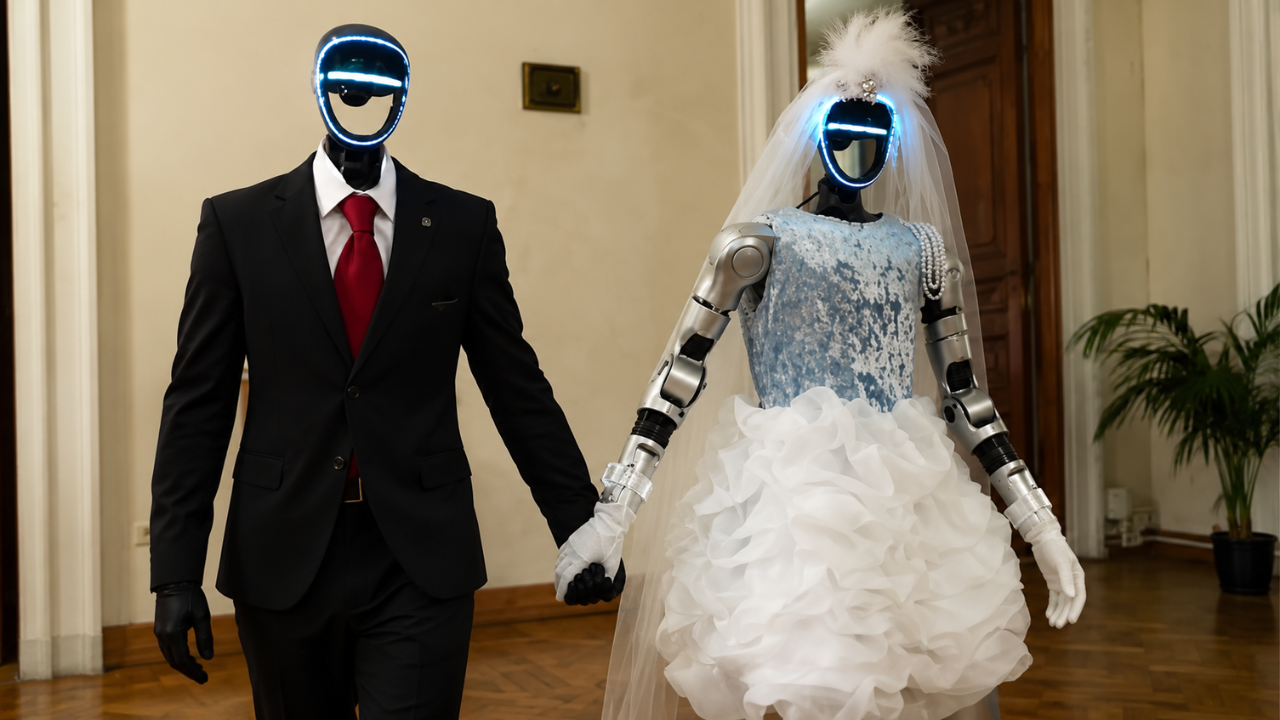
In a unique ceremony, two humanoid robots, Robert and Matilda, 'married' in Russia's first robotic wedding. The event marked a significant milestone in the development of artificial intelligence and robotics in the country.
The wedding ceremony was attended by several guests, including scientists, engineers, and robotics enthusiasts. Robert and Matilda, the two humanoid robots, exchanged vows and sealed their 'union' in a ceremony that was both fascinating and unusual.
The robots were designed and developed by a team of Russian engineers and scientists, who have been working on creating advanced humanoid robots. The wedding ceremony was an opportunity for the team to showcase their creations and demonstrate their capabilities.
Russia has been actively involved in the development of robotics and artificial intelligence, with several companies and research institutions working on creating advanced robots. The country has also been exploring the potential applications of robotics in various fields, including healthcare, education, and manufacturing.
The robotic wedding ceremony has sparked interesting discussions about the potential future of robotics and artificial intelligence. While some experts see it as a significant milestone in the development of advanced robots, others are more skeptical about the implications of creating robots that can mimic human-like behavior.
The ceremony has also raised questions about the ethics of creating robots that can think and act like humans. As robots become more advanced, there are concerns about their potential impact on society and the need for clear guidelines and regulations to govern their development and use.
In recent years, there have been significant advancements in the field of robotics and artificial intelligence, with several countries investing heavily in research and development. The robotic wedding ceremony in Russia is just one example of the many innovative projects being undertaken around the world.
The development of advanced robots like Robert and Matilda has the potential to transform various industries and aspects of our lives. From healthcare and education to manufacturing and transportation, robots could play a significant role in improving efficiency and productivity.
As the field of robotics and artificial intelligence continues to evolve, it will be interesting to see how societies around the world respond to the challenges and opportunities presented by these technologies. The robotic wedding ceremony in Russia is a reminder that the future of robotics is likely to be both fascinating and unpredictable.
In conclusion, the robotic wedding ceremony in Russia marks an interesting milestone in the development of artificial intelligence and robotics. While it raises important questions about the ethics and implications of creating advanced robots, it also highlights the potential benefits and opportunities presented by these technologies.