Supreme Court Rules States Can't Reject Judges' Retirement Age Hike
States can't oppose judges' retirement age hike due to financial burden. SC directs review within two weeks.
'%3E%3Crect%20width%3D'96'%20height%3D'96'%20fill%3D'%231A5276'%2F%3E%3Ccircle%20cx%3D'30'%20cy%3D'24'%20r%3D'44'%20fill%3D'%23fff'%20opacity%3D'.12'%2F%3E%3Ccircle%20cx%3D'60'%20cy%3D'74'%20r%3D'40'%20fill%3D'%23000'%20opacity%3D'.10'%2F%3E%3C%2Fg%3E%3Cg%20fill%3D'%23fff'%3E%3Cpath%20d%3D'M31%2041%20L48%2031%20L65%2041%20Z'%2F%3E%3Crect%20x%3D'33'%20y%3D'43'%20width%3D'4'%20height%3D'17'%2F%3E%3Crect%20x%3D'41'%20y%3D'43'%20width%3D'4'%20height%3D'17'%2F%3E%3Crect%20x%3D'51'%20y%3D'43'%20width%3D'4'%20height%3D'17'%2F%3E%3Crect%20x%3D'59'%20y%3D'43'%20width%3D'4'%20height%3D'17'%2F%3E%3Crect%20x%3D'30'%20y%3D'62'%20width%3D'36'%20height%3D'4'%20rx%3D'1'%2F%3E%3C%2Fg%3E%3C%2Fsvg%3E)
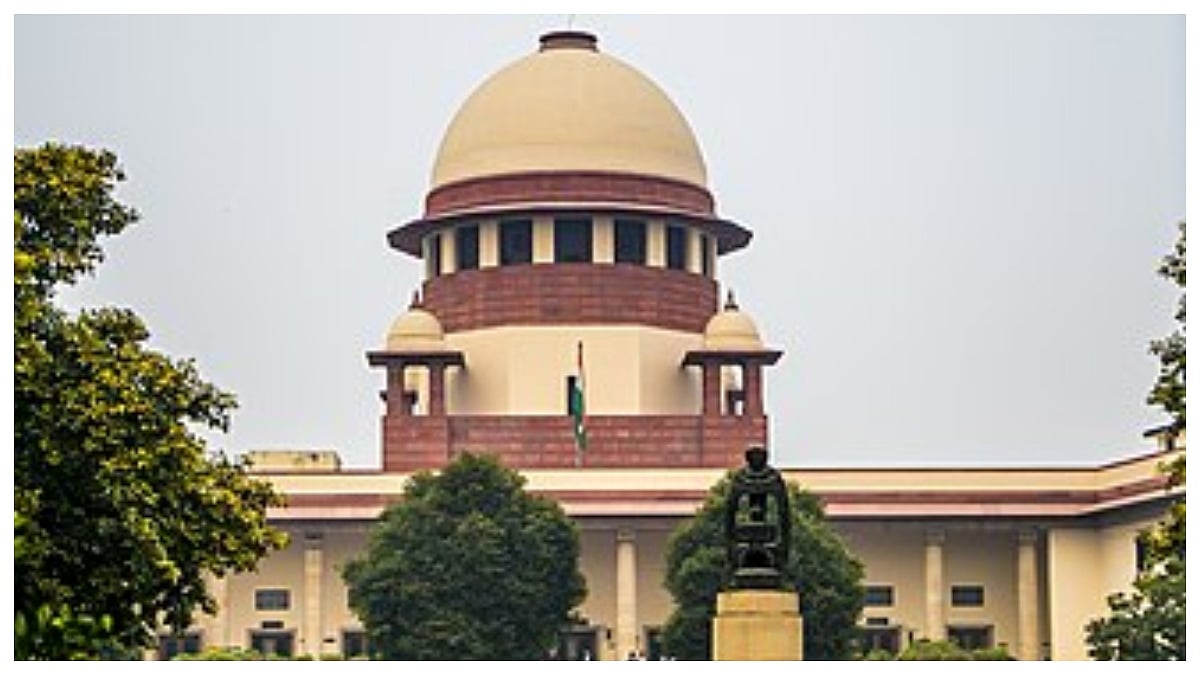
The Supreme Court has ruled that state governments cannot reject the proposal to raise the retirement age of judicial officers from 60 to 62 years solely due to increased financial burden or differences in retirement age with government employees.
This decision was made by a bench comprising Chief Justice of India Surya Kant and Justices Joymalya Bagchi and V. Mohan while hearing a long-pending case filed by the All India Judges Association.
The court rejected the argument that the retirement age of judicial officers should be in line with that of state government employees, stating that members of the judiciary form a separate and distinct class.
The apex court noted that retaining experienced judges would help avoid immediate vacancies and reduce expenditure associated with recruitment, training, and induction of new officers.
It observed that seasoned judicial officers constitute an important institutional asset, and extending their service could prove more economical than replacing them.
The court directed states that had objected to the proposal to review the matter independently and arrive at a fresh decision within two weeks.
The Supreme Court also clarified that state governments should not refrain from approving the proposal merely because the concerned High Courts have expressed reservations.
Their views, it said, would be considered at an appropriate stage.
This ruling is significant as it addresses the long-pending issue of retirement age for judicial officers and provides clarity on the matter.
The decision is expected to have implications for the judiciary and state governments, and it remains to be seen how the states will respond to the Supreme Court's directive.
In the context of the Indian judiciary, this decision highlights the importance of experienced judges and the need to retain them to ensure continuity and efficiency in the judicial system.
The Supreme Court's ruling also underscores the distinct nature of the judiciary as a separate entity from the executive and legislative branches of government.
Overall, the decision is a significant development in the Indian judicial system and is expected to have far-reaching implications for the administration of justice in the country.
The ruling demonstrates the Supreme Court's commitment to upholding the principles of justice and ensuring that the judiciary is able to function effectively and efficiently.
As the states review the proposal and make fresh decisions, it will be important to monitor the developments and assess the impact of the Supreme Court's ruling on the Indian judicial system.
Frequently asked questions
Can states reject the proposal to raise judges' retirement age due to financial burden?
No, the Supreme Court has ruled that states cannot reject the proposal solely due to financial burden or differences in retirement age with government employees.
What is the significance of the Supreme Court's ruling on judges' retirement age?
The ruling addresses the long-pending issue of retirement age for judicial officers, provides clarity on the matter, and highlights the importance of experienced judges in the Indian judicial system.