SC Orders Separate Namaz Space Near Bhojshala
Supreme Court directs separate space for Friday prayers, urges restraint from both sides.
'%3E%3Crect%20width%3D'96'%20height%3D'96'%20fill%3D'%231A5276'%2F%3E%3Ccircle%20cx%3D'30'%20cy%3D'24'%20r%3D'44'%20fill%3D'%23fff'%20opacity%3D'.12'%2F%3E%3Ccircle%20cx%3D'60'%20cy%3D'74'%20r%3D'40'%20fill%3D'%23000'%20opacity%3D'.10'%2F%3E%3C%2Fg%3E%3Cg%20fill%3D'%23fff'%3E%3Cpath%20d%3D'M31%2041%20L48%2031%20L65%2041%20Z'%2F%3E%3Crect%20x%3D'33'%20y%3D'43'%20width%3D'4'%20height%3D'17'%2F%3E%3Crect%20x%3D'41'%20y%3D'43'%20width%3D'4'%20height%3D'17'%2F%3E%3Crect%20x%3D'51'%20y%3D'43'%20width%3D'4'%20height%3D'17'%2F%3E%3Crect%20x%3D'59'%20y%3D'43'%20width%3D'4'%20height%3D'17'%2F%3E%3Crect%20x%3D'30'%20y%3D'62'%20width%3D'36'%20height%3D'4'%20rx%3D'1'%2F%3E%3C%2Fg%3E%3C%2Fsvg%3E)
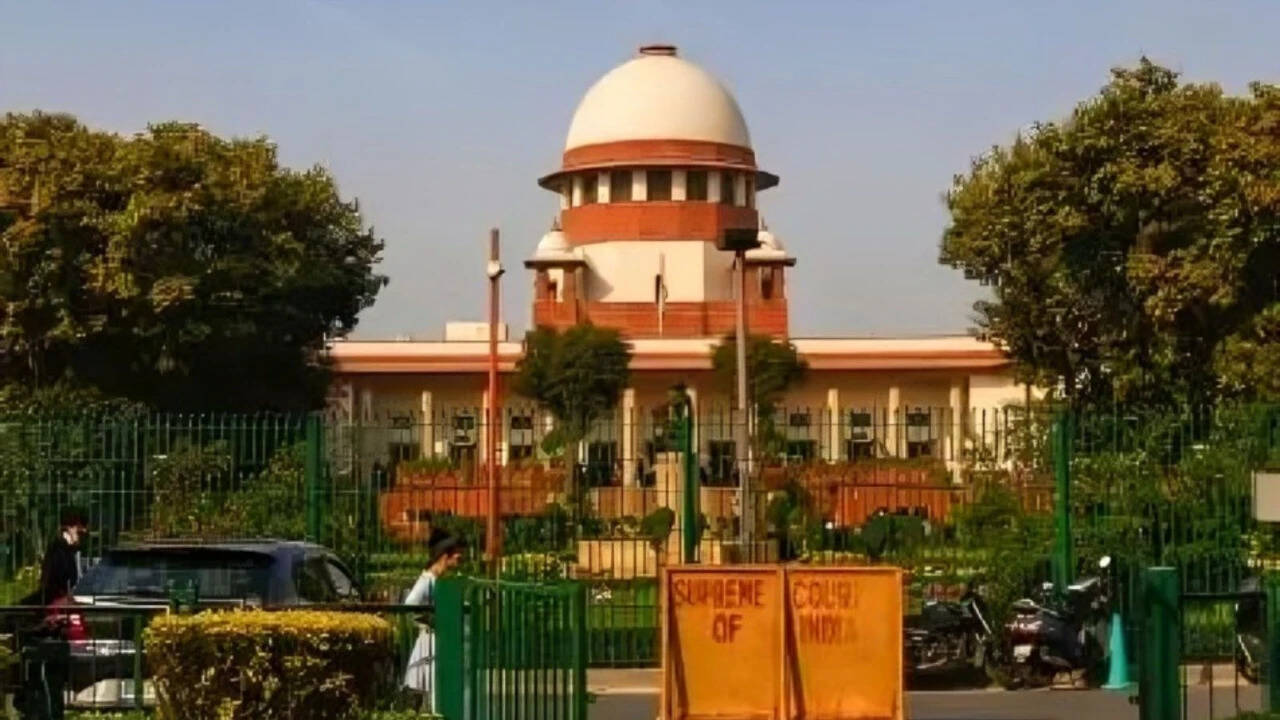
The Supreme Court has directed that a separate space be allocated for Friday namaz prayers near the Bhojshala site in Madhya Pradesh. This space will be designated for Muslim worshippers to perform their prayers between 1pm and 3pm on Fridays.
The court's decision comes as part of its ongoing efforts to resolve the Bhojshala dispute, which has been a point of contention between Hindu and Muslim communities. The Archaeological Survey of India (ASI) has been instructed to ensure that any structural alterations to the site require prior permission from the Supreme Court.
In its ruling, the court also urged both Hindu and Muslim sides to exercise restraint during proceedings, emphasizing the need for peaceful coexistence and respect for each other's religious traditions. This move is seen as an attempt to reduce tensions and promote harmony between the two communities.
The Bhojshala site, located in Madhya Pradesh, has been at the center of a long-standing dispute between Hindus and Muslims. The site is considered sacred by both communities, with Hindus worshipping it as a temple and Muslims using it as a mosque. The dispute has led to occasional clashes and tensions between the two groups.
The Supreme Court's decision to allocate a separate space for Friday namaz prayers is seen as a significant step towards resolving the dispute. By providing a designated area for Muslim worshippers, the court aims to reduce congestion and potential conflicts at the site.
The ASI, which is responsible for the maintenance and conservation of the site, has been instructed to work closely with local authorities to ensure that the separate space for namaz prayers is properly designated and maintained. The court's ruling also emphasizes the importance of preserving the site's cultural and historical significance.
In recent years, the Bhojshala dispute has gained significant attention, with both Hindu and Muslim groups advocating for their respective claims to the site. The Supreme Court's decision is expected to have a positive impact on the dispute, promoting a sense of mutual respect and understanding between the two communities.
The allocation of a separate space for Friday namaz prayers near the Bhojshala site is a significant development in the ongoing efforts to resolve the dispute. As the situation continues to unfold, it is likely that the Supreme Court's decision will have a lasting impact on the relationship between Hindu and Muslim communities in the region.
In the broader context, the Supreme Court's ruling highlights the importance of respecting and preserving India's rich cultural and religious diversity. By promoting peaceful coexistence and mutual respect, the court's decision sets a positive precedent for resolving similar disputes across the country.
The significance of the Supreme Court's decision extends beyond the Bhojshala dispute, as it underscores the need for tolerance, understanding, and respect for different religious traditions. As India continues to navigate its complex cultural and religious landscape, the court's ruling serves as a reminder of the importance of promoting harmony and cooperation between different communities.