NASA Tests FALCON Navigation System
NASA's FALCON system navigates satellites without GPS. It uses other spacecraft and debris as reference points.
'%3E%3Crect%20width%3D'96'%20height%3D'96'%20fill%3D'%23B3261E'%2F%3E%3Ccircle%20cx%3D'30'%20cy%3D'24'%20r%3D'44'%20fill%3D'%23fff'%20opacity%3D'.12'%2F%3E%3Ccircle%20cx%3D'60'%20cy%3D'74'%20r%3D'40'%20fill%3D'%23000'%20opacity%3D'.10'%2F%3E%3C%2Fg%3E%3Cg%20fill%3D'%23fff'%3E%3Crect%20x%3D'29'%20y%3D'49'%20width%3D'8'%20height%3D'19'%20rx%3D'1'%2F%3E%3Crect%20x%3D'39'%20y%3D'40'%20width%3D'9'%20height%3D'28'%20rx%3D'1'%2F%3E%3Crect%20x%3D'50'%20y%3D'45'%20width%3D'8'%20height%3D'23'%20rx%3D'1'%2F%3E%3Crect%20x%3D'60'%20y%3D'53'%20width%3D'7'%20height%3D'15'%20rx%3D'1'%2F%3E%3Crect%20x%3D'41'%20y%3D'34'%20width%3D'5'%20height%3D'6'%2F%3E%3C%2Fg%3E%3C%2Fsvg%3E)
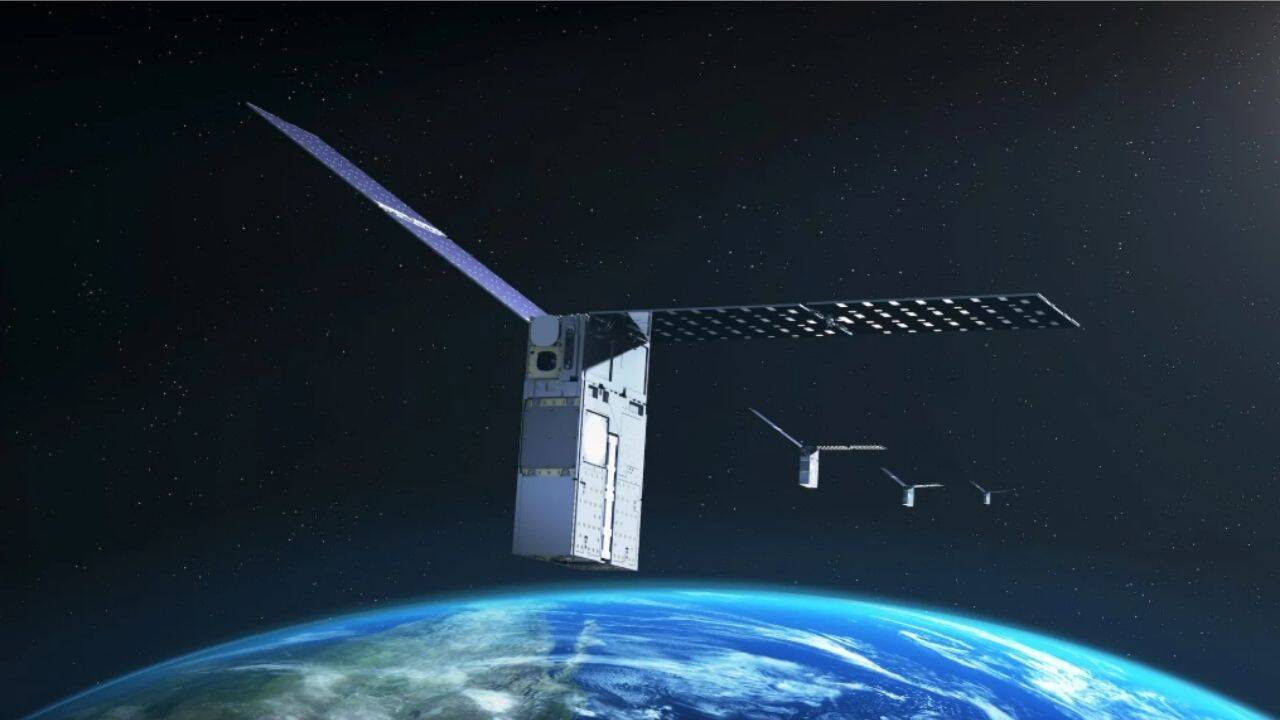
NASA has successfully tested a new navigation system called FALCON, which enables satellites to determine their position without relying on GPS. This innovative system utilizes other spacecraft and orbital debris as reference points to calculate a satellite's location.
The FALCON system was put to the test over a period of three days, during which it autonomously improved the known orbits of more than 200 space objects. Additionally, the system was able to calculate the position of NASA's Starling spacecraft.
This breakthrough technology has the potential to revolutionize the way satellites navigate in space. By not relying on GPS, satellites can operate more independently and efficiently, especially in areas where GPS signals are weak or unavailable.
The use of other spacecraft and orbital debris as reference points allows the FALCON system to create a more accurate and comprehensive picture of a satellite's position. This is particularly important for satellites operating in crowded orbits, where the risk of collision is higher.
NASA's development of the FALCON system is a significant step forward in the field of space navigation. As the number of satellites in orbit continues to grow, the need for reliable and efficient navigation systems becomes increasingly important.
The FALCON system has the potential to improve the safety and efficiency of satellite operations, and its development is a testament to NASA's commitment to advancing space technology.
In the future, the FALCON system could be used in a variety of applications, including satellite constellations and deep space missions. Its ability to navigate without GPS makes it an attractive option for missions where GPS signals are not available.
Overall, the successful testing of the FALCON system is a major milestone in the development of new space navigation technologies. It has the potential to make a significant impact on the way satellites operate in space and could pave the way for future advancements in space exploration.
The development of the FALCON system is a significant achievement for NASA and demonstrates the agency's continued commitment to pushing the boundaries of space technology.
As space agencies and private companies continue to launch more satellites into orbit, the need for reliable and efficient navigation systems will only continue to grow. The FALCON system is an important step towards meeting this need and could play a major role in shaping the future of space exploration.
Frequently asked questions
What is the FALCON navigation system?
The FALCON navigation system is a new technology developed by NASA that allows satellites to navigate without relying on GPS. It uses other spacecraft and orbital debris as reference points to calculate a satellite's location.
How does the FALCON system improve satellite navigation?
The FALCON system improves satellite navigation by providing a more accurate and comprehensive picture of a satellite's position, even in areas where GPS signals are weak or unavailable.