Delhi High Court Seeks Response On PIL For Fasting Activist
Delhi High Court seeks Centre and Delhi government response on PIL for medical aid to fasting activist Sonam Wangchuk. His health is deteriorating rapidly.
'%3E%3Crect%20width%3D'96'%20height%3D'96'%20fill%3D'%231A5276'%2F%3E%3Ccircle%20cx%3D'30'%20cy%3D'24'%20r%3D'44'%20fill%3D'%23fff'%20opacity%3D'.12'%2F%3E%3Ccircle%20cx%3D'60'%20cy%3D'74'%20r%3D'40'%20fill%3D'%23000'%20opacity%3D'.10'%2F%3E%3C%2Fg%3E%3Cg%20fill%3D'%23fff'%3E%3Cpath%20d%3D'M31%2041%20L48%2031%20L65%2041%20Z'%2F%3E%3Crect%20x%3D'33'%20y%3D'43'%20width%3D'4'%20height%3D'17'%2F%3E%3Crect%20x%3D'41'%20y%3D'43'%20width%3D'4'%20height%3D'17'%2F%3E%3Crect%20x%3D'51'%20y%3D'43'%20width%3D'4'%20height%3D'17'%2F%3E%3Crect%20x%3D'59'%20y%3D'43'%20width%3D'4'%20height%3D'17'%2F%3E%3Crect%20x%3D'30'%20y%3D'62'%20width%3D'36'%20height%3D'4'%20rx%3D'1'%2F%3E%3C%2Fg%3E%3C%2Fsvg%3E)
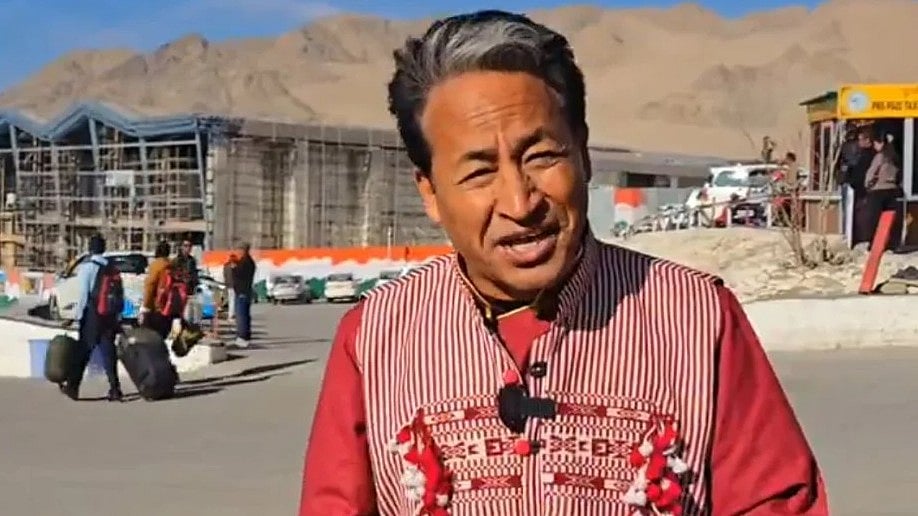
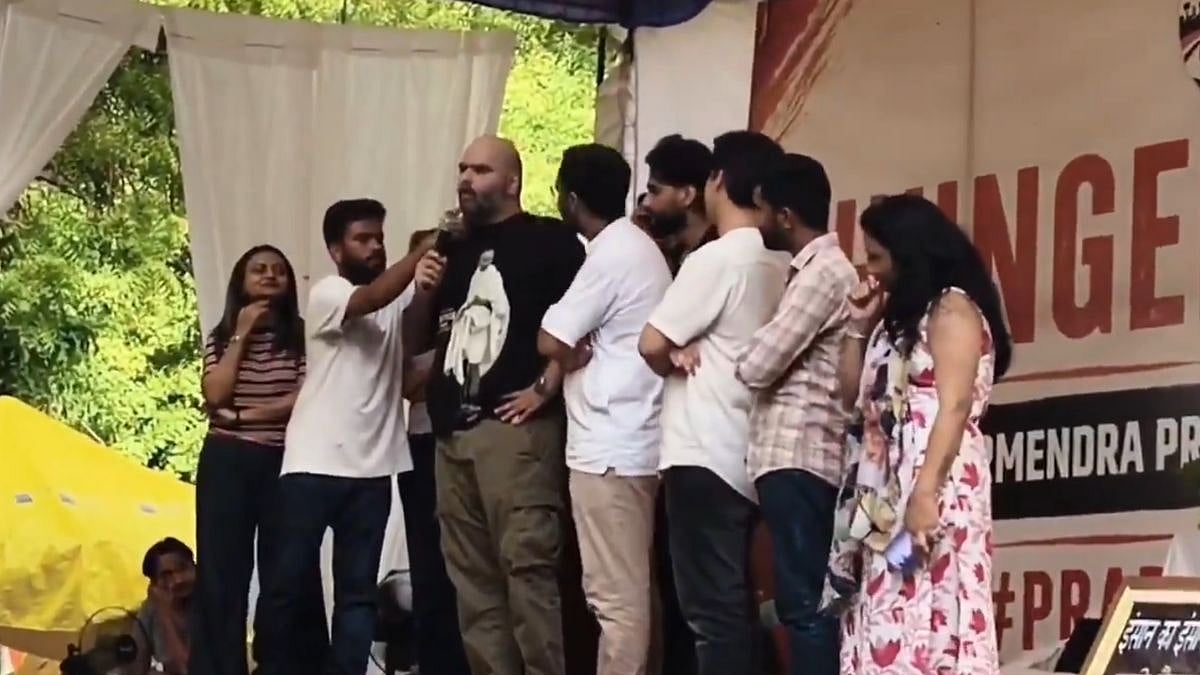
The Delhi High Court has sought responses from the Central and Delhi governments on a public interest litigation (PIL) seeking urgent medical intervention for climate activist Sonam Wangchuk. Wangchuk has been on an indefinite hunger strike at Jantar Mantar since June 28, demanding the resignation of Union Education Minister Dharmendra Pradhan over alleged question paper leaks and irregularities in the education system.
A division bench of Chief Justice Devendra Kumar Upadhyaya and Justice Tejas Karia termed the matter urgent and posted it for hearing on July 16. The court directed that copies of the petition and its order be served on the law officers representing the Centre and the Delhi government.
The PIL, filed by activist-lawyer Rakesh Kumar Saini, seeks directions to the Centre and the Delhi government to shift Wangchuk to a government hospital and provide medical treatment, including force-feeding, to save his life. Saini argued that Wangchuk was exercising his fundamental right to protest and that his condition required immediate intervention.
According to the petition, Wangchuk's health has deteriorated rapidly during the hunger strike, with a weight loss of 8.5 kg. The plea states that his death would be a matter of great shame for the country and the world. The petition alleges that the government is treating Wangchuk like a hardcore criminal, terrorist, or traitor to the nation and has failed to provide him with adequate medical care.
The plea questions the government's response to Wangchuk's protest, stating that he should be provided with necessary nutrients, vitamins, and minerals by way of a liquid diet to survive. The petition also states that while people have begun alleging that the conscience of the nation is dead, the petitioner is sure that the conscience of courts is not dead.
Wangchuk joined protests organised by the Cockroach Janta Party (CJP) at Jantar Mantar on June 28 and has remained on an indefinite hunger strike. His demands include the resignation of Union Education Minister Dharmendra Pradhan over alleged question paper leaks and irregularities in the education system.
The Delhi High Court's decision to seek responses from the Central and Delhi governments is a significant development in the case. The court's intervention highlights the urgency of the situation and the need for immediate medical attention for Wangchuk.
The case has sparked concerns about the government's response to protests and the treatment of activists. The petition alleges that the government is not providing adequate medical care to Wangchuk, which is a matter of concern.
In the context of the case, it is essential to consider the fundamental right to protest and the government's responsibility to ensure the safety and well-being of protesters. The Delhi High Court's decision will be closely watched, and its outcome will have significant implications for the case and the broader context of protests and activism in India.
The significance of the case lies in its potential to set a precedent for the treatment of protesters and the government's response to hunger strikes. The court's decision will also highlight the importance of protecting the fundamental right to protest and ensuring that protesters receive adequate medical care.
In conclusion, the Delhi High Court's decision to seek responses from the Central and Delhi governments on the PIL for medical aid to fasting activist Sonam Wangchuk is a crucial development in the case. The court's intervention highlights the urgency of the situation and the need for immediate medical attention for Wangchuk. The case has sparked concerns about the government's response to protests and the treatment of activists, and its outcome will have significant implications for the case and the broader context of protests and activism in India.