Supreme Court Rejects Abu Salem's Plea for Early Release
Abu Salem's plea for premature release dismissed, 1993 Mumbai blasts case
'%3E%3Crect%20width%3D'96'%20height%3D'96'%20fill%3D'%23B3261E'%2F%3E%3Ccircle%20cx%3D'30'%20cy%3D'24'%20r%3D'44'%20fill%3D'%23fff'%20opacity%3D'.12'%2F%3E%3Ccircle%20cx%3D'60'%20cy%3D'74'%20r%3D'40'%20fill%3D'%23000'%20opacity%3D'.10'%2F%3E%3C%2Fg%3E%3Cg%20fill%3D'%23fff'%3E%3Crect%20x%3D'29'%20y%3D'49'%20width%3D'8'%20height%3D'19'%20rx%3D'1'%2F%3E%3Crect%20x%3D'39'%20y%3D'40'%20width%3D'9'%20height%3D'28'%20rx%3D'1'%2F%3E%3Crect%20x%3D'50'%20y%3D'45'%20width%3D'8'%20height%3D'23'%20rx%3D'1'%2F%3E%3Crect%20x%3D'60'%20y%3D'53'%20width%3D'7'%20height%3D'15'%20rx%3D'1'%2F%3E%3Crect%20x%3D'41'%20y%3D'34'%20width%3D'5'%20height%3D'6'%2F%3E%3C%2Fg%3E%3C%2Fsvg%3E)
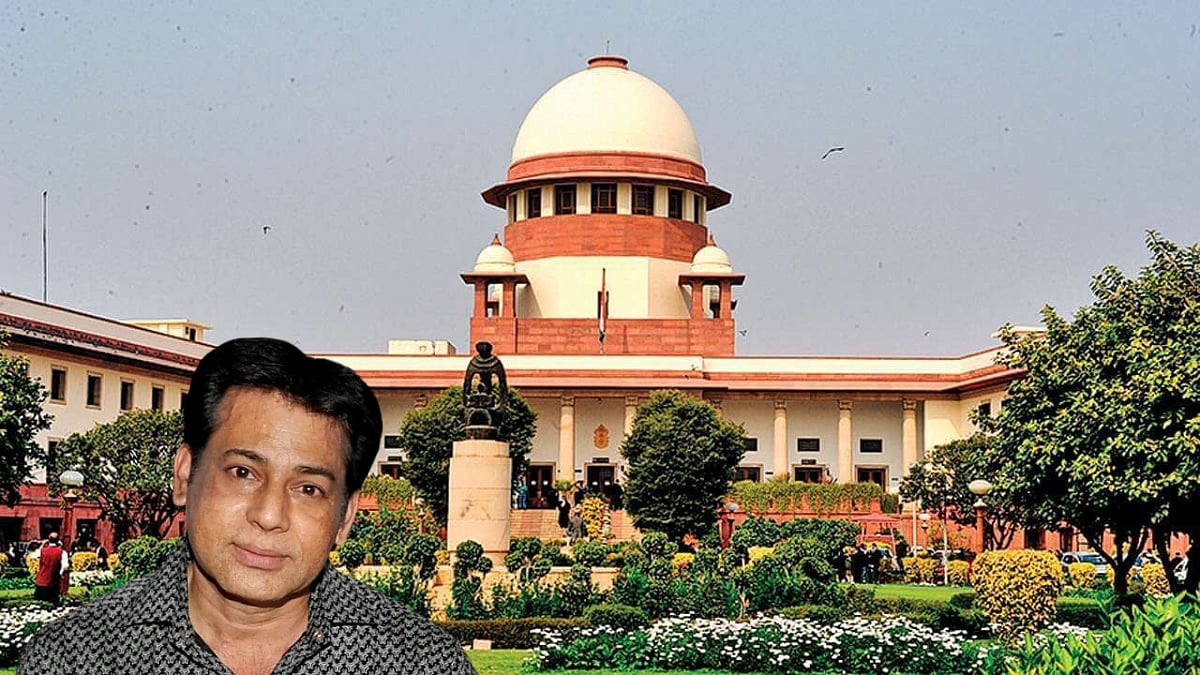
The Supreme Court has dismissed Abu Salem's plea seeking premature release from prison in connection with the 1993 Mumbai serial blasts case. A bench comprising Justice Vikram Nath and Justice Sandeep Mehta pronounced the verdict after hearing Salem's arguments challenging the Bombay High Court's decision to reject his plea.
Abu Salem had sought to count the remission he earned for good conduct, as well as the period he spent in custody as an undertrial, towards the 25-year imprisonment cap linked to the extradition assurances given by India to Portugal. Salem's plea stems from India's assurances to Portugal in 2002 during his extradition proceedings, where India had assured Portugal that Salem would neither be sentenced to death nor imprisoned for more than 25 years.
Senior Advocate Rishi Malhotra, appearing for Salem, argued that the period spent as an undertrial should be set off against his sentence, as directed by the TADA court. He also contended that earned remission for good conduct should be included while calculating the period of imprisonment. Malhotra submitted that Salem had earned around three years and two months of remission for good conduct and argued that such remission was distinct from statutory remission under Section 432 of the Code of Criminal Procedure.
The Bombay High Court had rejected Salem's plea for premature release in April 2025, holding that the 25-year period would expire only in November 2030. The High Court ruled that earned remission could not be used to further reduce the 25-year period arising from the extradition arrangement. The High Court noted that Salem was first arrested on November 11, 2005, and held that a simple calculation from that date showed that the 25-year period would conclude in November 2030.
Salem had claimed that he spent around 11 years, nine months and 26 days as an undertrial between November 2005 and September 2017, followed by another nine years, 10 months and four days as a convict. He further relied on remission earned for good conduct and a relaxation granted for the period spent as an undertrial prisoner in Portugal. He had argued that these periods together brought his incarceration close to the 25-year threshold and that continued imprisonment violated his fundamental right to life and personal liberty under Article 21 of the Constitution.
The Supreme Court's decision to dismiss Salem's plea means that he will have to serve out the remainder of his sentence. The 1993 Mumbai serial blasts case was a devastating terrorist attack that killed hundreds of people and injured many more. The case has been ongoing for many years, with several high-profile convictions and acquittals.
The Supreme Court's verdict is a significant development in the case and has important implications for the ongoing legal proceedings. The decision to reject Salem's plea for premature release is likely to be seen as a major setback for the gangster, who has been arguing that he has already served a significant portion of his sentence.
In the broader context, the case highlights the complexities and challenges of dealing with high-profile terrorist cases. The Indian government's assurances to Portugal during Salem's extradition proceedings have been a key factor in the case, and the Supreme Court's decision will likely have implications for future extradition proceedings.
The verdict also raises important questions about the rights of prisoners and the application of extradition agreements. Salem's arguments about the inclusion of remission and undertrial periods in the calculation of his sentence have been rejected, but the case highlights the need for clarity and consistency in the application of these provisions.
In conclusion, the Supreme Court's decision to dismiss Abu Salem's plea for premature release is a significant development in the 1993 Mumbai serial blasts case. The verdict has important implications for the ongoing legal proceedings and highlights the complexities and challenges of dealing with high-profile terrorist cases.
Frequently asked questions
What was Abu Salem's plea about?
Abu Salem's plea was about seeking premature release from prison in connection with the 1993 Mumbai serial blasts case, citing the 25-year imprisonment cap linked to the extradition assurances given by India to Portugal.
What was the Supreme Court's decision?
The Supreme Court dismissed Abu Salem's plea for premature release, holding that the 25-year period would expire only in November 2030.