Jharkhand Zoo Hatches Cobra Eggs Artificially
Bhagwan Birsa Biological Park achieves conservation milestone, welcomes cobra and sand boa hatchlings.
'%3E%3Crect%20width%3D'96'%20height%3D'96'%20fill%3D'%23B3261E'%2F%3E%3Ccircle%20cx%3D'30'%20cy%3D'24'%20r%3D'44'%20fill%3D'%23fff'%20opacity%3D'.12'%2F%3E%3Ccircle%20cx%3D'60'%20cy%3D'74'%20r%3D'40'%20fill%3D'%23000'%20opacity%3D'.10'%2F%3E%3C%2Fg%3E%3Cg%20fill%3D'%23fff'%3E%3Crect%20x%3D'29'%20y%3D'49'%20width%3D'8'%20height%3D'19'%20rx%3D'1'%2F%3E%3Crect%20x%3D'39'%20y%3D'40'%20width%3D'9'%20height%3D'28'%20rx%3D'1'%2F%3E%3Crect%20x%3D'50'%20y%3D'45'%20width%3D'8'%20height%3D'23'%20rx%3D'1'%2F%3E%3Crect%20x%3D'60'%20y%3D'53'%20width%3D'7'%20height%3D'15'%20rx%3D'1'%2F%3E%3Crect%20x%3D'41'%20y%3D'34'%20width%3D'5'%20height%3D'6'%2F%3E%3C%2Fg%3E%3C%2Fsvg%3E)
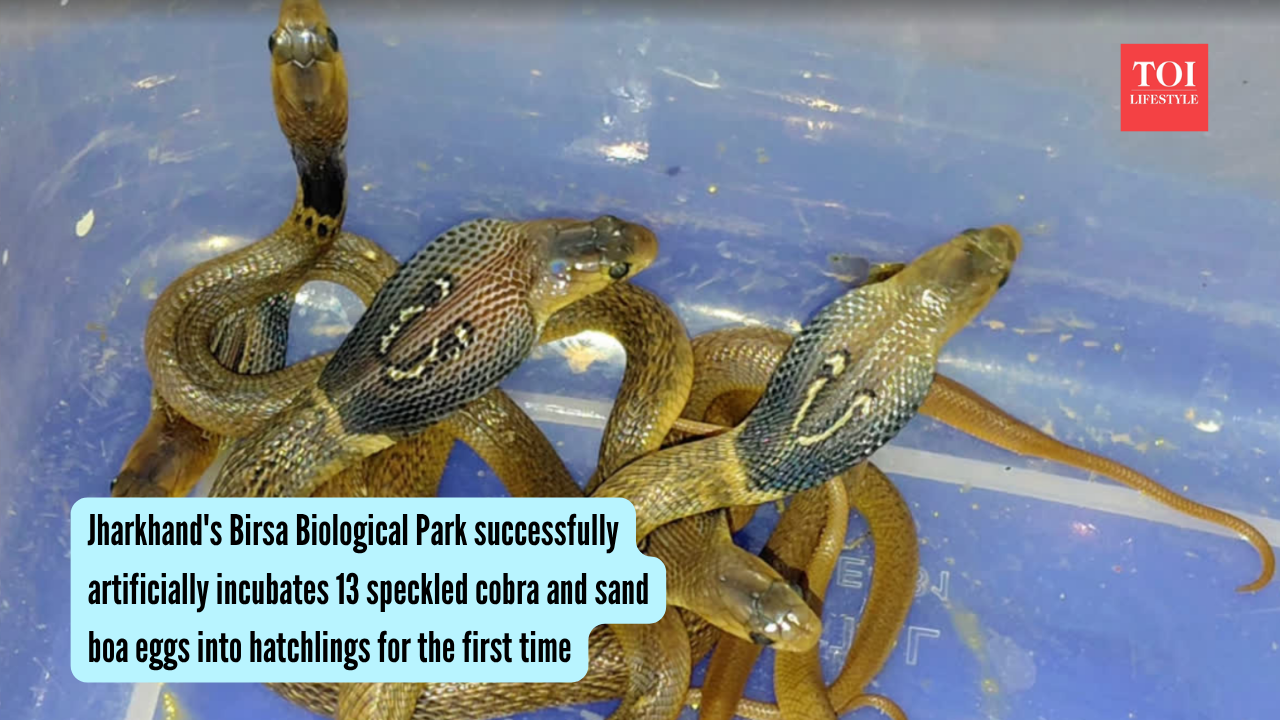
The Bhagwan Birsa Biological Park in Jharkhand has successfully hatched Spectacled Cobra eggs through artificial incubation for the first time. After a 70-day incubation period under controlled conditions, five healthy cobra hatchlings emerged.
In addition to the cobra hatchlings, the park also welcomed eight Sand Boa hatchlings as part of this conservation initiative. This achievement highlights the significance of scientific management in reptile breeding programs.
The Bhagwan Birsa Biological Park is a notable zoo in Jharkhand, known for its efforts in conservation and wildlife management. The park's success in artificially incubating cobra and sand boa eggs demonstrates its commitment to protecting and preserving reptile species.
The hatchlings are currently under close observation and are receiving veterinary care to ensure their health and well-being. This conservation initiative is a crucial step towards protecting these species and promoting biodiversity.
The artificial incubation of reptile eggs is a complex process that requires precise control over temperature, humidity, and other environmental factors. The success of this initiative at the Bhagwan Birsa Biological Park is a testament to the park's expertise and dedication to conservation.
The Spectacled Cobra and Sand Boa are both species of reptiles found in India, and their populations are often threatened by habitat loss, hunting, and other human activities. Conservation efforts like the one undertaken by the Bhagwan Birsa Biological Park are essential for protecting these species and preserving the country's biodiversity.
The park's achievement is also significant because it demonstrates the importance of scientific management in reptile breeding programs. By using artificial incubation techniques, the park can help increase the population of these species and reduce the risk of extinction.
In conclusion, the Bhagwan Birsa Biological Park's success in hatching cobra and sand boa eggs through artificial incubation is a major conservation milestone. The park's commitment to protecting and preserving reptile species is commendable, and its efforts will help promote biodiversity and conserve India's rich wildlife heritage.
This achievement has significant implications for conservation efforts in India, highlighting the importance of scientific management and artificial incubation techniques in reptile breeding programs. It also underscores the need for continued conservation efforts to protect and preserve India's diverse wildlife species.
The success of this initiative will likely inspire other zoos and conservation centers to adopt similar techniques, promoting a wider effort to conserve and protect reptile species. As a result, the Bhagwan Birsa Biological Park's achievement is a significant step forward for conservation in India, and its impact will be felt for years to come.
The park's dedication to conservation and wildlife management is a model for other institutions to follow, and its success in artificially incubating cobra and sand boa eggs is a testament to the power of scientific management and conservation efforts.
The conservation of reptile species is crucial for maintaining the balance of ecosystems and preserving biodiversity. The Bhagwan Birsa Biological Park's achievement is a significant contribution to this effort, and its impact will be felt in the years to come.
In the future, the park plans to continue its conservation efforts, using artificial incubation and other techniques to protect and preserve reptile species. The park's success is a beacon of hope for conservation in India, and its efforts will help promote a wider understanding of the importance of protecting and preserving the country's diverse wildlife heritage.
The Bhagwan Birsa Biological Park's achievement is a significant milestone in the conservation of reptile species in India. The park's commitment to protecting and preserving these species is commendable, and its efforts will help promote biodiversity and conserve India's rich wildlife heritage.
The park's success in artificially incubating cobra and sand boa eggs is a testament to the importance of scientific management in reptile breeding programs. The use of artificial incubation techniques can help increase the population of these species and reduce the risk of extinction.
In conclusion, the Bhagwan Birsa Biological Park's success in hatching cobra and sand boa eggs through artificial incubation is a major conservation milestone. The park's commitment to protecting and preserving reptile species is commendable, and its efforts will help promote biodiversity and conserve India's rich wildlife heritage.
This achievement has significant implications for conservation efforts in India, highlighting the importance of scientific management and artificial incubation techniques in reptile breeding programs. It also underscores the need for continued conservation efforts to protect and preserve India's diverse wildlife species.
The success of this initiative will likely inspire other zoos and conservation centers to adopt similar techniques, promoting a wider effort to conserve and protect reptile species. As a result, the Bhagwan Birsa Biological Park's achievement is a significant step forward for conservation in India, and its impact will be felt for years to come.
Frequently asked questions
What is the significance of artificial incubation in reptile breeding programs?
Artificial incubation is a complex process that requires precise control over temperature, humidity, and other environmental factors, and is essential for protecting and preserving reptile species.
How many cobra and sand boa hatchlings were born at the Bhagwan Birsa Biological Park?
Five healthy cobra hatchlings and eight sand boa hatchlings were born at the park.