NCERT Revises Class 8 Judiciary Chapter
NCERT revises textbook after Supreme Court order, drops corruption section and adds PIL focus.

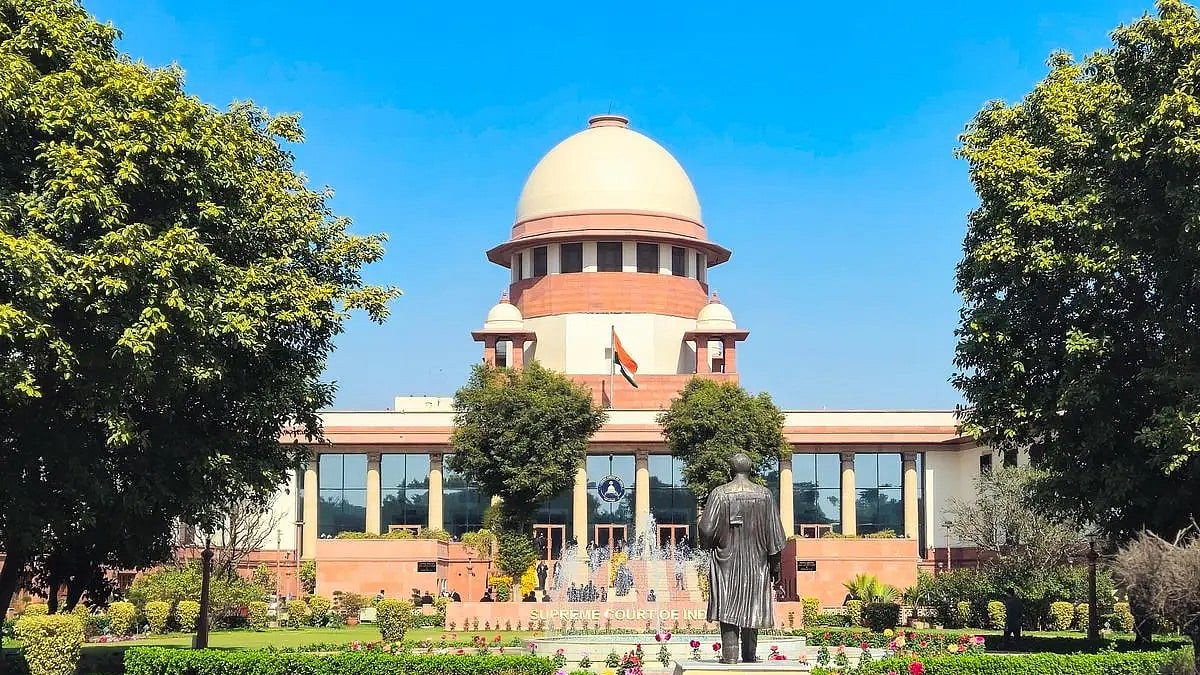
The National Council of Educational Research and Training (NCERT) has released a revised edition of its Class 8 Social Science textbook, making significant changes to the chapter on the judiciary. This move comes after the Supreme Court ordered the withdrawal of the earlier edition due to its controversial content on the judiciary. The updated textbook removes references to corruption in the judiciary, judicial backlog, and certain landmark Supreme Court judgements.
The revised chapter, titled 'The Role of the Judiciary in Society,' has been substantially rewritten to focus on the Supreme Court's constitutional role, Public Interest Litigation (PIL), tribunals, and alternative dispute resolution mechanisms. Notably, the chapter's opening 'Big Questions' section now asks students why justice is important for creating a 'just and harmonious society,' rather than why an independent judiciary is necessary.
Several sections have been removed from the revised textbook, including 'Challenges Faced by the Judicial System,' which discussed the large backlog of pending court cases, and 'Corruption in the judiciary,' which cited former Chief Justice of India BR Gavai's remarks on instances of corruption and misconduct within the judicial system. Additionally, discussions on landmark Supreme Court judgments, such as Shreya Singhal vs Union of India and Association for Democratic Reforms vs Union of India, have been omitted.
In contrast, the revised chapter includes an expanded discussion on Public Interest Litigation (PIL) under Articles 32 and 226 of the Constitution. It highlights cases such as the Hussainara Khatoon litigation on undertrial prisoners, the environmental cases filed by MC Mehta, and the Vishaka judgment on workplace sexual harassment. The changes were made after the Supreme Court took suo motu cognisance of the controversy sparked by the earlier edition, which was released on February 23, 2026.
The revision of the textbook is expected to impact students and educators across the country, as it presents a revised perspective on the judiciary and its role in society. The focus on PIL and alternative dispute resolution mechanisms may help students better understand the importance of justice and the mechanisms in place to uphold it. The revised edition is a significant development in the ongoing efforts to refine and improve educational content in India.
The Supreme Court's order to withdraw the earlier edition and the subsequent revision of the textbook demonstrate the importance of accurate and appropriate content in educational materials. The changes made to the chapter on the judiciary reflect a shift towards a more nuanced and balanced approach to teaching students about the judicial system and its role in society. As the revised textbook is implemented in schools, it will be important to monitor its impact and assess whether it achieves its intended goals of promoting a deeper understanding of the judiciary and its significance in Indian society.
In the coming months, educators and students will have the opportunity to engage with the revised textbook and explore its new content and perspectives. The revised chapter on the judiciary is likely to spark interesting discussions and debates, as students grapple with the complexities of the judicial system and its role in shaping Indian society. As the educational community adapts to the changes, it will be essential to provide support and resources to ensure a smooth transition and to maximize the benefits of the revised textbook.