PM Modi Warns of Resource Weaponisation
PM Modi warns of fuel, fertilisers, and medicines being used as geopolitical pressure tools.
'%3E%3Crect%20width%3D'96'%20height%3D'96'%20fill%3D'%231A5276'%2F%3E%3Ccircle%20cx%3D'30'%20cy%3D'24'%20r%3D'44'%20fill%3D'%23fff'%20opacity%3D'.12'%2F%3E%3Ccircle%20cx%3D'60'%20cy%3D'74'%20r%3D'40'%20fill%3D'%23000'%20opacity%3D'.10'%2F%3E%3C%2Fg%3E%3Cg%20fill%3D'%23fff'%3E%3Cpath%20d%3D'M31%2041%20L48%2031%20L65%2041%20Z'%2F%3E%3Crect%20x%3D'33'%20y%3D'43'%20width%3D'4'%20height%3D'17'%2F%3E%3Crect%20x%3D'41'%20y%3D'43'%20width%3D'4'%20height%3D'17'%2F%3E%3Crect%20x%3D'51'%20y%3D'43'%20width%3D'4'%20height%3D'17'%2F%3E%3Crect%20x%3D'59'%20y%3D'43'%20width%3D'4'%20height%3D'17'%2F%3E%3Crect%20x%3D'30'%20y%3D'62'%20width%3D'36'%20height%3D'4'%20rx%3D'1'%2F%3E%3C%2Fg%3E%3C%2Fsvg%3E)
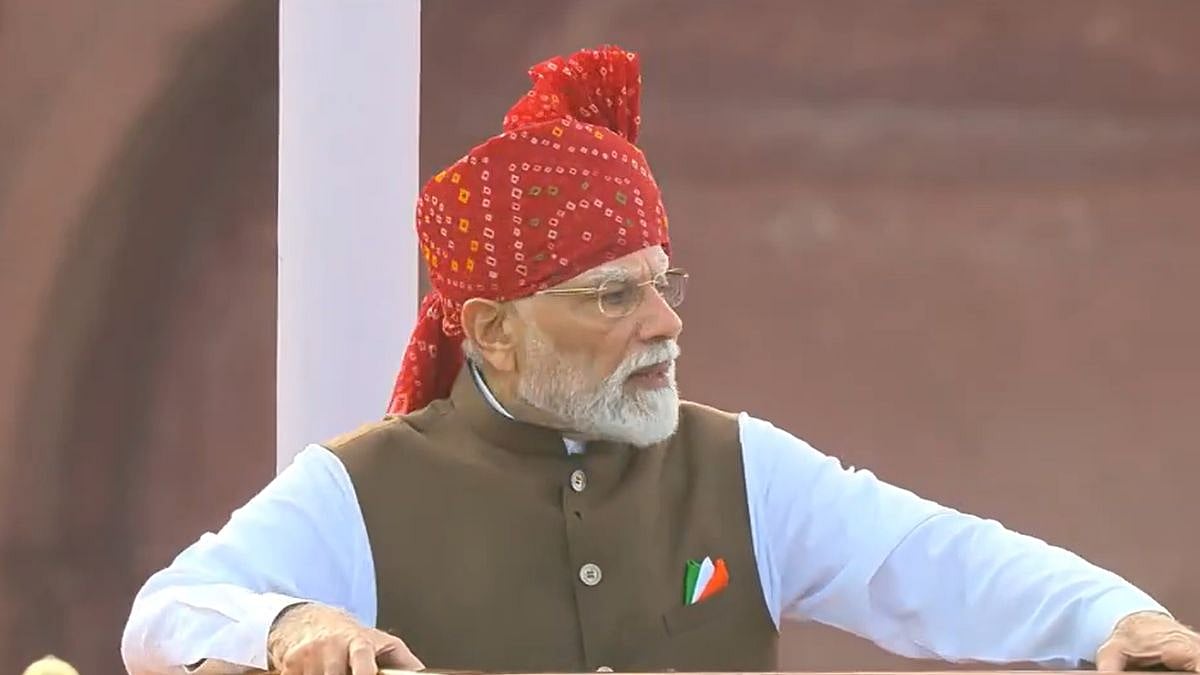
Prime Minister Narendra Modi, in his Independence Day address from the Red Fort, warned of the growing 'weaponisation of resources'. He stated that essential commodities such as fuel, fertilisers, and medicines are increasingly being used as instruments of geopolitical pressure.
The Prime Minister linked this issue to recent global crises and India's push for self-reliance. He emphasized that countries must reduce their dependence on external sources for critical resources to protect themselves from sudden supply disruptions and price shocks.
The 'weaponisation of resources' refers to the use of control over essential commodities, supply chains, or strategic routes to exert economic or political pressure on other countries. A country that controls the production, export, or transportation of a critical resource can restrict supplies, impose export curbs, or allow prices to surge, putting pressure on nations that depend heavily on imports.
PM Modi said the world is increasingly witnessing the weaponisation of 'petrol, diesel, fertilisers, medicines, technology chips' and even land and strategic routes. He highlighted the importance of energy self-reliance, citing the risks posed by the weaponisation of resources and strategic sea routes to India's economic security.
Fuel remains one of the most strategically important resources for any economy. Countries dependent on imported crude oil and gas can be particularly vulnerable to supply disruptions. Export restrictions, sanctions, conflict-related disruptions, or interference with key shipping routes can push up the cost of crude oil and natural gas.
Fertilisers are directly linked to food security, making their availability particularly important for countries with large agricultural sectors. Urea production depends heavily on natural gas, while supplies of phosphate and potash are concentrated in a relatively small number of countries. Export restrictions, production disruptions, or problems along shipping routes can trigger shortages and sharp price increases.
The Prime Minister's warning comes at a time when the world is facing multiple global crises, including the COVID-19 pandemic, climate change, and geopolitical tensions. India, like many other countries, is vulnerable to supply disruptions and price shocks due to its dependence on imported resources.
In conclusion, PM Modi's warning on the weaponisation of resources highlights the need for India to reduce its dependence on external sources for critical resources. By promoting self-reliance and energy independence, India can protect itself from the risks posed by the weaponisation of resources and strategic sea routes, and ensure its economic security in an increasingly uncertain world.
The Prime Minister's call for self-reliance is a significant step towards achieving this goal. By investing in domestic production, improving energy efficiency, and diversifying its energy mix, India can reduce its dependence on imported resources and mitigate the risks associated with the weaponisation of resources.
Overall, the Prime Minister's warning on the weaponisation of resources is a timely reminder of the importance of self-reliance and energy independence in ensuring India's economic security. As the world becomes increasingly interconnected, it is essential for countries to prioritize their economic security and reduce their dependence on external sources for critical resources.
In the context of India's economic security, the weaponisation of resources poses significant risks. The country's dependence on imported resources makes it vulnerable to supply disruptions and price shocks, which can have far-reaching consequences for its economy. Therefore, it is essential for India to prioritize self-reliance and energy independence to mitigate these risks and ensure its economic security.
The Prime Minister's warning on the weaponisation of resources is a call to action for India to reduce its dependence on external sources for critical resources. By promoting self-reliance and energy independence, India can protect itself from the risks posed by the weaponisation of resources and strategic sea routes, and ensure its economic security in an increasingly uncertain world.
Frequently asked questions
What is the weaponisation of resources?
The weaponisation of resources refers to the use of control over essential commodities, supply chains, or strategic routes to exert economic or political pressure on other countries.
Why is fuel a strategically important resource?
Fuel is a strategically important resource because countries dependent on imported crude oil and gas can be particularly vulnerable to supply disruptions, which can push up the cost of crude oil and natural gas.