Parliamentary Panel Delays Education Reforms Report
A House panel has deferred adopting a report on education reforms. This comes as the government faces opposition on key bills.
'%3E%3Crect%20width%3D'96'%20height%3D'96'%20fill%3D'%231A5276'%2F%3E%3Ccircle%20cx%3D'30'%20cy%3D'24'%20r%3D'44'%20fill%3D'%23fff'%20opacity%3D'.12'%2F%3E%3Ccircle%20cx%3D'60'%20cy%3D'74'%20r%3D'40'%20fill%3D'%23000'%20opacity%3D'.10'%2F%3E%3C%2Fg%3E%3Cg%20fill%3D'%23fff'%3E%3Cpath%20d%3D'M31%2041%20L48%2031%20L65%2041%20Z'%2F%3E%3Crect%20x%3D'33'%20y%3D'43'%20width%3D'4'%20height%3D'17'%2F%3E%3Crect%20x%3D'41'%20y%3D'43'%20width%3D'4'%20height%3D'17'%2F%3E%3Crect%20x%3D'51'%20y%3D'43'%20width%3D'4'%20height%3D'17'%2F%3E%3Crect%20x%3D'59'%20y%3D'43'%20width%3D'4'%20height%3D'17'%2F%3E%3Crect%20x%3D'30'%20y%3D'62'%20width%3D'36'%20height%3D'4'%20rx%3D'1'%2F%3E%3C%2Fg%3E%3C%2Fsvg%3E)
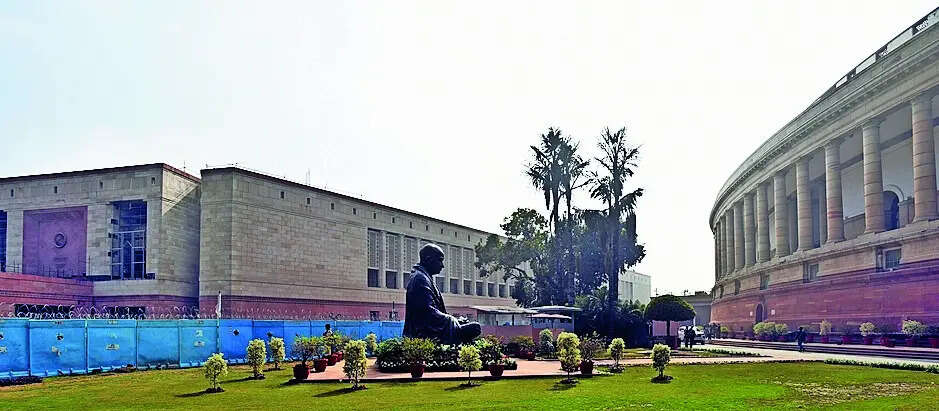
A parliamentary committee has postponed the adoption of its report on significant education reforms. This development comes as the government is seeking opposition support for other key legislative proposals.
The committee's decision to delay the report's adoption is a significant setback for the government's efforts to push through major reforms in the education sector. The report is expected to provide recommendations on the proposed higher education regulator bills, which have been facing widespread protests from various stakeholders.
The higher education regulator bills aim to overhaul the country's higher education system, but they have been criticized by opposition parties and other groups for being overly restrictive and bureaucratic. The Congress party has been vocal in its criticism of the government's handling of these controversial legislative matters, accusing it of trying to push through major reforms without adequate consultation and debate.
The delay in adopting the report is also significant because it comes at a time when the government is facing opposition on other key bills, including the anti-graft bill. The government had hoped to present both bills during the current parliamentary session, but it now appears unlikely that this will happen.
The parliamentary committee's decision to defer the adoption of its report is a reflection of the growing opposition to the government's legislative agenda. The government will need to work harder to build consensus and address the concerns of opposition parties and other stakeholders if it wants to push through its key legislative proposals.
The education reforms report is expected to provide a comprehensive overview of the proposed changes to the higher education system, including the establishment of a new regulatory body and the introduction of new standards and accreditation procedures. The report's adoption has been delayed several times in the past, and it remains to be seen when it will finally be presented to parliament.
The government's efforts to push through major reforms in the education sector are part of a broader effort to overhaul the country's regulatory framework and improve the quality of education. However, the opposition from various stakeholders has made it difficult for the government to make progress on this front.
In the coming days, the government will need to engage in intense negotiations with opposition parties and other stakeholders to build consensus on its legislative agenda. The outcome of these negotiations will have a significant impact on the government's ability to push through its key legislative proposals, including the higher education regulator bills.
The delay in adopting the education reforms report is a significant development in the ongoing debate over the government's legislative agenda. It reflects the growing opposition to the government's efforts to push through major reforms without adequate consultation and debate. As the parliamentary session comes to a close, it remains to be seen whether the government will be able to build consensus and push through its key legislative proposals.
The government's handling of the education reforms report has significant implications for the country's education sector. The proposed changes to the higher education system have the potential to improve the quality of education and increase access to higher education institutions. However, the opposition from various stakeholders has made it difficult for the government to make progress on this front.
In conclusion, the parliamentary committee's decision to defer the adoption of its report on education reforms is a significant setback for the government's efforts to push through major reforms in the education sector. The government will need to work harder to build consensus and address the concerns of opposition parties and other stakeholders if it wants to push through its key legislative proposals. The outcome of the negotiations will have a significant impact on the government's ability to overhaul the country's regulatory framework and improve the quality of education.