Munawar Faruqui Shares Jail Experience In New Show
Comedian Munawar Faruqui recounts 37-day jail stay, financial losses, and comeback. His new YouTube special has over 1.6M views.
'%3E%3Crect%20width%3D'96'%20height%3D'96'%20fill%3D'%23B3261E'%2F%3E%3Ccircle%20cx%3D'30'%20cy%3D'24'%20r%3D'44'%20fill%3D'%23fff'%20opacity%3D'.12'%2F%3E%3Ccircle%20cx%3D'60'%20cy%3D'74'%20r%3D'40'%20fill%3D'%23000'%20opacity%3D'.10'%2F%3E%3C%2Fg%3E%3Cg%20fill%3D'%23fff'%3E%3Crect%20x%3D'29'%20y%3D'49'%20width%3D'8'%20height%3D'19'%20rx%3D'1'%2F%3E%3Crect%20x%3D'39'%20y%3D'40'%20width%3D'9'%20height%3D'28'%20rx%3D'1'%2F%3E%3Crect%20x%3D'50'%20y%3D'45'%20width%3D'8'%20height%3D'23'%20rx%3D'1'%2F%3E%3Crect%20x%3D'60'%20y%3D'53'%20width%3D'7'%20height%3D'15'%20rx%3D'1'%2F%3E%3Crect%20x%3D'41'%20y%3D'34'%20width%3D'5'%20height%3D'6'%2F%3E%3C%2Fg%3E%3C%2Fsvg%3E)
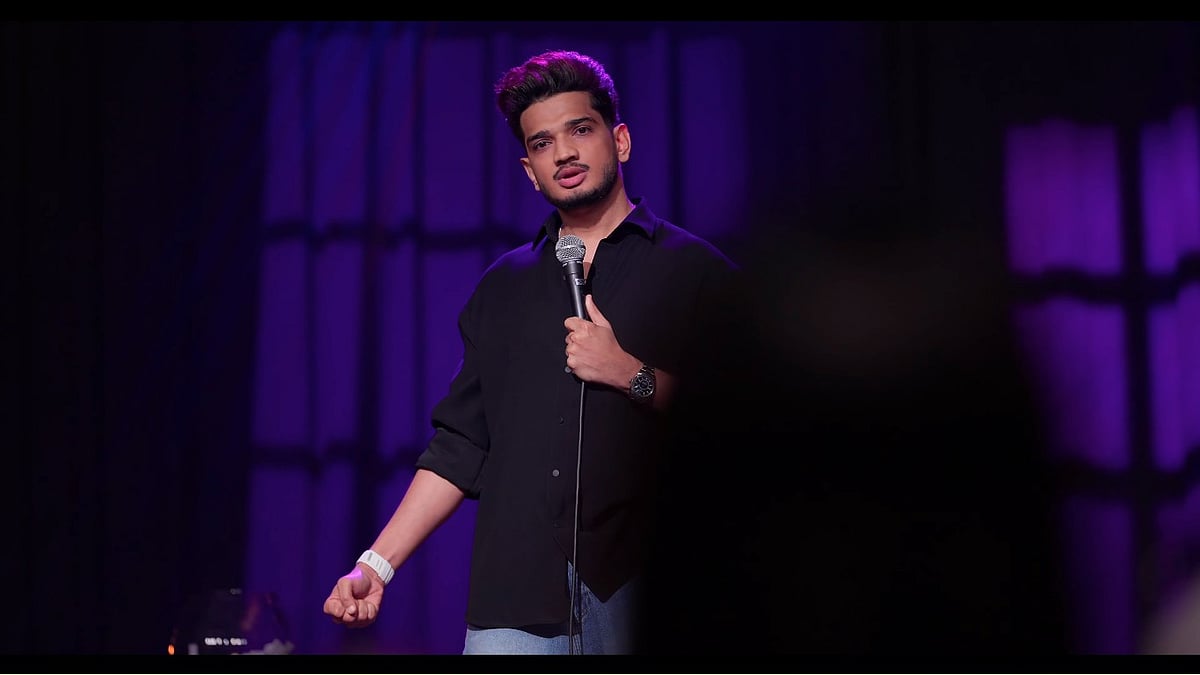
Comedian Munawar Faruqui has opened up about his 37-day stay in Indore Central Jail in his latest YouTube special, Dhandho. The show, released on July 11, has garnered over 1.6M views and narrates his journey from arrest to professional comeback.
Faruqui was arrested on January 1, 2021, in Indore, where he had arrived to perform a New Year show. A group of Hindu organisations allegedly raided the venue, accusing him of hurting religious sentiments through his jokes. He was taken into custody along with four others and spent a sleepless night in police custody.
The comedian recalled the emotional low point when a policeman allegedly told him that people like him 'should be shot', shattering his self-respect. He was later remanded to judicial custody and sent to Indore Central Jail, where he underwent a strip search and was lodged in an overcrowded barrack with around 120 inmates.
Faruqui described the poor conditions in the jail, including poor food and alleged violence against prisoners. He also shared an incident where he was taken to a hospital visit while handcuffed, and a frightened child made him realise how quickly public perception can change.
Throughout his performance, Faruqui said humour became his coping mechanism, and he chose to make himself the subject of his jokes rather than anyone else. The special also reveals a lesser-known financial detail behind one of his biggest business decisions. After his release, Faruqui had a meeting with an OTT platform, which initially offered him around Rs 2 crore for a show. However, he negotiated the amount to Rs 2,22,67,300, which symbolised the debt and losses he had suffered during his 37-day jail stay.
Faruqui's career had begun recovering after the Covid-19 pandemic, with sold-out shows across India and an OTT offer worth Rs 70 lakh. He had dreamed of buying back his family restaurant, which his father had been forced to sell due to financial losses. The comedian's story is one of resilience and comeback, as he turned his losses into profit through storytelling rather than revenge.
The incident had sparked widespread debate about freedom of speech and creative expression. Faruqui's experience highlights the challenges faced by artists and comedians in India, where they often face backlash and censorship for their work.
Faruqui's decision to share his story through comedy is a testament to the power of humour in coping with adversity. His performance has resonated with audiences, and his story serves as an inspiration to many.
In the end, Faruqui's 37-day jail stay, which was meant to silence him, ultimately became the foundation of his biggest professional comeback. His story is a reminder that even in the darkest of times, there is always hope for a better tomorrow.
The significance of Faruqui's story extends beyond his personal experience, as it highlights the importance of freedom of speech and creative expression in India. As the country continues to navigate the complexities of censorship and artistic expression, Faruqui's story serves as a powerful reminder of the need to protect and promote these fundamental rights.