Centre Denies Nod to Revanth Reddy's US Trip
Telangana CM's US visit blocked, deemed inappropriate. Deputy calls move unfortunate.
'%3E%3Crect%20width%3D'96'%20height%3D'96'%20fill%3D'%231A5276'%2F%3E%3Ccircle%20cx%3D'30'%20cy%3D'24'%20r%3D'44'%20fill%3D'%23fff'%20opacity%3D'.12'%2F%3E%3Ccircle%20cx%3D'60'%20cy%3D'74'%20r%3D'40'%20fill%3D'%23000'%20opacity%3D'.10'%2F%3E%3C%2Fg%3E%3Cg%20fill%3D'%23fff'%3E%3Cpath%20d%3D'M31%2041%20L48%2031%20L65%2041%20Z'%2F%3E%3Crect%20x%3D'33'%20y%3D'43'%20width%3D'4'%20height%3D'17'%2F%3E%3Crect%20x%3D'41'%20y%3D'43'%20width%3D'4'%20height%3D'17'%2F%3E%3Crect%20x%3D'51'%20y%3D'43'%20width%3D'4'%20height%3D'17'%2F%3E%3Crect%20x%3D'59'%20y%3D'43'%20width%3D'4'%20height%3D'17'%2F%3E%3Crect%20x%3D'30'%20y%3D'62'%20width%3D'36'%20height%3D'4'%20rx%3D'1'%2F%3E%3C%2Fg%3E%3C%2Fsvg%3E)
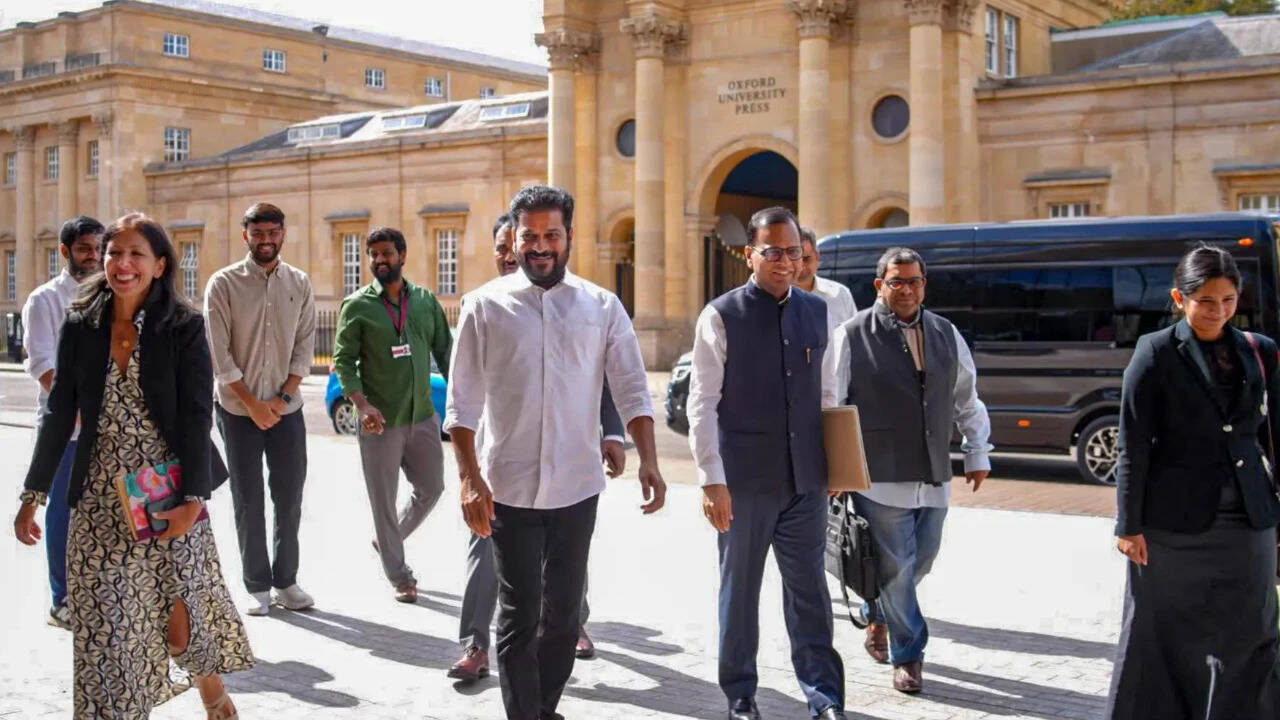
Telangana Chief Minister Revanth Reddy's planned visit to the United States has been denied permission by the Centre. The decision comes after reports emerged that Reddy had planned to meet with US leaders, including Vance and Mamdani, during his trip.
The Ministry of External Affairs (MEA) stated that the proposed program was not suitable for an official visit by the Chief Minister. Reddy is currently in the United Kingdom, where he is meeting with educational institutions.
The denial of permission has been criticized by Reddy's deputy, who termed the move as unfortunate and politically motivated. The deputy's statement suggests that the Centre's decision may have been driven by political considerations rather than a genuine concern about the appropriateness of the visit.
The MEA's decision to deny permission for Reddy's visit is likely to be seen as a significant development in the context of Centre-state relations. The Centre has the authority to approve or reject the foreign travel plans of state chief ministers, and the denial of permission in this case may be perceived as an assertion of this authority.
Revanth Reddy's visit to the US was likely to be seen as an opportunity for him to engage with US leaders and promote the interests of Telangana. The state has been actively seeking to attract foreign investment and promote its industrial and economic development, and a visit to the US could have been an important step in this direction.
The denial of permission for Reddy's visit may also be seen as a reflection of the Centre's concerns about the activities of state chief ministers on foreign soil. The Centre may be seeking to ensure that state chief ministers do not engage in activities that could be perceived as inconsistent with the country's foreign policy or national interests.
In the context of Telangana, the denial of permission for Reddy's visit may be seen as a setback for the state's efforts to promote its economic and industrial development. The state has been seeking to attract foreign investment and promote its exports, and a visit to the US could have been an important step in this direction.
The development is also likely to have implications for Centre-state relations, particularly in the context of foreign travel by state chief ministers. The Centre's decision to deny permission for Reddy's visit may be seen as an assertion of its authority, and may lead to further debates and discussions about the role of the Centre in regulating the foreign travel plans of state chief ministers.
In conclusion, the denial of permission for Revanth Reddy's US visit is a significant development that reflects the complexities of Centre-state relations in India. The decision may have implications for the state's economic and industrial development, and may also lead to further debates and discussions about the role of the Centre in regulating the foreign travel plans of state chief ministers.
The Centre's decision to deny permission for Reddy's visit may also be seen as a reflection of the political tensions between the Centre and the state government. The deputy's statement criticizing the denial of permission as unfortunate and politically motivated suggests that the decision may have been driven by political considerations rather than a genuine concern about the appropriateness of the visit.
Overall, the development highlights the need for greater clarity and transparency in the regulation of foreign travel by state chief ministers. It also underscores the importance of effective Centre-state relations in promoting the economic and industrial development of states like Telangana.
The denial of permission for Revanth Reddy's US visit is likely to be a major talking point in the coming days, with implications for Centre-state relations and the economic development of Telangana. As the situation unfolds, it will be important to watch how the Centre and the state government respond to the development, and what implications it may have for the future of foreign travel by state chief ministers.
The development may also lead to a re-evaluation of the Centre's policies and guidelines for regulating the foreign travel plans of state chief ministers. The Centre may need to clarify its stance on what constitutes an appropriate program for an official visit, and what activities are permissible for state chief ministers on foreign soil.
In the meantime, Revanth Reddy's visit to the UK continues, with the Chief Minister engaging with educational institutions and promoting the interests of Telangana. The visit may provide an opportunity for Reddy to build relationships with UK leaders and promote the state's economic and industrial development, despite the setback of the denied US visit.
The Centre's decision to deny permission for Reddy's US visit may have significant implications for the future of foreign travel by state chief ministers. As the situation unfolds, it will be important to watch how the Centre and the state government respond to the development, and what implications it may have for the economic development of Telangana and other states.
What it means for Mumbai or India is that the Centre's decision to deny permission for Revanth Reddy's US visit reflects the complexities of Centre-state relations and the need for greater clarity and transparency in the regulation of foreign travel by state chief ministers. The development may have implications for the economic development of states like Telangana, and may also lead to further debates and discussions about the role of the Centre in regulating the foreign travel plans of state chief ministers.
Frequently asked questions
Why was Revanth Reddy's US visit denied permission?
The Centre denied permission for Revanth Reddy's US visit because the proposed program was deemed inappropriate for an official visit.
What were the implications of the denial of permission for Revanth Reddy's US visit?
The denial of permission for Revanth Reddy's US visit may have implications for the economic development of Telangana and may also lead to further debates and discussions about the role of the Centre in regulating the foreign travel plans of state chief ministers.