
Dadar Food Trail: Marathi Snacks & Sweet Shops
Dadar's Marathi food trail: misal and thalipeeth at Aaswad, sabudana vada and piyush at Prakash, sweets at Panshikar — with route, timings and ₹ prices.
'%3E%3Crect%20width%3D'96'%20height%3D'96'%20fill%3D'%23E65100'%2F%3E%3Ccircle%20cx%3D'30'%20cy%3D'24'%20r%3D'44'%20fill%3D'%23fff'%20opacity%3D'.12'%2F%3E%3Ccircle%20cx%3D'60'%20cy%3D'74'%20r%3D'40'%20fill%3D'%23000'%20opacity%3D'.10'%2F%3E%3C%2Fg%3E%3Cg%3E%3Ccircle%20cx%3D'48'%20cy%3D'48'%20r%3D'15'%20fill%3D'none'%20stroke%3D'%23fff'%20stroke-width%3D'3'%2F%3E%3Cpath%20fill%3D'%23fff'%20d%3D'M48%2037%20l3.5%2011%20-3.5%2011%20-3.5%20-11%20z'%2F%3E%3Ccircle%20cx%3D'48'%20cy%3D'48'%20r%3D'2.2'%20fill%3D'%23fff'%2F%3E%3C%2Fg%3E%3C%2Fsvg%3E)
The Top 10
- 01
Aaswad
Shivaji Park (Gadkari Chowk), Dadar West ₹300–500 for two (approx.)Go for: Award-winning misal pav, thick yellow piyush, thalipeeth and kothimbir vadi — the definitive pure-veg Maharashtrian anchor of the trail.
Go on the earlier side and be ready to share a table; queues build fast and lingering after eating is discouraged.
- 02
Prakash Shakahari Upahaar Kendra
Gokhale Road, near Shivaji Park, Dadar West ₹250–450 for two (approx.)Go for: Legendary piyush (available in half portions), giant batata vada with peanut chutney, sabudana vada and thalipeeth.
Carry cash — it's a cash-only, no-cards/UPI old-school joint; best for a mid-morning breakfast.
- 03
Mama Kane Swachha Upahar Griha
Opposite Dadar Station (West) ₹150–300 for two (approx.)Go for: Century-old (est. ~1910), one of Mumbai's earliest batata-vada spots; misal, kothimbir vadi and traditional sherbets.
A no-frills heritage stop — come for a quick authentic breakfast rather than ambience.
- 04
Tambe Arogya Bhuvan
Dadar West (near Ranade Road) ₹150–300 for two (approx.)Go for: The reputed birthplace of piyush (since 1941); also shrikhand, misal, sabudana vada and kanda pohe.
Order the piyush here to taste the original, made with just nutmeg and saffron — no artificial colour.
- 05
Ashok Vada Pav
Near Kirti College, Dadar West / Prabhadevi ₹40–80 per plate (approx.), ₹Go for: Mumbai's most famous vada pav stall — vada in pav with three chutneys plus crunchy 'chura' batter bits.
It's a tiny roadside stall; visit in the evening, order the vada pav and eat standing — that's the whole experience.
- 06
Sindhudurg
Bylane behind Sena Bhavan, Shivaji Park, Dadar West ₹600–900 for two (approx.)Go for: Fresh, no-nonsense Malvani-Konkani seafood — fish thali, tawa-fried surmai, prawns and sol kadhi.
Come hungry and order the surmai fry with a Malvani thali; plain interiors but fast service and great value.
- 07
Gypsy Chinese
Maryland Corner, Keluskar Marg, Shivaji Park, Dadar West ₹600–800 for two (approx.), ₹₹Go for: Iconic old-school Indian-Chinese (running since the early 1980s) — chicken lollipop, Schezwan preparations, fried rice and triple.
A nostalgic sit-down break from the veg-snack circuit; good for a heavier lunch or dinner on the trail.
- 08
Panshikar
Near Dadar Station (W) / Ranade Road, Dadar West ₹150–300 for two (approx.)Go for: Long-standing Maharashtrian snacks-and-sweets house — batata vada, sabudana vada, Puneri misal with masala milk, plus pedha and shrikhand.
Great for picking up Diwali faral and packaged snacks to take away, alongside a quick bite.
- 09
Chitale Bandhu Mithaiwale
Ranade Road, Dadar West ₹ (priced by weight)Go for: Famous Maharashtrian mithai and namkeen — bakarwadi, pedha, shrikhand and seasonal sweets.
Mainly a take-away counter; grab their signature bakarwadi to snack on as you walk the trail.
- 10
Amar Juice Centre
Dr. Ambedkar Road, Dadar East ₹200–400 for two (approx.)Go for: Popular quick-bite stop for grilled cheese sandwiches, pav bhaji, milkshakes and fresh juices.
Handy cool-down/refuel point on the Dadar East side — order a thick shake with a grilled sandwich.
Ranked by our Mumbai desk · prices are approximate — confirm before you go.
The short version: Dadar is Mumbai’s Marathi heartland, and a tight, walkable loop around Shivaji Park lets you eat the classics at their source — hot misal and thalipeeth at Aaswad, the city’s most talked-about sabudana vada and creamy piyush at Prakash, and traditional sweets from a Panshikar counter. Go mid-morning or early evening, come hungry, and keep some cash on you; almost nothing here costs much more than a couple of hundred rupees.
Most Mumbai food trails send you chasing a single dish across the city — a vada pav in one suburb, a kebab in another, a bhel by the sea. Dadar does the opposite. It puts an entire cuisine within a few hundred metres of itself. This is the neighbourhood where Marathi Mumbai still eats the way it always has: standing at a crowded counter, sharing a table with strangers, working through a plate of misal before the queue gets impatient. West of the station, in the streets that fan out from Shivaji Park, sits a cluster of institutions that have fed this cuisine to the city for decades. This guide walks you between them — slowly, and in the right order.
The trail at a glance
Before you set off, here is the whole loop on one screen. Treat the price bands as honest ranges rather than fixed rates — they move with the season, and sweets are often sold by weight.
| Stop | Where | Order this | Price band (per plate) | Best for |
|---|---|---|---|---|
| Aaswad | LJ Road, near Gadkari Chowk, Shivaji Park | Misal pav, thalipeeth, kothimbir vadi | ₹100–₹200 | The full Marathi spread, sit-down |
| Prakash | Dadar West | Sabudana vada, piyush | ₹80–₹180 | The single-dish pilgrimage |
| Panshikar | Near Dadar station / around the city | Puran poli, modak, chikki, kokum sarbat | Sold by weight/piece | Sweets and festive faral to carry home |
Read left to right and you have the natural rhythm of the morning: a savoury sit-down, a crisp fried interlude with a cooling drink, and a sweet finish you can eat now or box up for later. Roughly ₹500 to ₹700 covers two people eating generously across all three — part of what makes Dadar such a forgiving place to be greedy.
Why Dadar is the place to eat Marathi
Plenty of Mumbai neighbourhoods have a good misal joint. Dadar has a whole ecosystem. This is historically the cultural core of Marathi Mumbai — the Shivaji Park maidan where generations learned cricket, the flower market that opens before dawn, the Marathi theatres, the bookshops on Ranade Road, the political and literary energy that has always concentrated here. The food follows the culture. The eateries around the park are not curated for tourists; they are everyday canteens feeding office-goers on their way to the station, students, morning walkers coming off the maidan, and families who have eaten at the same table for two generations.
What that means for you is simple and reassuring. The food is honest, quick and cheap. The portions are built for real appetites, not for photographs. And the specialities are the genuine Maharashtrian repertoire — the dishes a Marathi household actually cooks — rather than a five-star hotel’s polished, sweetened version of them. The core vocabulary you will meet again and again is misal pav, thalipeeth, sabudana vada, kothimbir vadi, batata vada, and the drink that ties the whole trail together — piyush. Learn those six words and you can order confidently at any counter in the neighbourhood.
There is also a rhythm to how locals eat here worth borrowing. Nobody sits down to a single enormous meal — they graze, a plate of misal on the way in, a vada standing up, a piyush before the walk home. That habit is exactly what a food trail is, which is why Dadar takes to one so naturally.
Getting your bearings around Shivaji Park
The trail lives on the west side of Dadar station, so orient yourself the moment you step out of the Dadar West exit. The landmark that anchors everything is Shivaji Park itself, the big open maidan a short auto ride or brisk walk from the station. Around its edges run the roads that hold the eateries — Lady Jamshedji (LJ) Road, with Gadkari Chowk as a useful pin, and the lanes threading off towards Ranade Road and the old Portuguese Church quarter.
You do not need a precise map. Once you are in the Shivaji Park pocket the stops are close enough to walk between, and locals will happily point you the last hundred metres. If you arrive fresh and hungry, take an auto or taxi straight to the LJ Road / Gadkari Chowk area, eat your way through, then walk the loop back towards the station at your own pace. Do it outside rush hour and the streets are calm, shaded in patches, and pleasant to amble.
Aaswad: misal, thalipeeth and the full Marathi spread
Start at Aaswad, on LJ Road near Gadkari Chowk in the Shivaji Park area. It is one of the best-known Maharashtrian eateries in the city — a bright, busy, fully vegetarian spot that does the whole classic spread rather than specialising in one thing. Because it covers so much ground, it is the ideal first stop: you can survey the entire cuisine in a single sitting before you go looking for the specialists.
What to order first
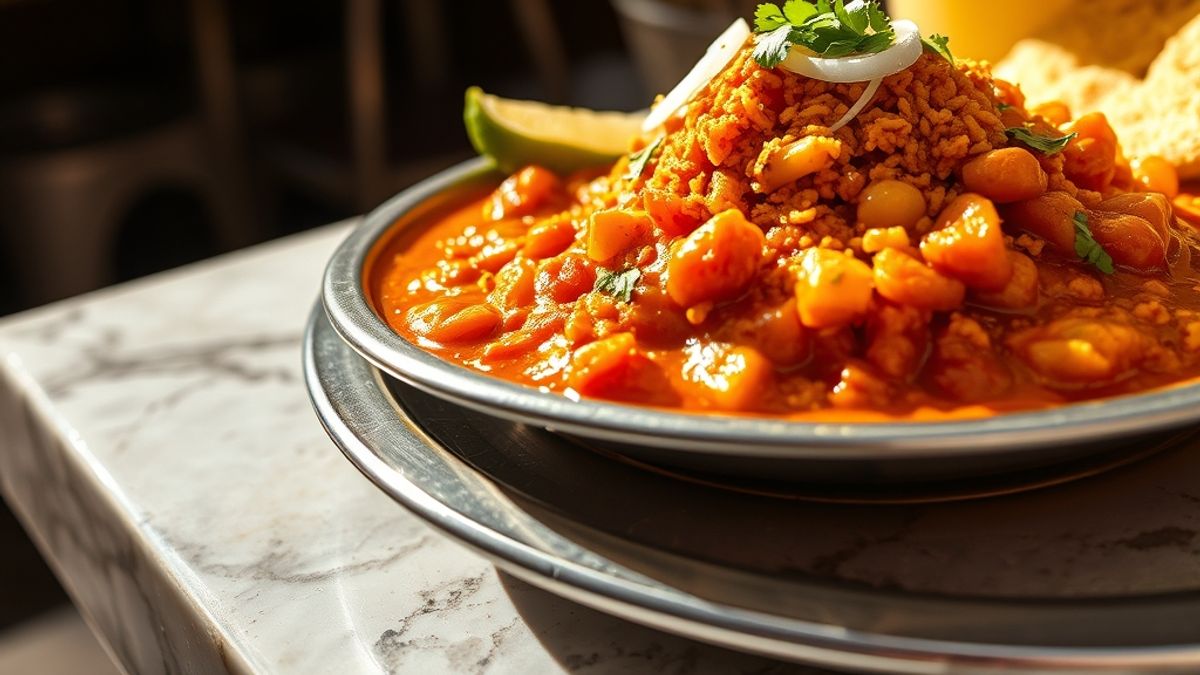
Come for the misal — the spicy sprouted-bean curry with its fiery rassa (the thin, red, oil-slicked gravy), topped with crunchy farsan, raw onion and coriander, and mopped up with soft pav. That is the dish the room revolves around, and it is the right thing to lead with. But do not stop there.
Thalipeeth, the rustic multi-grain griddle bread flecked with onion and spice and served with a melting knob of white butter, is a signature here and one of the most satisfying things on the menu — earthy, filling, a little smoky off the tawa. The kothimbir vadi (coriander-and-gram-flour cakes, steamed until set and then fried to a crisp edge) is exactly what it should be: fragrant, savoury, faintly nutty. And if you happen to visit in the mango months of April to June, the amras puri — a bowl of thick, cold Alphonso pulp with hot puris to tear and dip — is worth queueing for on its own merit, season permitting.
Practicalities
- Order this: misal pav, thalipeeth with butter, and kothimbir vadi to share between two.
- Rough price: individual plates typically land around ₹100–₹200; two people can eat well for roughly ₹300–₹400.
- Good to know: expect a wait and be ready to share a table. The turnover is fast, which is a good sign, not a bad one — it means the food is fresh and the kitchen is turning out plate after plate. It is fully vegetarian and does not serve alcohol. Go easy here if you intend to finish the trail; the temptation is to over-order at the first stop, and misal is deceptively filling.
Prakash: the sabudana vada and piyush pilgrimage
A short walk away is Prakash (Prakash Shakahari Upahaar Kendra) in Dadar West, one of the oldest Maharashtrian counters in the neighbourhood and, for a great many Mumbaikars, the definitive stop on any Dadar trail. Where Aaswad is a broad survey, Prakash is a specialist you make a detour for.
The two things that matter
Two dishes bring people here, and both deserve their reputation.
The first is the sabudana vada — sago pearls bound with mashed potato, crushed roasted peanuts and green chilli, then deep-fried into a shell that shatters over a soft, faintly sweet, peanut-studded centre. It arrives with a cooling peanut-and-yoghurt chutney that is half the pleasure. Regulars will tell you, with total and slightly territorial conviction, that this is the best sabudana vada in the city. You do not have to agree to see why they say it: the contrast of crackling crust and pillowy inside is genuinely hard to beat.
The second is piyush, a thick, pale, cardamom-scented drink built on shrikhand and yoghurt, lightly sweet and dense enough to coat a spoon. It sits somewhere between a lassi and a dessert, and it is the perfect foil to anything fried and salty. If you drink only one thing on this entire trail, drink this. It cools the palate after the misal’s chilli and the vada’s oil, and it doubles as a light pudding so you do not strictly need to reach the sweet counter — though you should anyway.
Practicalities
- Order this: sabudana vada and a glass of piyush. This one is non-negotiable.
- Rough price: snacks are modest, generally in the ₹80–₹180 band; a piyush is usually a little cheaper than a plate of food.
- Good to know: it is a compact, no-frills, cash-friendly place, and it can get tight at peak hours. Come off-peak if you dislike crowds — mid-morning, or the lull between the lunch and evening rushes, is calmest. Order at the counter, find a perch, and do not expect table service or ceremony; the whole appeal is that there is none.
Panshikar: sweets, faral and the Marathi mithai counter
To finish sweet, look for a Panshikar counter. This is a long-running Maharashtrian sweets-and-snacks name with roots near Dadar station and outlets dotted around the city, and it is the traditional place to pick up Marathi mithai and faral — the repertoire of festive snacks that a Maharashtrian household prepares by the tin for Diwali and other occasions.
What the counter holds
This is where you buy — or eat on the spot — the sweets that define a Maharashtrian festival table. Look for puran poli, the soft flatbread stuffed with a sweet lentil-and-jaggery filling, best eaten warm with a little ghee. Look for modak, the steamed or fried dumpling of coconut and jaggery that appears everywhere around Ganesh Chaturthi. There will be chikki in its various nutty, brittle forms, an assortment of barfi, and tubs of shrikhand, the strained, saffron-and-cardamom sweetened yoghurt that is the ancestor of the piyush you just drank.
Many of these counters also make their own piyush and cooling drinks like kokum sarbat — a tart, ruby, digestive cooler pressed from the kokum fruit, exactly what your body wants after a morning of fried snacks in Mumbai’s humidity. In festival season this is the moment to try seasonal specialities you will not easily find the rest of the year, because the counters cook to the calendar.
Practicalities
- Order this: a couple of pieces of puran poli or barfi to eat now, and a box of chikki or modak to carry home.
- Rough price: sweets are usually sold by weight or per piece, so cost scales with appetite; a small assorted box is genuinely inexpensive by Mumbai standards.
- Good to know: treat this as a takeaway-style counter rather than a sit-down meal — grab, pay, and either eat standing or bag it up. Sweet availability shifts with the season and the festival calendar, so the case you see in July will not be the case you see in September.
A field guide to what you’re eating
If the names are new, here is the shortlist worth building a plate around, so you order with intent rather than pointing hopefully at the counter:
- Misal pav — spicy sprouted-bean curry with its rassa, farsan and pav. The signature Marathi breakfast-cum-snack, and the dish the whole trail is built around. Ask for the rassa on the side if you want to control the heat.
- Sabudana vada — crisp sago-and-peanut fritters with a soft centre; a fasting-day classic that is eaten happily year-round.
- Thalipeeth — savoury multi-grain griddle bread, served with white butter; the most home-style, filling thing you will eat all morning.
- Kothimbir vadi — steamed-then-fried coriander and gram-flour cakes, fragrant and savoury, ideal for sharing.
- Batata vada — the spiced potato fritter in gram-flour batter that, in a pav, becomes the vada pav; a quick standing snack.
- Piyush — thick, cardamom-scented, shrikhand-based drink; the trail’s defining sip and its natural palate-cleanser.
- Puran poli / modak — the sweet finish, best sourced from a dedicated mithai counter rather than a snack kitchen.
You do not have to eat all of these in one visit. Treat the list as a menu to graze across, ordering one or two items per stop and sharing, so that by the time you reach the sweets you still have room to enjoy them.
Timing the trail: seasons, festivals and fasting days
Dadar rewards a little calendar awareness. The food is good all year, but certain windows are better than others.
The best time of day
Aim for mid-morning, roughly 9 to 11 am, for a proper breakfast run when the misal is freshest and the counters are lively but not overwhelmed. Early evening is the other sweet spot, good for snacks and a piyush as the neighbourhood winds down from work. The one window to avoid is the sharp 1 to 2 pm lunch peak, when every table is claimed and the queues stretch — unless queueing is your idea of a good time.
The best time of year
The mango months of roughly April to June unlock amras and amras puri, a genuine seasonal treat and reason enough to time a visit. The monsoon, from June into September, is when a hot plate of misal and a fried vada feel almost medicinal against the damp — just carry an umbrella.
And around September, Dadar’s sweet counters shift into overdrive for Ganesh Chaturthi, when modak is made by the thousand and the festive energy of the neighbourhood is at its peak. If you can align your trail with the festival, do — it is one of the great times to eat here, and we cover the wider celebration in our guide to Ganesh Chaturthi in Mumbai.
Fasting days
There is a quiet bonus to watch for. On Hindu fasting days — upvas — the fasting specials such as sabudana vada and sabudana khichdi are made in larger quantities and turned over faster, which means they are at their freshest and most plentiful. If you see the counter busy with regulars ordering sabudana, that is your cue to do the same.
Ground rules for a good trail
A few practical habits separate a happy Dadar morning from an over-stuffed, over-heated one:
- Pace it, don’t feast it. This is grazing, not a single sitting. Order one or two things at each stop and share, so you can actually reach the sweet counter with room to spare rather than surrendering halfway.
- Carry cash. The older counters are cash-friendly and quick, and small notes save you time in a fast-moving queue. Digital payment is increasingly accepted, but never assume it at the smallest, oldest places.
- Go where the locals are. If you have a delicate stomach, stick to the busiest counters with the fastest turnover — high volume means high freshness. Go easy on the spice, and ask for the rassa on the side if you are unsure of your tolerance.
- Respect the queue. Turnover is the whole system here — order decisively, eat at a reasonable pace, and free the table.
- Come thirsty for piyush, not just food. The drink is not an afterthought; it is what makes the fried, spicy procession feel balanced. Build at least one into your plan.
How to get there and what to pair it with
Dadar is one of the easiest neighbourhoods in the city to reach, which is half the reason this trail is so doable.
- By train: Dadar is a major junction on both the Western and Central lines, so it connects to almost everywhere in the metropolitan region. The Shivaji Park cluster is on the west side — leave from the Dadar West exit and it is a short walk or a very quick auto or taxi ride toward LJ Road and Gadkari Chowk.
- On foot: once you are in the Shivaji Park area, the stops are close enough to walk between, which is the entire point of a trail. Wear comfortable shoes and let the maidan be your compass.
- Pair it up: you can easily fold this into a wider Mumbai street-food day, using Dadar as the sit-down Marathi anchor before you head elsewhere for the chaat and the sea-facing bhel. And if you want more of the same sweet register across the city — the mithai, the barfi, the seasonal specials — see our guide to desserts and mithai in Mumbai.
Do Dadar slowly and you will understand something the flashier food trails miss. Mumbai’s Marathi kitchen is not a novelty put on for visitors — it is the everyday, the food people here grew up on and still queue for on a Tuesday morning. And a few hundred walkable metres around Shivaji Park is where it is cooked best.
Frequently Asked Questions
What is Dadar famous for eating?
Dadar is Mumbai's heartland for authentic Maharashtrian food — misal pav, thalipeeth, sabudana vada, kothimbir vadi and the drink piyush — mostly clustered around Shivaji Park in Dadar West. The neighbourhood is also the go-to for traditional Marathi sweets like puran poli, modak and chikki. Because the classic eateries sit within a short, walkable loop, it works especially well as a food trail rather than a single meal.
Where can I get the best sabudana vada and piyush in Dadar?
Prakash (Prakash Shakahari Upahaar Kendra) in Dadar West is the spot most Mumbaikars point to for sabudana vada and piyush, and it is one of the oldest Maharashtrian counters in the area. The sabudana vada is crisp outside with a soft, peanut-studded centre, served with a cooling peanut-yoghurt chutney, while the piyush is a thick, cardamom-scented shrikhand-based drink. For the broader spread of misal, thalipeeth and kothimbir vadi, Aaswad near Shivaji Park is the place to start.
What is the nearest station to the Dadar food trail?
Dadar station is the nearest stop and a major junction on both the Western and Central railway lines, so it connects to almost everywhere in the city. The eateries sit on the west side — take the Dadar West exit and head toward the Shivaji Park and LJ Road area near Gadkari Chowk. From there the stops are close enough to walk between, or a very short auto ride away.
Is the Dadar food trail vegetarian?
Yes, the core Dadar Marathi trail is almost entirely vegetarian. Aaswad is a fully vegetarian eatery that does not serve alcohol, and Prakash and the Panshikar sweet counters are vegetarian too. The signature dishes — misal, thalipeeth, sabudana vada, kothimbir vadi and the sweets — are all meat-free, which makes it an easy trail for vegetarians to enjoy.
What is the best time of day to do the Dadar food trail?
Aim for mid-morning, roughly 9 to 11 am, for a fresh breakfast run when the misal is at its best, or early evening for snacks and a piyush. Avoid the sharp 1 to 2 pm lunch peak, when tables are hard to find and the queues stretch. Going off-peak also means calmer counters, so you can graze slowly and still have room for the sweet stop.
How much does the Dadar food trail cost?
It is one of the cheapest food outings in Mumbai. Individual plates generally run about ₹80 to ₹200, and two people can eat generously across all three stops for roughly ₹500 to ₹700, with sweets sold by weight or per piece. Carry small notes in cash, since the older counters are quick and cash-friendly, though many now also accept digital payment.