

Starring
About the film
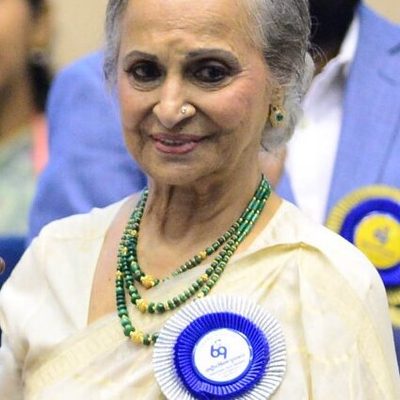
Jayasimha is a 1955 Indian Telugu-language swashbuckler film directed by D. Yoganand and written by Samudrala Jr. It was produced by N. T. Rama Rao and his brother N. Trivikrama Rao for their production company National Art Theatre. The film features Rama Rao playing the eponymous protagonist along with Anjali Devi and Waheeda Rehman (making her debut as an actress in Indian cinema) in the lead roles, supported by an ensemble cast of S. V. Ranga Rao, Kantha Rao, Gummadi, Relangi and Rajanala Kaleswara Rao.
Inspired from the Telugu novel Veera Pooja, the film tells the story of Jayasimha (played by Rama Rao), the crown prince of Malawa kingdom who escapes assassination attempts from his uncle Rudrasimha (Ranga Rao), who wishes to ascend the throne as the next king. Jayasimha leaves Malawa assuming a new identity and leads the life of a soldier in Magadha kingdom, falling in love with its princess Padmini (Waheeda) and befriending Kalindi (Anjali Devi), the daughter of an old disabled general Ranadheer (Gummadi). The rest of the film focuses on the aftermath of Rudrasimha finding out Jayasimha's new life in Magadha and seeking his life.
Plot
The film begins in the Malwa kingdom, whose ruler Amarasimha, while ailing, entrusts Prince Jayasimha's liability to his sibling Rudrasimha & his benevolent wife, Durgadevi. However, the spiteful Rudrasimha always urges for the throne. Durgadevi raises Jayasimha under the light of love with her son Vijayasimha, who is devoted to his brother. Years pass, Jay & Vijay turn into gallants, and it is time to crown him. It begrudges Rudrasimha, who ruses to assassinate Jayasimha. Being conscious of it, Jayasimha silently quits the Kingdom, surrendering it to his uncle. Yet, Rudrasimha commissions his henchman Chandrasena, determining that no enemy should be left. Vijay learns of his father's plot and walks to shield his brother.
Meanwhile, in the forest of the Magadha kingdom, Jayasimha secures Princess Padmini from the dacoits when they crush. He is introduced as Bhavani Prasad and moves into their Kingdom. Therein, an old disabled general, Ranadheer, shelters him and befriends his son Budhimathi, & daughter Kalindi. Currently, their country is facing a gigantic battle with bandits' rebellion, who captured Emperor Raghuveer. Jayasimha proceeds to the fortress; with the aid of Padmini, he enrolls in the army and safeguards the King. Ergo, he has given with the great honor of a satrap. Here, the commander-in-chief, Mahaveer, is enraged at Jayasimha's big hit and Pamini's endearment towards him. Parallelly, Kalindi also falls for Jayasimha and, thus, creates a rift between him & Padmini to win her love. Later, she regrets that Jayasimha considers her a sibling.
Chandrasena then tracks down Jayasimha's whereabouts, who mingles with Mahaveer and abducts him with Padmini. Kalindi follows the duo and safeguards them by sacrificing her life. Besides, Mahaveer forcibly conspires to knit Padmini when Jayasimha assaults him. Unfortunately, the miscreants capture Jaya Simha when a man with a veil protects them, and Jayasimha kills Mahaveer. Now, Rudrasimha is about to onset on Magadha when Durgadevi bars him, but he deafens his ears by shooting her down. Jayasimha alone enters the battlefield and bows his head before his uncle. On the verge of Rudrasimha slaying him, the man in the veil stabs him. As a flabbergast, he uncovers him as Vijayasimha. At last, remorseful Rudrasimha pleads pardon from Jay & Vijay. Finally, the movie ends happily with Jayasimha's crowing ceremony.
Production
N. T. Rama Rao was depressed because of the commercial failure of his previous film Thodu Dongalu (1954), which he produced along with his brother N. Trivikrama Rao and Atluri Pundarikakshayya. The failure prompted Rama Rao to contemplate quitting film production, until Trivikrama Rao and Pundarikakshayya convinced him to try making a swashbuckler film rooted in folklore. The financial success of Pathala Bhairavi (1951), Chandirani (1953) and Rechukka (1954)—all starring Rama Rao in the lead role and set in the same genre—further influenced their decision. Most of the principal crew of Thodu Dongalu, including its director D. Yoganand and writer Samudrala Jr., were retained for this film. Rama Rao advised Samudrala Jr. to loosely adapt the novel Veera Pooja. However, the same was not acknowledged in the film's credits.
The film was titled Jayasimha and was produced for Rama Rao's production company National Art Theatre. While Rama Rao decided to play the eponymous protagonist, Anjali Devi and Waheeda Rehman were cast as the female leads Kalindi and Padmini respectively. Jayasimha was Waheeda's debut as an actress, after her cameo appearances in Kanyadanam (1954) and Rojulu Marayi (1955); she was trained by Pundarikakshayya himself and her lines were dubbed by Sowcar Janaki. For the role of Vijayasimha, Jayasimha's brother, the makers approached Akkineni Nageswara Rao who could not accept the offer because of scheduling conflicts. Jaggayya was considered, but Gummadi (who was cast as Ranadheer, Kalindi's father) recommended Kanta Rao for the role. Rama Rao agreed, and this was Kanta Rao's second collaboration with the former after Vaddante Dabbu (1954). S. V. Ranga Rao, Rajanala Kaleswara Rao and Relangi were cast in key supporting roles. Anjali Devi was given the top billing in the film's opening credits and the song books, and was succeeded by Rama Rao and Ranga Rao.
Key details
| Release year | 1955 |
|---|---|
| Language | Hindi |
| Director | D. Yoganand |
| Writer | Samudrala Jr. It |
| Starring | Waheeda Rehman |
Frequently Asked Questions
When was Jayasimha released?
Jayasimha is a Hindi-language film released in 1955, directed by D. Yoganand.
Who directed Jayasimha?
Jayasimha was directed by D. Yoganand, with the screenplay by Samudrala Jr. It.
Who stars in Jayasimha?
Jayasimha stars Waheeda Rehman.
What is Jayasimha about?
Jayasimha is a 1955 Indian Telugu-language swashbuckler film directed by D. Yoganand and written by Samudrala Jr.
Where can I watch Jayasimha?
Jayasimha may be available on major streaming platforms or for digital rental — check current OTT listings for availability in your region.
Reference: Wikipedia
← Back to the Bollywood Hub