

Starring
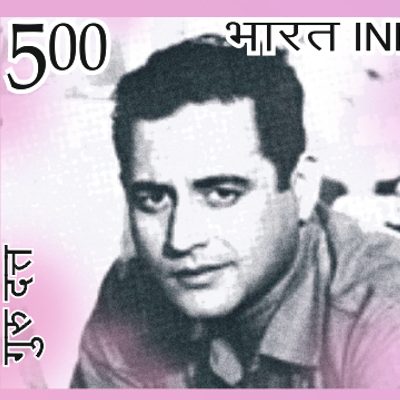
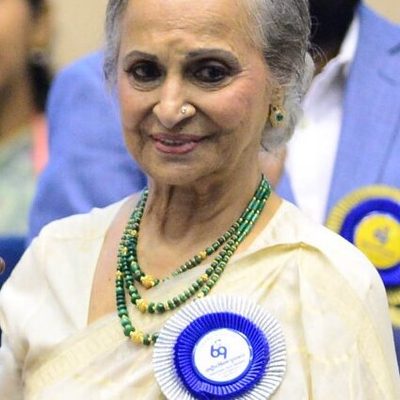
The story
Kaagaz Ke Phool ("Paper Flowers") follows Suresh Sinha, a celebrated film director at the height of his powers whose personal life is quietly collapsing. Estranged from a wife whose aristocratic family looks down on cinema as a disreputable trade, and separated from his young daughter Pammi, Sinha finds unexpected companionship in Shanti, a woman he meets by chance and then transforms into a screen star. As her fame rises, gossip and the pressures of respectability force the two apart.
Told largely in flashback, the film charts Sinha's slow ruin — the fading of his talent, his slide into drink and irrelevance, and a final, desolate return to the empty studio where he once reigned. It is a melancholy meditation on fame, artistic loneliness and the disposability of even the most adored figures, the "paper flowers" of the title. Guru Dutt plays Sinha himself, opposite Waheeda Rehman as Shanti.
Making the film: India's first CinemaScope
Kaagaz Ke Phool holds a permanent place in film history as the first Indian feature shot in CinemaScope, the wide-screen anamorphic format. Guru Dutt imported the special lenses from 20th Century Fox and paid royalties for their use, gambling on scale and spectacle to match his ambitions. The gamble was artistically triumphant even as it proved commercially disastrous.
The film's visual reputation rests heavily on cinematographer V.K. Murthy, who won the Filmfare Award for Best Cinematographer for his work here. Murthy exploited the wide frame and deep studio shadows to create some of the most celebrated black-and-white imagery in Indian cinema. Art director M.R. Acharekar, who built the cavernous studio sets, also took home a Filmfare Award, and the screenplay was written by Guru Dutt's long-time collaborator Abrar Alvi.
Music
S.D. Burman composed the score, with lyrics largely by Kaifi Azmi (Shailendra contributed as well). The film's immortal song is "Waqt Ne Kiya Kya Haseen Sitam," sung by Geeta Dutt — Guru Dutt's wife — a haunting lament that has become one of the most cherished melodies in Hindi film history.
Its picturisation is as famous as the tune. In the shot, a shaft of light slices across the darkened studio to fall on the two figures below; Murthy created the beam by bouncing sunlight off large mirrors into the sound stage, a piece of improvised ingenuity that is still studied in film schools. Songs and their staging are a large part of why the film was rediscovered and revered.
Failure — and the fall of Guru Dutt
On release in early 1959, Kaagaz Ke Phool was a resounding flop, rejected by audiences who could not warm to its bleak, self-reflexive theme. The failure was financially and personally devastating: it pushed Guru Dutt's studio to the brink and wounded the director deeply. So bruised was he that it became the last film he officially directed under his own name — his later productions, including Sahib Bibi Aur Ghulam, credited others, though his hand is widely felt in them.
The parallels between the doomed Suresh Sinha and Guru Dutt himself have haunted the film's legend. S.D. Burman is said to have warned Dutt against making a story so close to his own life. Guru Dutt died in 1964 at just 39, a death long linked in the popular imagination to the despair the film seemed to foretell — though Waheeda Rehman later cautioned against reading it as literal autobiography, noting Dutt never suffered the professional collapse his character does.
Legacy: a paper flower that never wilted
Rejected in its day, Kaagaz Ke Phool was resurrected as a cult classic in the 1980s and is now routinely ranked among the greatest films India has ever produced. Critics and scholars treat it as a landmark of self-reflexive cinema, often mentioning it in the same breath as Fellini's 8½, and it has appeared on international lists including Sight & Sound's critics' poll and the British Film Institute's ranking of the finest Indian films.
Its afterlife stretches into the present: the 2022 Hindi thriller Chup: Revenge of the Artist is built explicitly around the film and its ill-fated reception, a tribute to a work whose reappraisal has itself become part of Indian cinema lore. What audiences dismissed as a director's indulgent misfire is now embraced as his masterpiece.
Key details
| Release year | 1959 |
|---|---|
| Language | Hindi |
| Director | Guru Dutt |
| Writer | Kaifi Azmi |
| Genre | Drama |
| Starring | Guru Dutt, Waheeda Rehman |
Did you know?
- It was the first Indian film shot in CinemaScope; Guru Dutt imported the anamorphic lenses from 20th Century Fox and paid royalties to use them.
- The famous shaft of light in "Waqt Ne Kiya Kya Haseen Sitam" was not a lamp — cinematographer V.K. Murthy created it by bouncing sunlight off large mirrors into the darkened studio.
- Stung by the film's failure, Guru Dutt never again took a directorial credit under his own name, even though he is widely believed to have directed later films like Sahib Bibi Aur Ghulam.
- The signature song was sung by Geeta Dutt, Guru Dutt's own wife, and remains one of the most beloved melodies in Hindi cinema.
- Composer S.D. Burman reportedly warned Guru Dutt against making the film because its story of a ruined artist mirrored his own life too closely.
- V.K. Murthy won the Filmfare Award for Best Cinematographer and M.R. Acharekar won Best Art Direction, even as the film bombed commercially.
Frequently Asked Questions
Is Kaagaz Ke Phool based on Guru Dutt's real life?
The film's story of a great director's decline has long been read as semi-autobiographical, and S.D. Burman is said to have warned Dutt that it hit too close to home. However, Waheeda Rehman later disputed a literal reading, pointing out that Guru Dutt never suffered the professional collapse his character does. The eerie parallels grew in the popular imagination after Dutt's early death in 1964.
Why did Kaagaz Ke Phool fail at the box office?
Released in 1959, the film was a commercial disaster because audiences could not connect with its bleak, introspective theme of an artist's ruin. Its failure was severe enough to push Guru Dutt's studio toward financial crisis and to discourage him from directing under his own name again. It was only rediscovered and celebrated as a masterpiece decades later, becoming a cult classic in the 1980s.
Was Kaagaz Ke Phool really India's first CinemaScope film?
Yes. It is recognised as the first Indian feature shot in the widescreen CinemaScope format, with Guru Dutt importing the special lenses from 20th Century Fox and paying royalties for their use. Cinematographer V.K. Murthy used the wide frame to create some of the most admired black-and-white imagery in Indian cinema.
Who sang "Waqt Ne Kiya Kya Haseen Sitam"?
The song was sung by Geeta Dutt, who was Guru Dutt's wife, and composed by S.D. Burman. It has become one of the most cherished songs in Hindi film history, as famous for its melody as for its striking picturisation with a beam of light cutting across a darkened studio.
Did Guru Dutt direct any films after Kaagaz Ke Phool?
It was the last film Guru Dutt officially directed under his own name. Devastated by its failure, he handed directorial credit to others on subsequent projects such as Sahib Bibi Aur Ghulam, though many believe he effectively directed them himself. He died in 1964 at the age of 39.
Why is Kaagaz Ke Phool considered a classic today?
Though rejected on release, the film is now regarded as one of the finest and most influential works in Indian cinema, admired for V.K. Murthy's cinematography, S.D. Burman's music and its pioneering self-reflexive storytelling. Critics often compare it to Fellini's 8½, and it has featured on international lists from Sight & Sound and the British Film Institute. Its legend continues, notably inspiring the 2022 film Chup: Revenge of the Artist.
Reference: Wikipedia
← Back to the Bollywood Hub