

Starring
The story
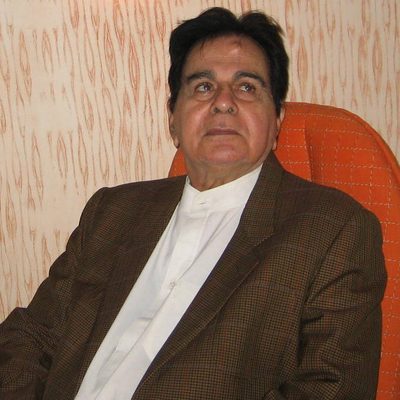
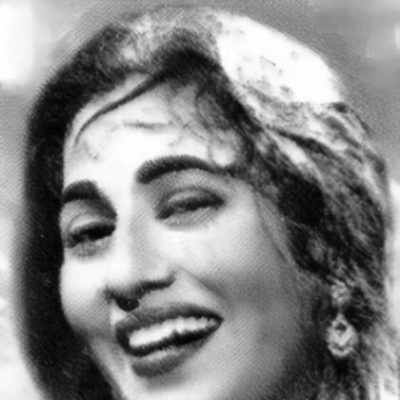
Mughal-e-Azam ("The Great Mughal") is a 1960 Indian historical romance produced and directed by K. Asif, adapted from Imtiaz Ali Taj's 1922 Urdu play Anarkali. Set in the court of Emperor Akbar (who reigned 1556-1605), it follows the rebellious Prince Salim (Dilip Kumar), heir to the Mughal throne, who falls for Anarkali (Madhubala), a court dancer of common birth. Emperor Akbar (Prithviraj Kapoor) forbids the match, and the collision of a father's imperial duty with a son's defiant love pushes the couple, and the empire, toward tragedy.
At its heart the film is exactly what our editors call it: the grand epic of doomed love. Around the central romance it stages the wider drama of power, honour and rebellion, with Durga Khote as Jodha Bai (Empress Mariam-uz-Zamani), Salim's mother, torn between her husband's crown and her son's happiness. It is a legend rather than documented history, told on the scale of a state occasion.
Sixteen years in the making
Few films had a longer road to the screen. K. Asif began developing the project in 1944 and actually shot a version in 1946 with an entirely different cast, only for the 1947 Partition to scatter the production when its financier migrated to Pakistan. Asif restarted in the early 1950s with Prithviraj Kapoor, Dilip Kumar and Madhubala, and the shooting stretched across nearly a decade of perfectionism before the 1960 release.
The spending was legendary. With a budget of about 1.5 crore rupees, Mughal-e-Azam was the most expensive Indian film made up to that point. Its most famous set, the Sheesh Mahal or Palace of Mirrors, was an enormous studio recreation inspired by the real hall in Lahore Fort, fitted with countless tiny mirrors of Belgian glass. Stories from the shoot are part of the film's mythology: Prithviraj Kapoor reportedly wore crushingly heavy costumes and walked barefoot on hot sand for Akbar's desert scenes.
The music
The score, composed by Naushad with lyrics by Shakeel Badayuni, is one of the pillars of the film's reputation. Its twelve songs draw on classical and semi-classical Hindustani traditions and were voiced by playback greats including Lata Mangeshkar, Mohammed Rafi and Shamshad Begum. In a coup that stunned the industry, Asif also persuaded the reclusive classical maestro Ustad Bade Ghulam Ali Khan, who almost never sang for films, to lend his voice to the soundtrack.
The centrepiece is Lata Mangeshkar's "Pyar Kiya To Darna Kya" ("Why be afraid when we are in love"), Anarkali's open, defiant declaration of love before the emperor's court. Filmed in Technicolor inside the mirrored Sheesh Mahal while most of the film remained black-and-white, the sequence has become one of the most recognisable images in Indian cinema.
Performances and dialogue
The acting is anchored by Prithviraj Kapoor's thunderous, granite Akbar, an emperor whose authority and inner conflict fill the frame, played against Dilip Kumar's deliberately restrained, smouldering Salim. Madhubala's Anarkali carries the emotional weight of the film, moving between fragility and quiet steel; the role is often regarded as the defining performance of her career.
The film is also celebrated for its ornate Urdu dialogue, written by a team of writers, which lends the court scenes a formal grandeur that fans still quote. It is worth noting that Dilip Kumar and Madhubala were romantically involved during the long production, and their off-screen bond is frequently credited for the charged intimacy of their scenes together, even as the relationship reportedly came apart around the time of filming.
Legacy
Mughal-e-Azam was a colossal commercial success, widely reported to have grossed around 11 crore rupees worldwide and holding the record as Hindi cinema's biggest earner until Sholay in 1975; adjusted for inflation it remains among the highest-grossing Indian films of all time. It won the National Film Award for Best Feature Film in Hindi and Filmfare Awards including Best Film.
Its afterlife has been just as remarkable. In 2004 it became the first Indian black-and-white feature to be fully digitally colourized and given a theatrical re-release, introducing the epic to a new generation, and it was later reimagined as a lavish stage musical. More than six decades on, it is routinely ranked among the greatest films ever made in India, a benchmark for scale, romance and spectacle that later epics are still measured against.
Key details
| Release year | 1960 |
|---|---|
| Language | Hindi |
| Director | K. Asif |
| Genre | Historical Romance |
| Starring | Prithviraj Kapoor, Dilip Kumar, Madhubala |
Did you know?
- Development began in 1944, and K. Asif first shot the film in 1946 with a completely different cast (including Chandra Mohan, Nargis and D.K. Sapru) before the 1947 Partition halted it; the finished film did not reach cinemas until 1960, roughly sixteen years after Asif read the source play.
- Only part of the film was shot in colour. The "Pyar Kiya To Darna Kya" number was filmed in Technicolor while the rest stayed black-and-white, and in 2004 the entire film was digitally colourized and re-released, a first for Indian cinema.
- The Sheesh Mahal (Palace of Mirrors) set was built with countless small mirrors of Belgian glass and is one of the most famous sets in Indian film history; the mirrored song sequence alone is said to have cost close to 1 crore rupees, a fortune for the era.
- Classical vocalist Ustad Bade Ghulam Ali Khan, who rarely recorded for films, was coaxed into singing for the soundtrack for a fee considered extraordinary at the time, a mark of how far K. Asif would go for prestige.
- With a budget of roughly 1.5 crore rupees, Mughal-e-Azam was the most expensive Indian film made up to that point, and its box-office record stood unbeaten until Sholay in 1975.
- Prithviraj Kapoor reportedly endured heavy costumes and walked barefoot across hot desert sand for Akbar's penance scenes, suffering blisters to convey the emperor's suffering.
Frequently Asked Questions
Is Mughal-e-Azam based on a true story?
It is a dramatization built on legend rather than documented history. The romance between Prince Salim (the future Emperor Jahangir) and the courtesan Anarkali comes from folklore and Imtiaz Ali Taj's 1922 play Anarkali, and historians have found no firm evidence that Anarkali actually existed. Akbar and Salim were real Mughal figures, but their story here is largely fictionalized.
Why did Mughal-e-Azam take so long to make?
K. Asif started developing it in 1944 and shot an early version in 1946, but the 1947 Partition derailed the production when its financier migrated to Pakistan. He began again in the early 1950s with a new cast, and the enormous sets, huge crowd scenes and his perfectionism stretched filming across nearly a decade before the 1960 release.
Is the whole film in colour?
No. Originally only the song "Pyar Kiya To Darna Kya" was shot in colour, with the rest of the film in black-and-white. A fully colourized version was digitally created and released in theatres on 12 November 2004, making it the first Indian black-and-white feature to be colourized and re-released in cinemas.
Were Dilip Kumar and Madhubala really in love?
Yes, the two were romantically involved during the long shoot, and their real-life bond is often credited for the intensity of their scenes together. The relationship reportedly ended around the time of filming, amid a legal dispute involving her family, and they never worked together again afterwards.
How much did Mughal-e-Azam earn?
Reported figures vary, but it is widely cited as grossing around 11 crore rupees worldwide on a budget near 1.5 crore rupees. That made it Hindi cinema's biggest earner until Sholay in 1975, and adjusted for inflation it is still counted among the highest-grossing Indian films ever made.
What is the Sheesh Mahal in the film?
The Sheesh Mahal, or Palace of Mirrors, is the glittering mirrored hall where Anarkali performs "Pyar Kiya To Darna Kya." It was a huge studio set inspired by the real Sheesh Mahal in Lahore Fort, fitted with thousands of small mirrors, and is remembered as one of the most iconic sets in Indian film history.
Reference: Wikipedia
← Back to the Bollywood Hub