

Starring
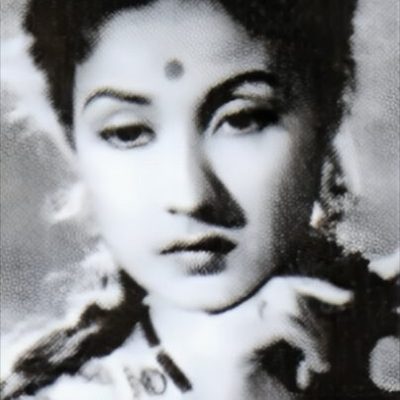
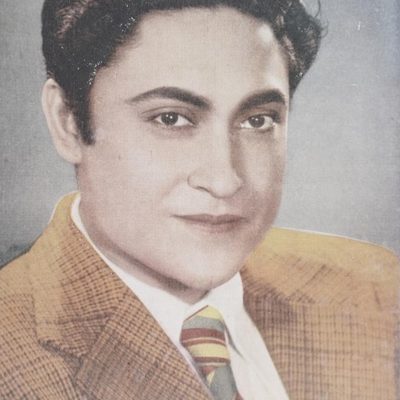
The story
Set in a gilded, twilight world of Lucknow's tawaifs (courtesans), Pakeezah follows Sahibjaan, a celebrated dancing girl raised in the kotha after her mother Nargis dies heartbroken and cast out by a respectable family. On a train journey, a stranger slips a note beside her sleeping feet — an admiring line about how beautiful they are and a plea that she never let them touch the ground and be soiled. That message, from a young forest officer named Salim, sets in motion a tender, doomed romance between a woman defined by her profession and a man who sees her differently.
Kamal Amrohi wrote as well as directed and produced the film, and Meena Kumari plays a dual role — the mother Nargis and the daughter Sahibjaan. Raaj Kumar is Salim, with Ashok Kumar as Shahabuddin and veteran actresses Veena and Nadira rounding out the world of the kotha. Rather than a plot-driven melodrama, the film is a mood piece: a meditation on longing, respectability and the impossible price a courtesan pays for love, told through poetry, silence and dance.
A film sixteen years in the making
Few films carry as legendary a backstory as Pakeezah. Amrohi conceived it as a gift to his wife, Meena Kumari, and principal photography began in 1956. What should have been a few years stretched into roughly a decade and a half. The couple's separation in the mid-1960s stalled the project entirely, and the production only resumed and reached completion at the turn of the 1970s, with the film finally premiering at Bombay's Maratha Mandir on 4 February 1972.
The long gestation left its marks everywhere. The German cinematographer Josef Wirsching, who shot the film's shimmering early footage, died in 1967 before it was finished, and several cameramen completed the work. Originally planned in black and white, the film was reshot in colour and CinemaScope on Meena Kumari's suggestion, giving it the sumptuous, painterly look it is famous for. That so ravaged and interrupted a production emerged as a seamless, dreamlike whole is part of the Pakeezah legend.
The music
The soundtrack is routinely ranked among the finest in Hindi cinema. Composer Ghulam Mohammed wrote the songs, steeped in classical raga and the ghazal tradition, but died before the film reached the screen; Naushad stepped in to complete the background score and title music. Lata Mangeshkar's voice carries most of the film's immortal numbers — 'Chalte Chalte,' 'Inhi Logon Ne,' 'Thare Rahiyo,' 'Chalo Dildar Chalo' (a duet with Mohammed Rafi) and 'Mausam Hai Aashiqana.'
More than half a century on, these songs remain staples of the mujra and classical-film canon, taught, covered and quoted endlessly. The music's fusion of Awadhi courtly refinement and aching romanticism is inseparable from the film's identity — for many listeners the album is the reason Pakeezah endures as strongly as the film itself.
Meena Kumari's swan song
Pakeezah is inescapably bound to the tragedy of its star. Meena Kumari, already frail and ailing, reportedly took only a token fee for the film she had waited so long to complete. Her performance as Sahibjaan — mournful, luminous, heavy with real-life weariness — is widely regarded as the crowning role of the actress known as Bollywood's 'Tragedy Queen.' Because of her failing health, the dancer Padma Khanna stood in for some of the more strenuous movements in long shots of the climactic dance.
She died on 31 March 1972, only weeks after the premiere, making Pakeezah her final release and true swan song. The film had opened to a modest, uncertain response; her death triggered a wave of public grief and curiosity that sent audiences flooding back. It went on to celebrate a golden jubilee and became one of the biggest earners of 1972, and earned Meena Kumari a posthumous Filmfare nomination for Best Actress — the last of her record run of nominations.
Legacy
Today Pakeezah is enshrined as a classic of the 'Muslim social' genre and one of the most beautiful films the Hindi industry has produced. Its imagery — the note by the sleeping feet, the lamplit kotha, the train whistling through the night — has passed into the shared memory of Indian cinema, endlessly referenced by later filmmakers and cited as an inspiration by costume designers and directors alike.
The film's near-mythical status rests on a rare alchemy: a devoted, obsessive maker; a star giving the performance of her life at its very end; a score by two masters; and a production so troubled it seemed cursed, yet arrived on screen looking effortless. Pakeezah is remembered less as a story than as an experience — a swan song for its leading lady and a high-water mark of romantic melancholy that new generations keep rediscovering.
Key details
| Release year | 1972 |
|---|---|
| Language | Hindi |
| Director | Kamal Amrohi |
| Genre | Musical Drama |
| Starring | Meena Kumari, Raaj Kumar, Ashok Kumar |
Did you know?
- Production spanned roughly sixteen years, from 1956 to the early 1970s, making it one of the longest-gestating films in Indian cinema; the Amrohi–Meena Kumari separation stalled it for years before it was revived and completed.
- Meena Kumari played a dual role — the mother Nargis and the courtesan daughter Sahibjaan — and is said to have accepted only a token fee to finish the film she had waited so long to make.
- She died on 31 March 1972, just weeks after the 4 February premiere; the film had opened modestly, but the outpouring after her death turned it into a golden-jubilee hit.
- Cinematographer Josef Wirsching, who shot the film's early footage, died in 1967 before completion, and several cameramen finished the job; it was ultimately made in colour and CinemaScope.
- Composer Ghulam Mohammed died before the film's release, and Naushad completed the background score and title music.
- Because of Meena Kumari's ill health, dancer Padma Khanna performed some of the more vigorous dance movements in long shots of the climactic song.
Frequently Asked Questions
Why did Pakeezah take so long to make?
The film began shooting in 1956 but was repeatedly derailed, most seriously by the separation of director Kamal Amrohi and his wife and star, Meena Kumari, in the 1960s. It lay abandoned for years before being revived and finished around 1971, giving it a production span of roughly sixteen years. Deaths of key crew members, including cinematographer Josef Wirsching, added to the delays.
When did Meena Kumari die, and was Pakeezah her last film?
Meena Kumari died on 31 March 1972, only weeks after Pakeezah premiered on 4 February 1972. It was her final release and is remembered as her swan song. The film had opened to a lukewarm response, but the shock of her death sparked a huge wave of public interest that turned it into one of the year's biggest hits.
Who composed the music for Pakeezah and who sang the songs?
The songs were composed by Ghulam Mohammed, drawing on classical ragas and the ghazal tradition, but he died before the film was released. Naushad completed the background score and title music. Lata Mangeshkar sang most of the celebrated numbers, including 'Chalte Chalte,' 'Inhi Logon Ne' and 'Thare Rahiyo,' with 'Chalo Dildar Chalo' a duet featuring Mohammed Rafi.
What is the story of Pakeezah about?
Pakeezah tells the story of Sahibjaan, a courtesan in Lucknow, who receives an admiring note from a stranger named Salim praising her feet and asking that she never let them be soiled. The two fall into a tender but socially impossible romance, shadowed by the stigma of her profession. It is essentially a lyrical meditation on love, longing and respectability rather than a conventional plot-driven drama.
Was Pakeezah a hit at the box office?
Not at first — it opened to a modest, uncertain response in February 1972. After Meena Kumari's death weeks later, audiences returned in large numbers, and the film went on to celebrate a golden jubilee, running for well over fifty weeks. It became one of the highest-earning Hindi films of 1972.
Who directed Pakeezah and who starred in it?
Pakeezah was written, produced and directed by Kamal Amrohi. It starred his wife Meena Kumari in a dual role as Nargis and Sahibjaan, with Raaj Kumar as Salim and Ashok Kumar as Shahabuddin, alongside Veena and Nadira. Amrohi conceived the film as a tribute to Meena Kumari.
Reference: Wikipedia
← Back to the Bollywood Hub