
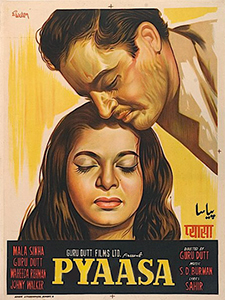
Starring
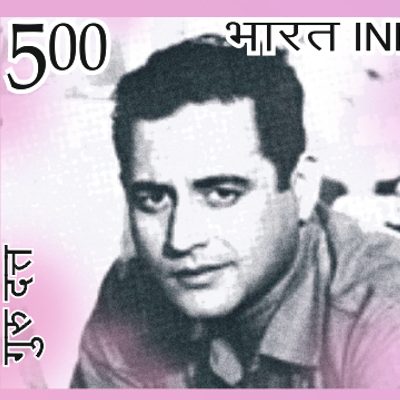
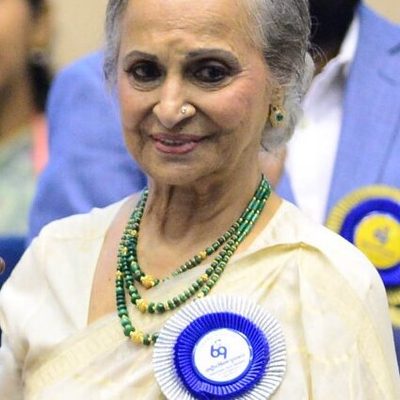
The story
Pyaasa ("Thirst") follows Vijay, a gifted but unpublished Urdu poet whose verses about poverty and injustice are dismissed by publishers who want only romance. Adrift in Calcutta, jobless and mocked even by his own brothers, he is befriended by Gulabo, a courtesan who has fallen in love with his poetry. His college sweetheart Meena, meanwhile, has married the wealthy, callous publisher Mr. Ghosh for security rather than love.
The film's devastating turn comes when Vijay is mistakenly believed dead after a train accident. His poems, suddenly fashionable, are published to acclaim and profit by the very people who once ignored him. When he reappears at a memorial gathering held in his honour, no one wants the living poet who exposes their hypocrisy. Rather than reclaim a name in a world he now despises, Vijay walks away from fame to begin again with Gulabo, the one person who valued him when he was nothing.
Making of the film
Guru Dutt directed, produced and starred in Pyaasa, working from a screenplay by Abrar Alvi and a concept the filmmaker had nursed since the late 1940s under the title Kashmakash. The lead role of Vijay was first offered to Dilip Kumar, who declined; he later named Pyaasa among the films he most regretted turning down. Nargis and Madhubala were at one point considered for the female leads before the parts went to Mala Sinha and a young Waheeda Rehman, for whom Gulabo became a career-defining breakthrough.
Shot in luminous black and white by cinematographer V.K. Murthy, the film is famous for its expressive use of light, shadow and slow tracking movement, most strikingly in the climactic scene where Vijay appears silhouetted in a doorway like a martyr. Location work in Calcutta's red-light district reportedly turned hostile, forcing the crew to rebuild sets in Bombay from photographs. Released on 22 February 1957, Pyaasa opened slowly but grew into a major commercial and critical success.
The music
The soundtrack is one of the towering achievements of Hindi film music, composed by S.D. Burman to lyrics by Sahir Ludhianvi, in what proved to be their final collaboration. Mohammed Rafi, Geeta Dutt and Hemant Kumar provided the voices for songs that function as narrative rather than decoration.
Rafi's anguished "Yeh Duniya Agar Mil Bhi Jaye Toh Kya Hai" delivers the film's cry of disillusionment, while "Jinhe Naaz Hai Hind Par" turns a brothel lane into a searing indictment of a nation that fails its women, drawing on Sahir's earlier poem "Chakle." Lighter moments come through Johnny Walker's crowd-pleasing "Sar Jo Tera Chakraye" and Geeta Dutt's tender "Aaj Sajan Mohe Ang Laga Lo," giving the film emotional range without softening its message.
Performances
Guru Dutt underplays Vijay with a wounded, inward stillness that lets the poetry and the images carry the film's feeling. Waheeda Rehman, in only her second Hindi film, brings warmth and dignity to Gulabo, refusing to let the character become a cliché of the golden-hearted courtesan.
Mala Sinha gives Meena a hard-edged pragmatism that makes her betrayal understandable rather than villainous, while Rehman is memorably cold as the publisher husband. Comedian Johnny Walker provides essential relief as the good-natured head-masseur Abdul Sattar, a performance woven into the story rather than bolted onto it.
Legacy
Pyaasa endures as Guru Dutt's most celebrated film and a landmark of world cinema. In 2005 it was the only Hindi film named to Time magazine's All-Time 100 Movies list, and it has appeared on major critics' polls including Sight & Sound; in 2019 the British Film Institute called it the greatest musical of 1957 and Dutt's masterpiece.
The film's fusion of lyrical beauty and social critique has influenced generations of Indian filmmakers, and its international reputation grew steadily in the decades after Dutt's early death in 1964. In 2015 Pyaasa became one of the first Indian films to be fully digitally restored, and the restoration premiered at the Venice International Film Festival, introducing the poet's thirst to a new global audience.
Key details
| Release year | 1957 |
|---|---|
| Language | Hindi |
| Director | Guru Dutt |
| Genre | Poetic Drama |
| Starring | Guru Dutt, Waheeda Rehman, Mala Sinha |
Did you know?
- Pyaasa was the only Hindi film included on Time magazine's 2005 list of the All-Time 100 Movies, and it regularly appears on international greatest-films polls.
- The lead role of Vijay was first offered to Dilip Kumar, who turned it down; he later listed Pyaasa among the films he most regretted rejecting.
- Nargis and Madhubala were considered for the female leads before the roles went to Mala Sinha and Waheeda Rehman, the latter in a star-making early performance.
- The song "Jinhe Naaz Hai Hind Par" grew out of Sahir Ludhianvi's earlier poem "Chakle," a bitter verse about brothels and the nation's neglect of its women.
- In 2015 Pyaasa became one of the first Indian films to receive a full digital restoration, which premiered at the Venice International Film Festival.
- The film marked the last collaboration between composer S.D. Burman and lyricist Sahir Ludhianvi, whose partnership had defined many 1950s soundtracks.
Frequently Asked Questions
What does the title Pyaasa mean?
Pyaasa is Hindi/Urdu for "thirsty" or "the thirst." The title is a metaphor for the poet Vijay's craving for love, recognition and an honest world, none of which the society around him is willing to give while he is alive and poor.
Is Pyaasa based on a true story?
It is not a biography, but it grew from Guru Dutt's long-held personal concept and drew on real observation. Writer Abrar Alvi has said the character of Gulabo was inspired by a woman he encountered in a red-light area, and the film reflects the struggles of idealistic artists Dutt knew.
Who composed the music and sang the songs in Pyaasa?
The score was composed by S.D. Burman with lyrics by Sahir Ludhianvi, in their final film together. The playback singers included Mohammed Rafi, Geeta Dutt and Hemant Kumar, and songs such as "Yeh Duniya Agar Mil Bhi Jaye" and "Jinhe Naaz Hai Hind Par" are considered classics.
Did Pyaasa do well at the box office?
After a slow start, Pyaasa became both a critical and commercial success and is remembered as one of the notable hits of 1957. Its reputation only grew in later decades, and it is now regarded as one of the greatest Indian films ever made.
Why is Pyaasa considered so important?
It achieved a rare blend of mainstream storytelling, poetic beauty and sharp social criticism, attacking a materialistic and hypocritical society through the eyes of a neglected artist. Its visual style by cinematographer V.K. Murthy and its Sahir-Burman songs have influenced generations of Indian filmmakers.
Where does Pyaasa stand among Guru Dutt's films?
It is widely regarded as Guru Dutt's masterpiece, alongside his later Kaagaz Ke Phool (1959). The British Film Institute has called it his finest work, and it cemented his reputation as one of Indian cinema's boldest director-actors before his death in 1964.
Reference: Wikipedia
← Back to the Bollywood Hub