China's Economic Growth Slows Down
China's economy grows at weakest pace in 3 years, export boom provides some support
'%3E%3Crect%20width%3D'96'%20height%3D'96'%20fill%3D'%234A235A'%2F%3E%3Ccircle%20cx%3D'30'%20cy%3D'24'%20r%3D'44'%20fill%3D'%23fff'%20opacity%3D'.12'%2F%3E%3Ccircle%20cx%3D'60'%20cy%3D'74'%20r%3D'40'%20fill%3D'%23000'%20opacity%3D'.10'%2F%3E%3C%2Fg%3E%3Cg%20fill%3D'none'%20stroke%3D'%23fff'%20stroke-width%3D'3'%3E%3Ccircle%20cx%3D'48'%20cy%3D'48'%20r%3D'16'%2F%3E%3Cellipse%20cx%3D'48'%20cy%3D'48'%20rx%3D'6.5'%20ry%3D'16'%2F%3E%3Cline%20x1%3D'32'%20y1%3D'42'%20x2%3D'64'%20y2%3D'42'%2F%3E%3Cline%20x1%3D'32'%20y1%3D'54'%20x2%3D'64'%20y2%3D'54'%2F%3E%3C%2Fg%3E%3C%2Fsvg%3E)
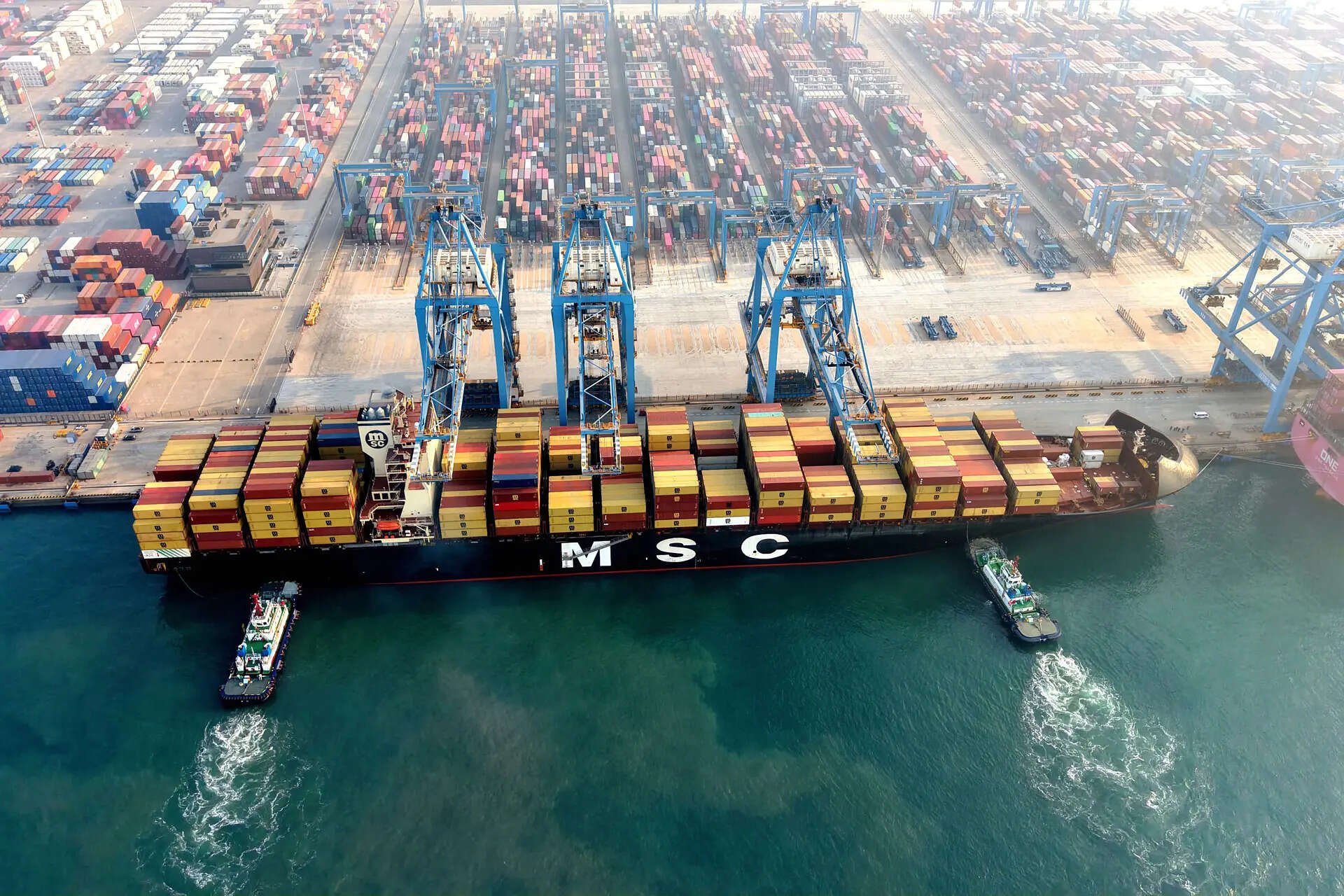
China's economic growth has slowed down to its weakest pace in three years, despite a significant boom in exports. The slowdown was recorded in the second quarter and was largely attributed to weak domestic demand.
The country's strong exports, particularly in the electric vehicles and artificial intelligence sectors, provided some support to the economy. However, consumer spending and investment remain subdued due to uncertainty in the property market.
China's economic growth has been impacted by various factors, including a decline in domestic consumption and a slowdown in the property sector. The nation is facing challenges in balancing its high-tech growth with job creation, as the focus on technology and innovation has led to concerns about employment opportunities.
Chinese officials are aiming for higher quality growth and a stronger domestic market. They are working to implement policies that will boost domestic demand and reduce the country's reliance on exports. The goal is to create a more sustainable and balanced economy that will drive long-term growth and stability.
China's economic slowdown has significant implications for the global economy, as the country is a major player in international trade. A slowdown in China's economy can have a ripple effect on other countries, particularly those that rely heavily on Chinese exports.
The Chinese government has been working to transition the economy from a focus on low-cost manufacturing to a more high-tech and service-oriented economy. This transition has been challenging, as it requires significant investments in education and training to develop the skills needed for high-tech industries.
Despite the challenges, China remains a major driver of global economic growth. The country's large population and growing middle class make it an attractive market for businesses and investors. However, the slowdown in economic growth highlights the need for China to continue to reform and adapt its economy to changing global conditions.
In recent years, China has made significant progress in developing its high-tech sector, with major advancements in areas such as artificial intelligence, renewable energy, and electric vehicles. However, the country still faces significant challenges in terms of job creation and income inequality.
The slowdown in China's economic growth is a reminder that the country's economic development is not without its challenges. As China continues to evolve and grow, it will be important for the government to balance the need for high-tech growth with the need for job creation and social stability.
The implications of China's economic slowdown are far-reaching, and will be closely watched by economists and policymakers around the world. As the country continues to navigate its economic challenges, it will be important to monitor its progress and adjust policies accordingly.
In conclusion, China's economic growth has slowed down to its weakest pace in three years, despite a boom in exports. The country faces significant challenges in balancing high-tech growth with job creation, and officials are working to implement policies that will boost domestic demand and reduce reliance on exports. The slowdown has significant implications for the global economy, and highlights the need for China to continue to reform and adapt its economy to changing global conditions.