Brands Rethink Strategy Amid Democratisation of Information
Differentiation gets tough, brands focus on meaning and experience
'%3E%3Crect%20width%3D'96'%20height%3D'96'%20fill%3D'%23B3261E'%2F%3E%3Ccircle%20cx%3D'30'%20cy%3D'24'%20r%3D'44'%20fill%3D'%23fff'%20opacity%3D'.12'%2F%3E%3Ccircle%20cx%3D'60'%20cy%3D'74'%20r%3D'40'%20fill%3D'%23000'%20opacity%3D'.10'%2F%3E%3C%2Fg%3E%3Cg%20fill%3D'%23fff'%3E%3Crect%20x%3D'29'%20y%3D'49'%20width%3D'8'%20height%3D'19'%20rx%3D'1'%2F%3E%3Crect%20x%3D'39'%20y%3D'40'%20width%3D'9'%20height%3D'28'%20rx%3D'1'%2F%3E%3Crect%20x%3D'50'%20y%3D'45'%20width%3D'8'%20height%3D'23'%20rx%3D'1'%2F%3E%3Crect%20x%3D'60'%20y%3D'53'%20width%3D'7'%20height%3D'15'%20rx%3D'1'%2F%3E%3Crect%20x%3D'41'%20y%3D'34'%20width%3D'5'%20height%3D'6'%2F%3E%3C%2Fg%3E%3C%2Fsvg%3E)
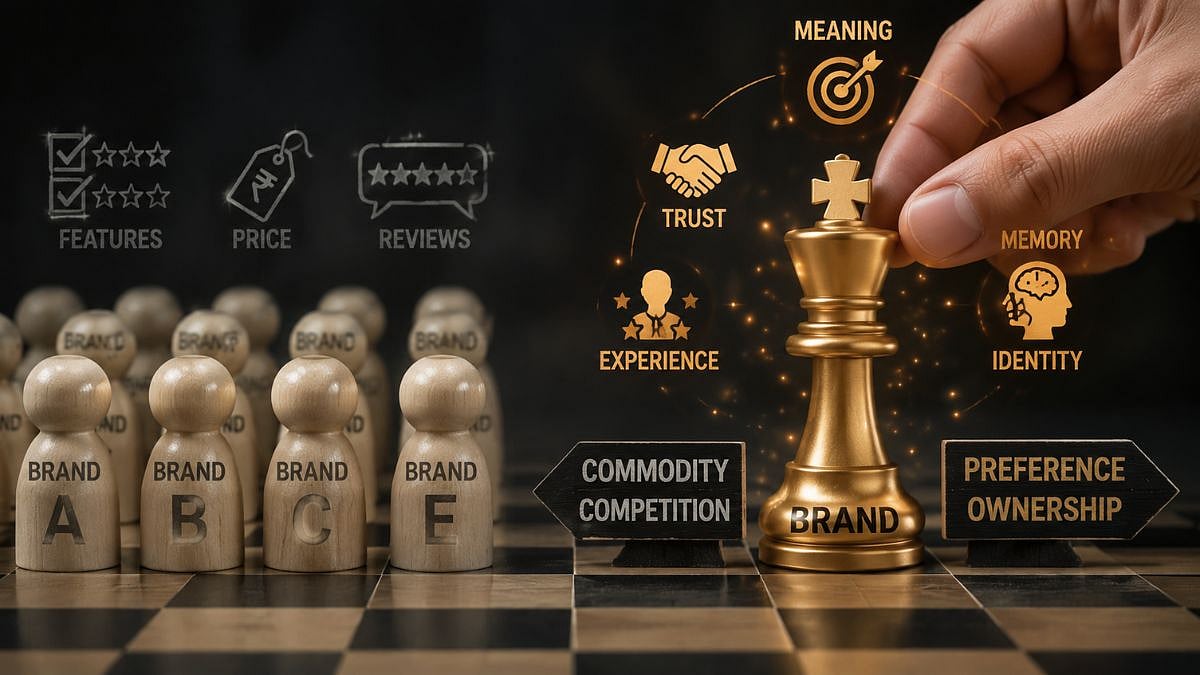
In today's digital age, the democratisation of information and access to technology has made it increasingly difficult for brands to differentiate themselves. Features that were once unique and took years to develop can now be easily replicated, and price parity has become the norm. E-commerce has further levelled the playing field, allowing consumers to compare similar products and features from various brands.
As a result, brands are finding it challenging to stand out and create a lasting impression on consumers. Reviews, which were once a reliable way to gauge a product's quality, have become less trustworthy due to fake reviews and manipulated ratings. So, what can brands do to fight the war of preference?
The answer lies in creating distinctive meaning and experience. Brands need to define what they stand for and what they mean to their consumers. It's not just about what the product does, but what the brand represents. For instance, Volvo is not just selling cars, but peace of mind and safety. Apple is not just selling computers, but creative empowerment and a sense of identity.
Experience also plays a crucial role in driving brand preference. Consumers don't just choose products based on their features or price; they choose what feels right, what represents them, and what helps them express who they are. Brands need to create experiences that resonate with their consumers and create a sense of trust and loyalty.
In this new era of branding, earned trust becomes more valuable than ever. Brands need to respond promptly and effectively when something goes wrong, and they need to make it easy for consumers to interact with them. By focusing on meaning, experience, and trust, brands can create a lasting impression on consumers and differentiate themselves in a crowded market.
The key to success lies in understanding what consumers truly value and creating a brand that resonates with them. It's not just about selling products; it's about creating a sense of belonging and identity. Brands that can achieve this will be the ones that thrive in today's competitive market.
In conclusion, the democratisation of information has changed the way brands need to approach marketing and consumer engagement. By focusing on meaning, experience, and trust, brands can create a lasting impression on consumers and differentiate themselves in a crowded market. It's time for brands to rethink their strategy and focus on what truly matters to their consumers.
The shift in focus from features and price to meaning and experience requires a fundamental change in the way brands approach marketing and consumer engagement. It's no longer just about selling products; it's about creating a sense of connection and community with consumers. Brands that can achieve this will be the ones that succeed in the long run.
As the market continues to evolve, brands need to stay ahead of the curve and adapt to changing consumer preferences. By prioritising meaning, experience, and trust, brands can create a lasting impression on consumers and establish a loyal customer base. It's time for brands to rethink their strategy and focus on what truly matters to their consumers.
In the end, it's not just about winning the war of preference; it's about creating a sense of connection and community with consumers. Brands that can achieve this will be the ones that thrive in today's competitive market.
Frequently asked questions
What is the main challenge for brands in today's market?
The main challenge for brands is to differentiate themselves in a crowded market where features and price are no longer unique selling points.
How can brands create a lasting impression on consumers?
Brands can create a lasting impression on consumers by focusing on meaning, experience, and trust, and by creating a sense of connection and community with them.