Nepal Floods: Families Burn Effigies for Missing Victims
Families in Nepal perform symbolic cremations, Hopes fade for missing
'%3E%3Crect%20width%3D'96'%20height%3D'96'%20fill%3D'%23B3261E'%2F%3E%3Ccircle%20cx%3D'30'%20cy%3D'24'%20r%3D'44'%20fill%3D'%23fff'%20opacity%3D'.12'%2F%3E%3Ccircle%20cx%3D'60'%20cy%3D'74'%20r%3D'40'%20fill%3D'%23000'%20opacity%3D'.10'%2F%3E%3C%2Fg%3E%3Cg%20fill%3D'%23fff'%3E%3Crect%20x%3D'29'%20y%3D'49'%20width%3D'8'%20height%3D'19'%20rx%3D'1'%2F%3E%3Crect%20x%3D'39'%20y%3D'40'%20width%3D'9'%20height%3D'28'%20rx%3D'1'%2F%3E%3Crect%20x%3D'50'%20y%3D'45'%20width%3D'8'%20height%3D'23'%20rx%3D'1'%2F%3E%3Crect%20x%3D'60'%20y%3D'53'%20width%3D'7'%20height%3D'15'%20rx%3D'1'%2F%3E%3Crect%20x%3D'41'%20y%3D'34'%20width%3D'5'%20height%3D'6'%2F%3E%3C%2Fg%3E%3C%2Fsvg%3E)
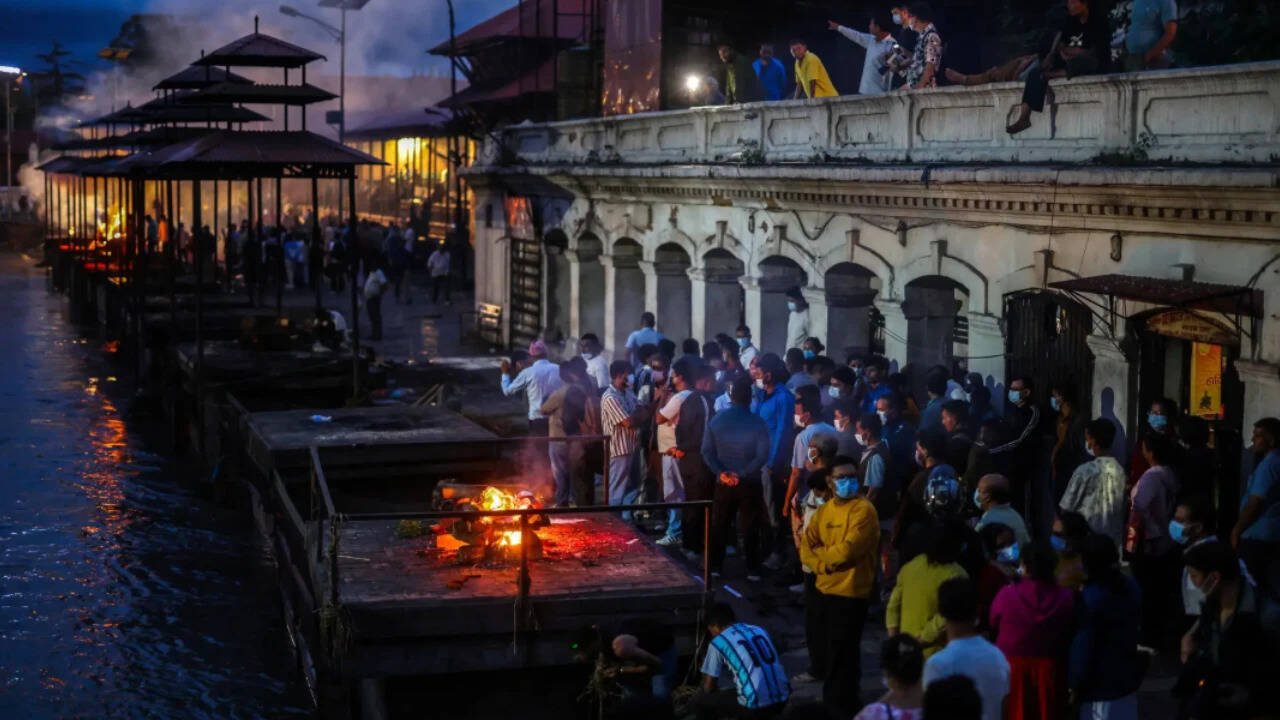
Families in Nepal's Nuwakot and Rasuwa districts have performed symbolic cremations for their missing loved ones who were swept away by the recent floods.
The floods have left many families without bodies to cremate, prompting them to use kusha grass effigies as a substitute in traditional Hindu cremation rituals.
Despite extensive searches across various locations, many families have been unable to recover the bodies of their missing kin.
In a bid to find closure and liberate the souls of their loved ones, families have been guided by priests through traditional rituals.
Over 100 effigies were cremated in Kathmandu's Pashupati Aryaghat, a significant Hindu cremation site.
The symbolic cremations are a poignant reminder of the devastating impact of the floods on communities in Nepal.
The use of kusha grass effigies is a rare but significant tradition in Hinduism, where it is believed to help liberate the soul of the deceased.
Families have been left to pick up the pieces and come to terms with their loss, as hopes of finding their missing loved ones alive continue to fade.
The Nepalese government has been working to provide support and relief to affected families, but the road to recovery is expected to be long and challenging.
As the people of Nepal struggle to cope with the aftermath of the floods, the symbolic cremations serve as a powerful reminder of the human cost of the disaster.
The international community has been urged to provide support and assistance to Nepal as it works to recover from the devastating floods.
In the meantime, families will continue to hold on to hope, even as they confront the harsh reality of their loss.
The floods have once again highlighted the need for disaster preparedness and mitigation measures in Nepal, where natural disasters are a recurring phenomenon.
As the country begins to rebuild and recover, it is essential that lessons are learned from this tragedy to prevent similar disasters in the future.
The people of Nepal will need time, support, and resources to heal and rebuild, but for now, they must come to terms with the devastating loss of life and property caused by the floods.
In the face of such tragedy, the symbolic cremations serve as a poignant reminder of the resilience and strength of the human spirit, even in the darkest of times.
Frequently asked questions
What are symbolic cremations in Hinduism?
Symbolic cremations in Hinduism involve the use of effigies, often made of kusha grass, to represent the deceased when the body is not available.
How many effigies were cremated in Kathmandu's Pashupati Aryaghat?
Over 100 effigies were cremated in Kathmandu's Pashupati Aryaghat.