Zomato Delists Analogue Paneer Dishes Across India
Zomato removes analogue paneer dishes amid food safety scrutiny. Other platforms may follow.
'%3E%3Crect%20width%3D'96'%20height%3D'96'%20fill%3D'%23B3261E'%2F%3E%3Ccircle%20cx%3D'30'%20cy%3D'24'%20r%3D'44'%20fill%3D'%23fff'%20opacity%3D'.12'%2F%3E%3Ccircle%20cx%3D'60'%20cy%3D'74'%20r%3D'40'%20fill%3D'%23000'%20opacity%3D'.10'%2F%3E%3C%2Fg%3E%3Cg%20fill%3D'%23fff'%3E%3Crect%20x%3D'29'%20y%3D'49'%20width%3D'8'%20height%3D'19'%20rx%3D'1'%2F%3E%3Crect%20x%3D'39'%20y%3D'40'%20width%3D'9'%20height%3D'28'%20rx%3D'1'%2F%3E%3Crect%20x%3D'50'%20y%3D'45'%20width%3D'8'%20height%3D'23'%20rx%3D'1'%2F%3E%3Crect%20x%3D'60'%20y%3D'53'%20width%3D'7'%20height%3D'15'%20rx%3D'1'%2F%3E%3Crect%20x%3D'41'%20y%3D'34'%20width%3D'5'%20height%3D'6'%2F%3E%3C%2Fg%3E%3C%2Fsvg%3E)
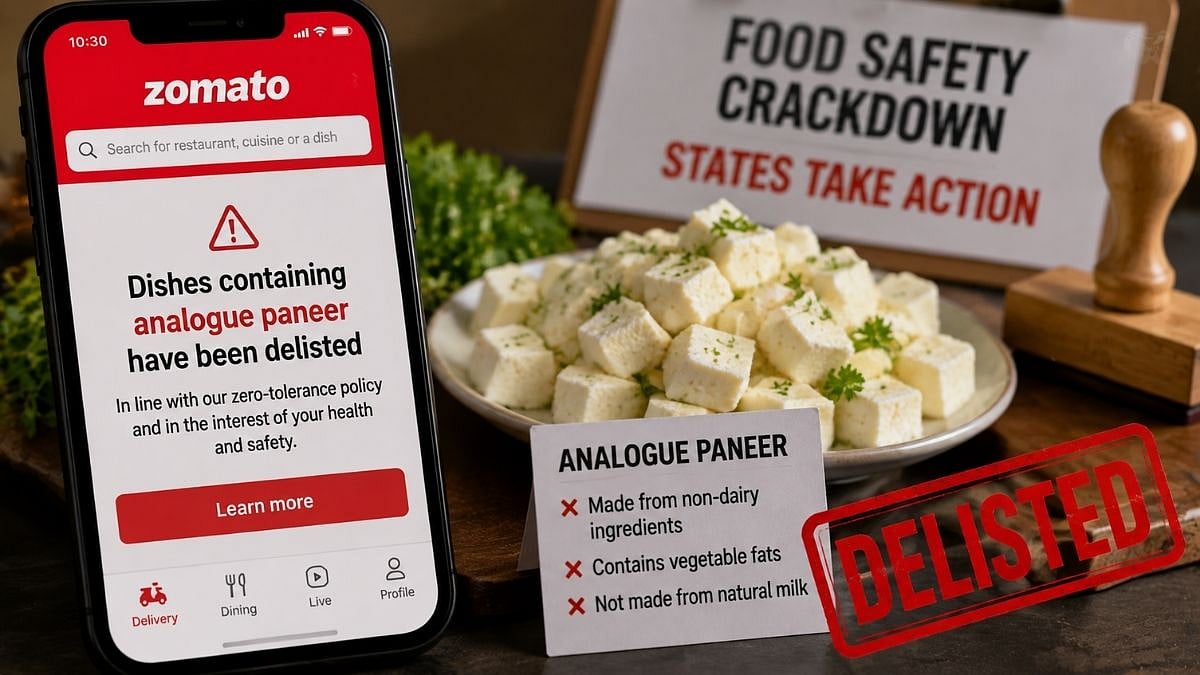
Zomato has delisted dishes containing analogue paneer and other analogue dairy products from its platform across India. This move comes amid intensifying regulatory scrutiny over the use of non-dairy substitutes in food. The company has adopted a zero-tolerance approach and reserves the right to remove any listing found to be in violation of its policy.
The decision was made with immediate effect, and Zomato has removed dishes that restaurant partners have declared as containing analogue dairy. Other major food ordering and delivery platforms are also considering similar measures.
The move comes amid action by food safety regulators in several states against analogue paneer, which is made using non-dairy ingredients and fats instead of natural milk. Maharashtra FDA has been conducting action against establishments using analogue paneer, while Chhattisgarh, Madhya Pradesh, and Gujarat have also imposed temporary restrictions on the production, sale, storage, and distribution of analogue or non-dairy paneer.
Several other states are reportedly examining similar regulatory measures amid concerns over consumer health, food safety, and misrepresentation of products. The increased scrutiny has also prompted food businesses and online food delivery platforms to review how such products are declared and sold to consumers.
Under Zomato's new policy, restaurant partners have been asked to switch to natural dairy products. Where an immediate transition is not feasible, restaurants have been directed to remove dishes containing analogue dairy from their menus. Restaurants have also been instructed to review product labels and ingredient declarations provided by suppliers, verify the ingredients being used, and ensure that products listed on Zomato are accurately represented.
Zomato said restaurants that remain non-compliant will be delisted from the platform. The company's CEO, Aditya Mangla, stated that the company's mission of providing 'better food for more people' also means safeguarding customer health and upholding clear standards for products listed and served by restaurant partners.
The policy is part of Zomato's broader focus on healthier food choices and greater transparency for customers, while remaining consistent with applicable regulatory requirements. This move is expected to put greater pressure on restaurants to disclose the actual ingredients used in dishes listed on online platforms.
The delisting of analogue paneer dishes by Zomato is a significant step towards ensuring food safety and transparency in the online food delivery industry. As other platforms consider similar measures, consumers can expect greater accountability from restaurants and food delivery platforms in the future.
In the context of the Indian food industry, this move highlights the growing importance of food safety and transparency. With the rise of online food delivery platforms, consumers are increasingly relying on these platforms to access a wide range of food options. However, this also increases the risk of food safety breaches and misrepresentation of products.
The regulatory scrutiny of analogue paneer and other non-dairy substitutes is a welcome step towards ensuring that consumers have access to safe and authentic food products. As the online food delivery industry continues to grow, it is essential that platforms like Zomato prioritize food safety and transparency to maintain consumer trust and confidence.
In conclusion, Zomato's decision to delist analogue paneer dishes is a significant step towards ensuring food safety and transparency in the online food delivery industry. This move is expected to have a positive impact on the industry as a whole, and consumers can expect greater accountability from restaurants and food delivery platforms in the future.
Frequently asked questions
Why did Zomato delist analogue paneer dishes?
Zomato delisted analogue paneer dishes amid intensifying regulatory scrutiny over the use of non-dairy substitutes in food.
What will happen to restaurants that do not comply with Zomato's policy?
Restaurants that remain non-compliant will be delisted from the platform.