Gen Z Students Weigh In On Delhi, Jharkhand Protests
Gen Z students share their views on protests in Delhi and Jharkhand. They see the protests differently.
'%3E%3Crect%20width%3D'96'%20height%3D'96'%20fill%3D'%231A5276'%2F%3E%3Ccircle%20cx%3D'30'%20cy%3D'24'%20r%3D'44'%20fill%3D'%23fff'%20opacity%3D'.12'%2F%3E%3Ccircle%20cx%3D'60'%20cy%3D'74'%20r%3D'40'%20fill%3D'%23000'%20opacity%3D'.10'%2F%3E%3C%2Fg%3E%3Cg%20fill%3D'%23fff'%3E%3Cpath%20d%3D'M31%2041%20L48%2031%20L65%2041%20Z'%2F%3E%3Crect%20x%3D'33'%20y%3D'43'%20width%3D'4'%20height%3D'17'%2F%3E%3Crect%20x%3D'41'%20y%3D'43'%20width%3D'4'%20height%3D'17'%2F%3E%3Crect%20x%3D'51'%20y%3D'43'%20width%3D'4'%20height%3D'17'%2F%3E%3Crect%20x%3D'59'%20y%3D'43'%20width%3D'4'%20height%3D'17'%2F%3E%3Crect%20x%3D'30'%20y%3D'62'%20width%3D'36'%20height%3D'4'%20rx%3D'1'%2F%3E%3C%2Fg%3E%3C%2Fsvg%3E)
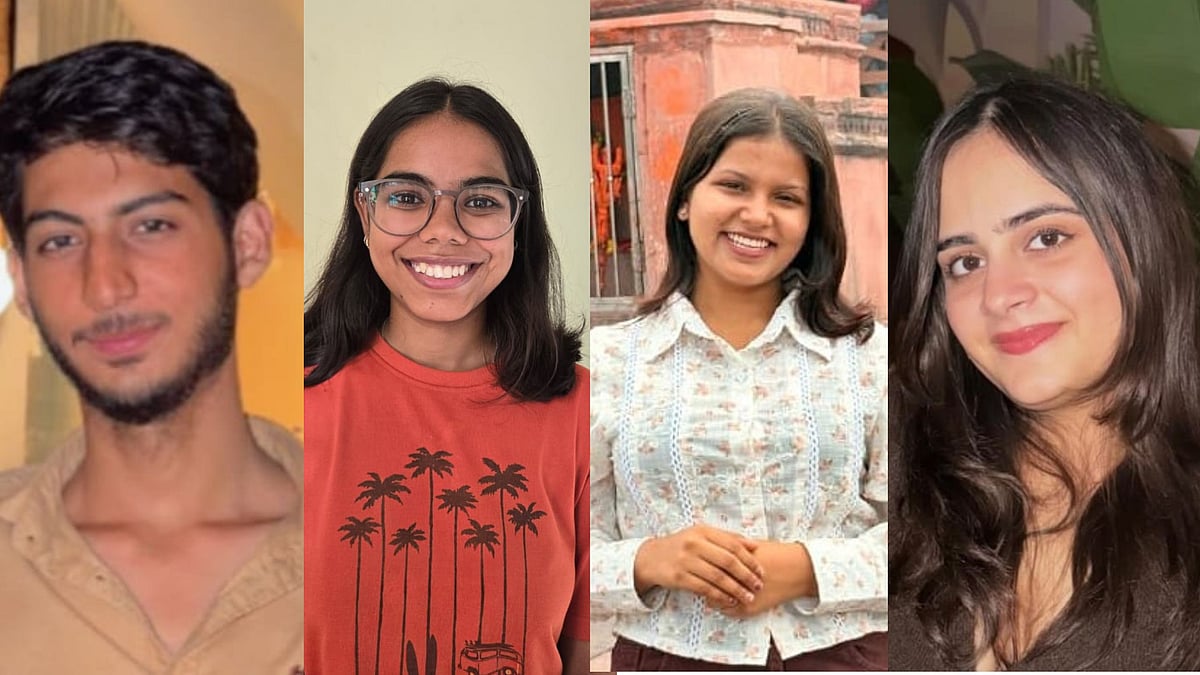
Gen Z students in Bhopal and Indore have shared their perspectives on the recent protests in Delhi and Jharkhand. The students believe that the two protests cannot be compared as they involve different issues, with the Delhi protest being about a national issue and the Jharkhand protest being about a state-level issue.
The students were asked about the perceived double standards of political parties in their response to the two protests. They acknowledged that while key Opposition parties like the Congress and the AAP were more enthusiastic about the Delhi protest, they have their own agendas and work accordingly.
Niraj Raj, a 21-year-old student, emphasized that the government should listen to the Jharkhand students, as their protest is purely apolitical and does not involve anti-national slogans or communal issues. He also advised students to keep away from political parties.
Aditya Sharma, a 26-year-old student, noted that there is a difference in the scale of opposition and coverage of the two protests, with the Delhi protest being against irregularities in a national-level exam and the Jharkhand protest affecting a state.
Social activist Deepika observed that political parties seemed more supportive of the students' protest at Jantar Mantar, while their response in Jharkhand appeared different. Nishi Pandey believed that the Jantar Mantar protest was used by political parties to swell their vote bank.
Prateek Raj, a 20-year-old student, pointed out that many political parties were involved in the Delhi protest, but that is not happening in Jharkhand. He added that the students are protesting against the failure of the governments, which is a good thing.
Pragya Bakshi, a 28-year-old student, felt that political parties are treating the two protests differently. Apurva Shandilya, a 22-year-old student, said that political parties work according to their own perception of what will help them win the support of the people.
Harshita Tomar, a 20-year-old student, urged the Opposition parties to speak up about both the Delhi and Jharkhand protests, rather than just pushing their own political agenda.
The students' views highlight the complexities of the protests and the role of political parties in shaping public opinion. The Jharkhand protests, in particular, raise questions about how public figures choose the causes they associate themselves with and the need for greater visibility and scrutiny of such issues.
The protests in Delhi and Jharkhand have sparked a national conversation about the role of political parties, the media, and public figures in shaping public opinion. The students' perspectives offer a unique insight into the complexities of these issues and the need for a more nuanced understanding of the protests.
In conclusion, the Gen Z students' views on the Delhi and Jharkhand protests highlight the importance of considering the complexities of these issues and the need for a more nuanced understanding of the role of political parties, the media, and public figures in shaping public opinion.
The protests have also raised questions about the accountability of governments and the need for greater transparency and scrutiny of their actions. The students' demand for justice and fairness is a reminder that the protests are not just about political agendas, but about the fundamental rights and aspirations of the people.
As the protests continue, it is essential to consider the perspectives of all stakeholders, including the students, political parties, and the media. By doing so, we can gain a deeper understanding of the complexities of these issues and work towards finding solutions that address the concerns of all parties involved.
In the end, the protests in Delhi and Jharkhand are a reminder that the power of democracy lies in the voices and actions of its citizens. The Gen Z students' views on these protests offer a unique insight into the complexities of these issues and the need for a more nuanced understanding of the role of political parties, the media, and public figures in shaping public opinion.
Frequently asked questions
What do Gen Z students think about the Delhi and Jharkhand protests?
Gen Z students believe that the two protests cannot be compared as they involve different issues.
Why do political parties have different responses to the two protests?
Political parties have their own agendas and work accordingly, which is why they have different responses to the two protests.