Nepal Floods Kill 1,050, 4,000 Missing
Nepal floods claim 1,050 lives, 4,000 missing. PM blames climate change.
'%3E%3Crect%20width%3D'96'%20height%3D'96'%20fill%3D'%23B3261E'%2F%3E%3Ccircle%20cx%3D'30'%20cy%3D'24'%20r%3D'44'%20fill%3D'%23fff'%20opacity%3D'.12'%2F%3E%3Ccircle%20cx%3D'60'%20cy%3D'74'%20r%3D'40'%20fill%3D'%23000'%20opacity%3D'.10'%2F%3E%3C%2Fg%3E%3Cg%20fill%3D'%23fff'%3E%3Crect%20x%3D'29'%20y%3D'49'%20width%3D'8'%20height%3D'19'%20rx%3D'1'%2F%3E%3Crect%20x%3D'39'%20y%3D'40'%20width%3D'9'%20height%3D'28'%20rx%3D'1'%2F%3E%3Crect%20x%3D'50'%20y%3D'45'%20width%3D'8'%20height%3D'23'%20rx%3D'1'%2F%3E%3Crect%20x%3D'60'%20y%3D'53'%20width%3D'7'%20height%3D'15'%20rx%3D'1'%2F%3E%3Crect%20x%3D'41'%20y%3D'34'%20width%3D'5'%20height%3D'6'%2F%3E%3C%2Fg%3E%3C%2Fsvg%3E)
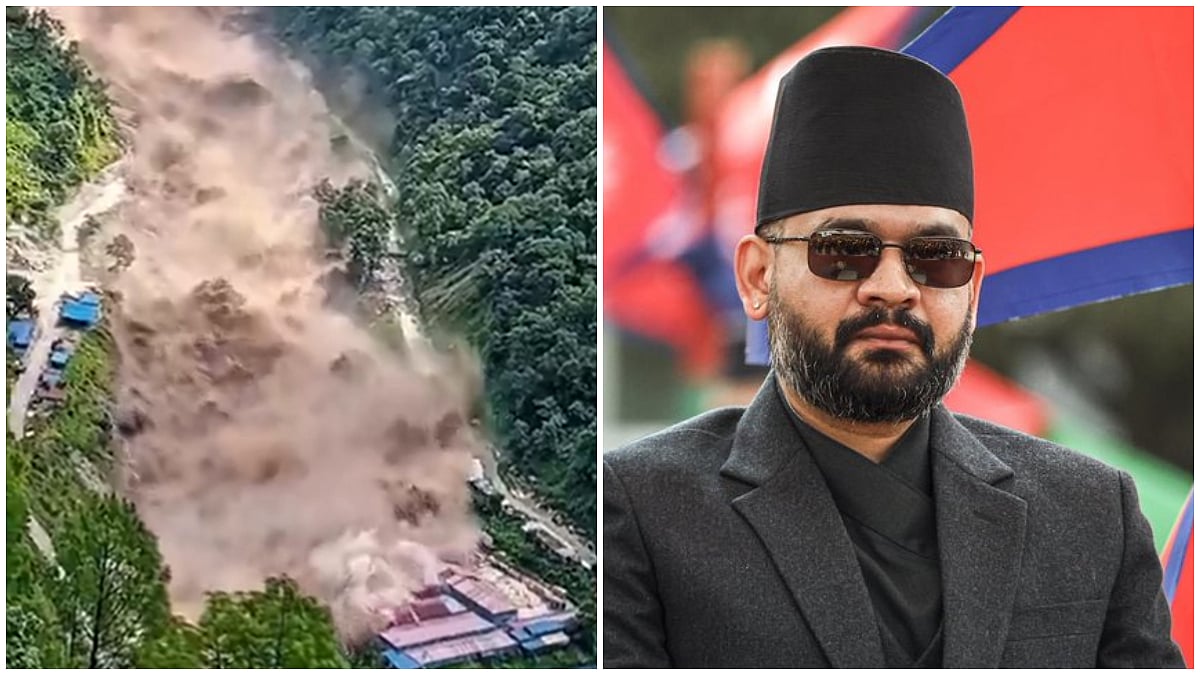
At least 1,050 people have died in the devastating floods that hit Nepal, with nearly 4,000 still missing, according to the country's disaster management authority. The floods, which were triggered by a collapse or avalanche of ice and rock near the Nepal-Tibet border, have affected eight districts in northern and central Nepal.
The National Disaster Risk Reduction and Management Authority (NDRRMA) reported that security forces are still recovering bodies from the affected areas, while rescue operations are ongoing. So far, nearly 12,000 people have been rescued. The Bhotekoshi River, which flows south from the Himalayan border region, carried the floodwaters downstream, sweeping away homes, vehicles, roads, and bridges.
Prime Minister Balendra Shah has linked the devastating floods to climate change, citing the rising temperature in the Himalayan region as a major factor. In a social media post, Shah said that climate change is a global challenge and that disaster response remains a global responsibility. He also stated that the incident highlights the growing risk of climate change in the Himalayas.
The flash floods, which occurred on August 26, have caused widespread destruction in towns and villages across northern and central Nepal. The floods have also damaged hydropower projects, adding to the economic losses. According to the NDRRMA, the Chitwan district has recorded the highest number of deaths, with 321 bodies recovered.
The other affected districts include Nawalparasi East, which has recorded 216 deaths, followed by Nawalparasi West with 170, Nuwakot with 95, Gorkha with 65, Dhading with 57, Rasuwa with 41, and Tanahun with 38. Rescue and recovery operations are still underway, with authorities searching for nearly 4,000 people who remain missing.
The Nepal government has appealed for international aid to help with the rescue and relief efforts. The floods have caused widespread devastation, with many homes, roads, and bridges destroyed. The country is still reeling from the disaster, and the full extent of the damage is still being assessed.
The floods in Nepal are a stark reminder of the impact of climate change on vulnerable communities. Rising temperatures and changing weather patterns are increasing the risk of natural disasters, such as floods and landslides. The international community must come together to support countries like Nepal, which are bearing the brunt of climate change.
In conclusion, the floods in Nepal have caused unprecedented destruction and loss of life. The country needs urgent support and aid to help with the rescue and relief efforts. The international community must also take action to address the root cause of the problem, which is climate change.
Frequently asked questions
What is the current death toll in Nepal floods?
At least 1,050 people have died in the devastating floods in Nepal.
What is the main cause of the Nepal floods according to PM Shah?
PM Shah has linked the devastating floods to climate change, citing the rising temperature in the Himalayan region as a major factor.