Centre Introduces Auto-FIR For ₹5 Lakh Cyber Frauds
New system to reduce delays, Pimpri-Chinchwad Police warn against mule accounts
'%3E%3Crect%20width%3D'96'%20height%3D'96'%20fill%3D'%23B3261E'%2F%3E%3Ccircle%20cx%3D'30'%20cy%3D'24'%20r%3D'44'%20fill%3D'%23fff'%20opacity%3D'.12'%2F%3E%3Ccircle%20cx%3D'60'%20cy%3D'74'%20r%3D'40'%20fill%3D'%23000'%20opacity%3D'.10'%2F%3E%3C%2Fg%3E%3Cg%20fill%3D'%23fff'%3E%3Crect%20x%3D'29'%20y%3D'49'%20width%3D'8'%20height%3D'19'%20rx%3D'1'%2F%3E%3Crect%20x%3D'39'%20y%3D'40'%20width%3D'9'%20height%3D'28'%20rx%3D'1'%2F%3E%3Crect%20x%3D'50'%20y%3D'45'%20width%3D'8'%20height%3D'23'%20rx%3D'1'%2F%3E%3Crect%20x%3D'60'%20y%3D'53'%20width%3D'7'%20height%3D'15'%20rx%3D'1'%2F%3E%3Crect%20x%3D'41'%20y%3D'34'%20width%3D'5'%20height%3D'6'%2F%3E%3C%2Fg%3E%3C%2Fsvg%3E)
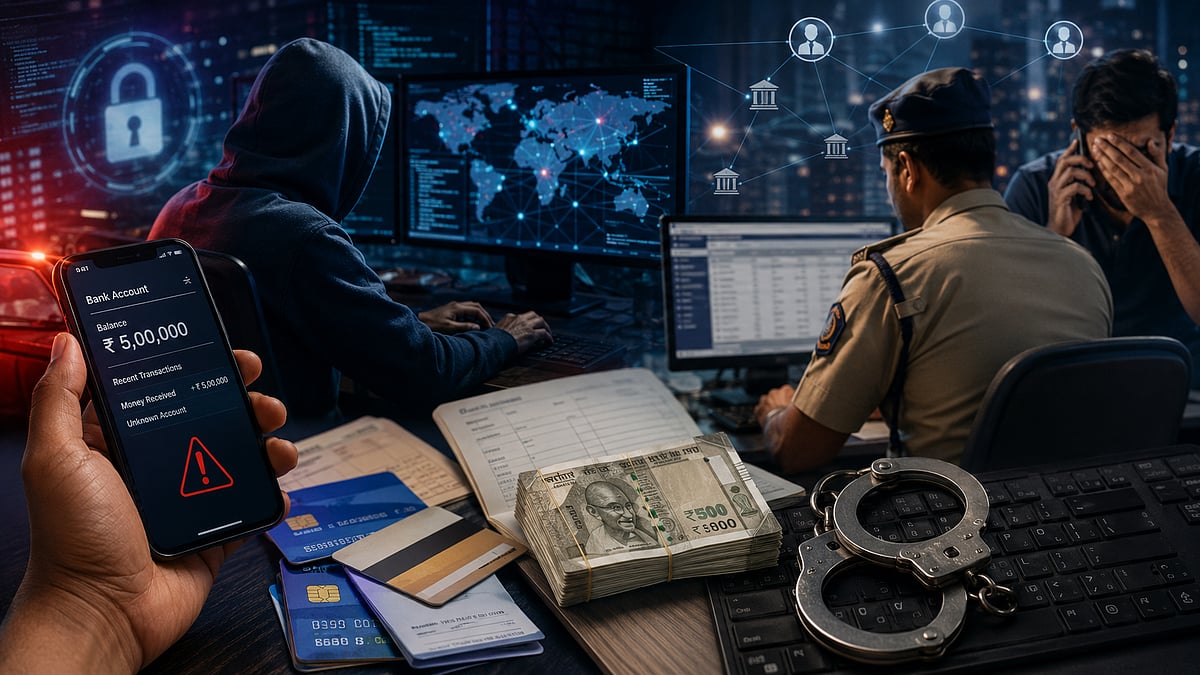
The central government has introduced a new system to automatically register FIRs in cyber fraud cases involving losses of ₹5 lakh or more. This move aims to reduce delays in cybercrime investigations and improve the chances of recovering stolen money.
The new system links the Indian Cyber Crime Coordination Centre, the National Cyber Crime Reporting Portal, and the Crime and Criminal Tracking Network and Systems. Once a victim reports cyber fraud through the 1930 helpline or the National Cyber Crime Reporting Portal, the complaint will be recorded digitally.
In eligible cases involving fraud of ₹5 lakh or more, an E-Zero FIR will be generated automatically and sent to the concerned police station for investigation. This will help investigators freeze suspicious bank accounts, secure digital evidence, and begin action without waiting for the formal registration of an FIR.
According to Pimpri-Chinchwad Police, the commissionerate has received 283 cyber fraud complaints involving amounts above ₹5 lakh in the past six months. These complaints will now qualify for automatic E-Zero FIR registration under the new system.
Cybercrime continues to rise sharply in the city, with police receiving more than 17,000 cyber complaints every year, compared to around 7,500 conventional criminal cases. Online investment scams, digital arrest frauds, UPI frauds, and fake KYC update scams remain the most common forms of cybercrime.
Deputy Commissioner of Police (Crime) Rohidas Pawar said every minute is critical in cyber fraud cases. He urged victims to immediately report fraud through the 1930 helpline or the National Cyber Crime Reporting Portal as soon as they realise they have been cheated.
Pimpri-Chinchwad Police have also warned citizens against the growing misuse of “mule accounts”, saying 60 people have already landed in legal trouble in just the last 15 days after allowing cybercriminals to use their bank accounts.
The new system is expected to strengthen investigations, but officials admitted it will also increase the workload on the cyber police. Investigating cybercrime requires tracking bank transactions, UPI trails, IP addresses, and payment gateways and coordinating with agencies in different states.
Since such investigations are generally handled by police inspectors, officials said there is also a need to strengthen the cyber investigation machinery.
The introduction of the new system is a significant step towards combating cybercrime in India. With the increasing number of cyber complaints, it is essential to have a system in place that can quickly respond to and investigate such cases.
The warning against mule accounts is also a crucial reminder for citizens to be cautious when using their bank accounts and to never allow unknown individuals to use them.
In conclusion, the new auto-FIR system for ₹5 lakh cyber frauds is a welcome move that will help reduce delays and improve the chances of recovering stolen money. However, it is also important to strengthen the cyber investigation machinery and to educate citizens about the risks of cybercrime and the importance of reporting it promptly.
Frequently asked questions
What is the new auto-FIR system for cyber frauds?
The new system automatically registers FIRs in cyber fraud cases involving losses of ₹5 lakh or more, reducing delays in investigations.
What are mule accounts and why are they a concern?
Mule accounts are bank accounts used by cybercriminals to transfer stolen money. Pimpri-Chinchwad Police have warned citizens against allowing unknown individuals to use their accounts, as it can lead to legal trouble.