Virginia Swamp Restores 200,000 Tons Carbon Annually
North Carolina's coastal peatlands restoration reduces fire risk and stores carbon. Water restoration benefits wildlife and local communities.
'%3E%3Crect%20width%3D'96'%20height%3D'96'%20fill%3D'%23B3261E'%2F%3E%3Ccircle%20cx%3D'30'%20cy%3D'24'%20r%3D'44'%20fill%3D'%23fff'%20opacity%3D'.12'%2F%3E%3Ccircle%20cx%3D'60'%20cy%3D'74'%20r%3D'40'%20fill%3D'%23000'%20opacity%3D'.10'%2F%3E%3C%2Fg%3E%3Cg%20fill%3D'%23fff'%3E%3Crect%20x%3D'29'%20y%3D'49'%20width%3D'8'%20height%3D'19'%20rx%3D'1'%2F%3E%3Crect%20x%3D'39'%20y%3D'40'%20width%3D'9'%20height%3D'28'%20rx%3D'1'%2F%3E%3Crect%20x%3D'50'%20y%3D'45'%20width%3D'8'%20height%3D'23'%20rx%3D'1'%2F%3E%3Crect%20x%3D'60'%20y%3D'53'%20width%3D'7'%20height%3D'15'%20rx%3D'1'%2F%3E%3Crect%20x%3D'41'%20y%3D'34'%20width%3D'5'%20height%3D'6'%2F%3E%3C%2Fg%3E%3C%2Fsvg%3E)
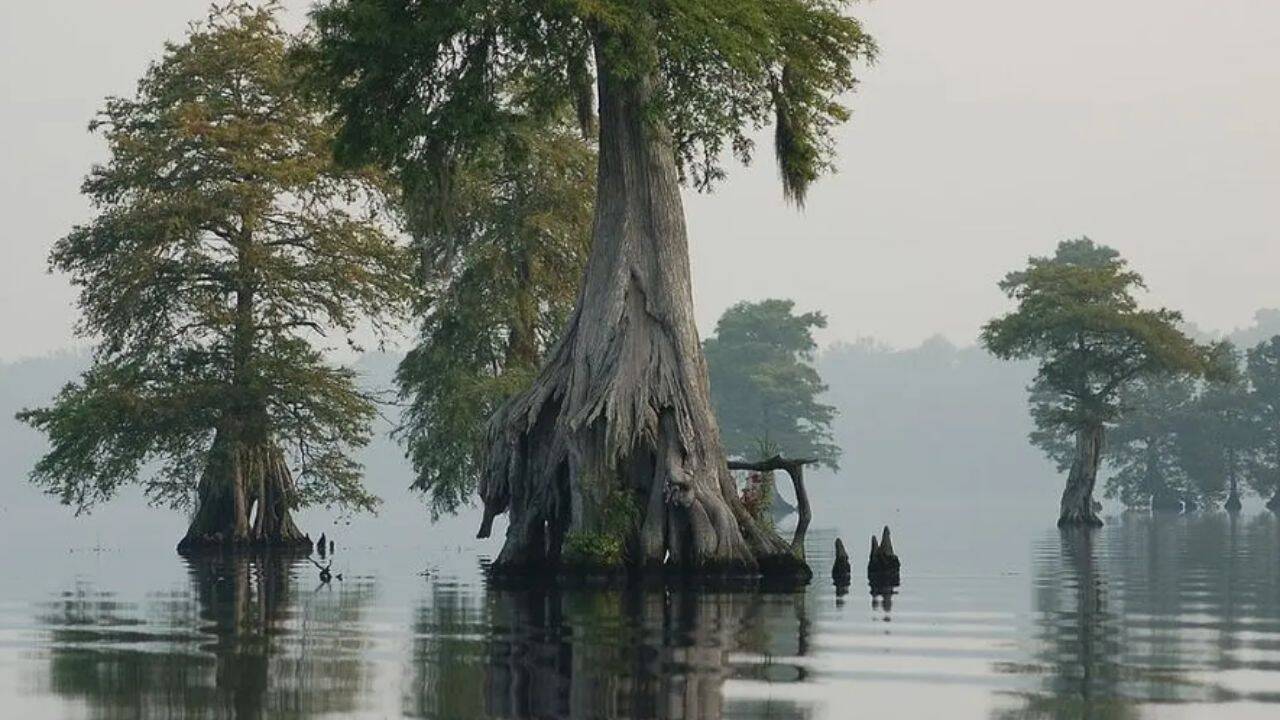
A significant environmental project is underway in North Carolina, where the restoration of coastal peatlands is yielding impressive results. By reintroducing water to areas previously damaged by drainage, farming, and timber activities, the state is reducing the risk of severe peat fires while keeping carbon stored in wet soils.
The Pocosin Lakes National Wildlife Refuge is a prime example of this restoration effort, with 37,000 acres of land already restored. Water-control structures have been implemented to recreate the natural water movement in the area, promoting a healthier ecosystem. Similar work is being done at the Angola Bay Game Land, where ditched peatland and wetland habitat are being restored.
These restoration projects not only help to mitigate the effects of climate change by storing carbon in the soil, but also provide numerous benefits to local wildlife. The reintroduction of water to these areas creates a more resilient ecosystem, better equipped to handle flooding and sea-level rise. Additionally, the projects involve local communities and landowners in the management of water across the coastal landscape, fostering a sense of cooperation and shared responsibility.
The restoration of coastal peatlands is a complex process, requiring careful planning and execution. However, the results are well worth the effort, with the potential to trap significant amounts of carbon. In fact, it is estimated that the restoration of the Virginia swamp alone can trap up to 200,000 tons of carbon per year.
The importance of preserving and restoring natural ecosystems like coastal peatlands cannot be overstated. These areas provide vital habitat for countless species of plants and animals, and play a critical role in regulating the climate. By supporting efforts like the restoration of the Pocosin Lakes National Wildlife Refuge and the Angola Bay Game Land, we can help to ensure the long-term health and resilience of our planet.
As the world continues to grapple with the challenges of climate change, projects like these serve as a reminder of the importance of preserving and restoring natural ecosystems. By working together to protect and restore these areas, we can help to reduce the risk of severe peat fires, store carbon in the soil, and promote a healthier, more resilient environment for generations to come.
In the context of global efforts to combat climate change, the restoration of coastal peatlands in North Carolina is a significant step in the right direction. As the state continues to work towards reducing its carbon footprint and promoting sustainability, projects like these will play an increasingly important role in achieving these goals.
The success of these restoration projects also highlights the importance of community involvement and cooperation in environmental conservation. By working together with local landowners and communities, the state can ensure that these efforts are sustainable and effective in the long term.
In conclusion, the restoration of coastal peatlands in North Carolina is a vital step towards reducing the risk of severe peat fires, storing carbon in the soil, and promoting a healthier, more resilient environment. With the potential to trap up to 200,000 tons of carbon per year, these projects are an important part of the global effort to combat climate change.
Frequently asked questions
What is the purpose of restoring coastal peatlands in North Carolina?
The purpose is to reduce the risk of severe peat fires, store carbon in the soil, and promote a healthier ecosystem.
How much carbon can the restoration of the Virginia swamp trap per year?
The restoration of the Virginia swamp can trap up to 200,000 tons of carbon per year.