Kashi Performs Ganga Aarti For Nepal Flood Victims
A special Ganga Aarti was held in Kashi, Uttar Pradesh to honour Nepal flood victims. The ceremony brought devotees together to pray for those affected.
'%3E%3Crect%20width%3D'96'%20height%3D'96'%20fill%3D'%23B3261E'%2F%3E%3Ccircle%20cx%3D'30'%20cy%3D'24'%20r%3D'44'%20fill%3D'%23fff'%20opacity%3D'.12'%2F%3E%3Ccircle%20cx%3D'60'%20cy%3D'74'%20r%3D'40'%20fill%3D'%23000'%20opacity%3D'.10'%2F%3E%3C%2Fg%3E%3Cg%20fill%3D'%23fff'%3E%3Crect%20x%3D'29'%20y%3D'49'%20width%3D'8'%20height%3D'19'%20rx%3D'1'%2F%3E%3Crect%20x%3D'39'%20y%3D'40'%20width%3D'9'%20height%3D'28'%20rx%3D'1'%2F%3E%3Crect%20x%3D'50'%20y%3D'45'%20width%3D'8'%20height%3D'23'%20rx%3D'1'%2F%3E%3Crect%20x%3D'60'%20y%3D'53'%20width%3D'7'%20height%3D'15'%20rx%3D'1'%2F%3E%3Crect%20x%3D'41'%20y%3D'34'%20width%3D'5'%20height%3D'6'%2F%3E%3C%2Fg%3E%3C%2Fsvg%3E)
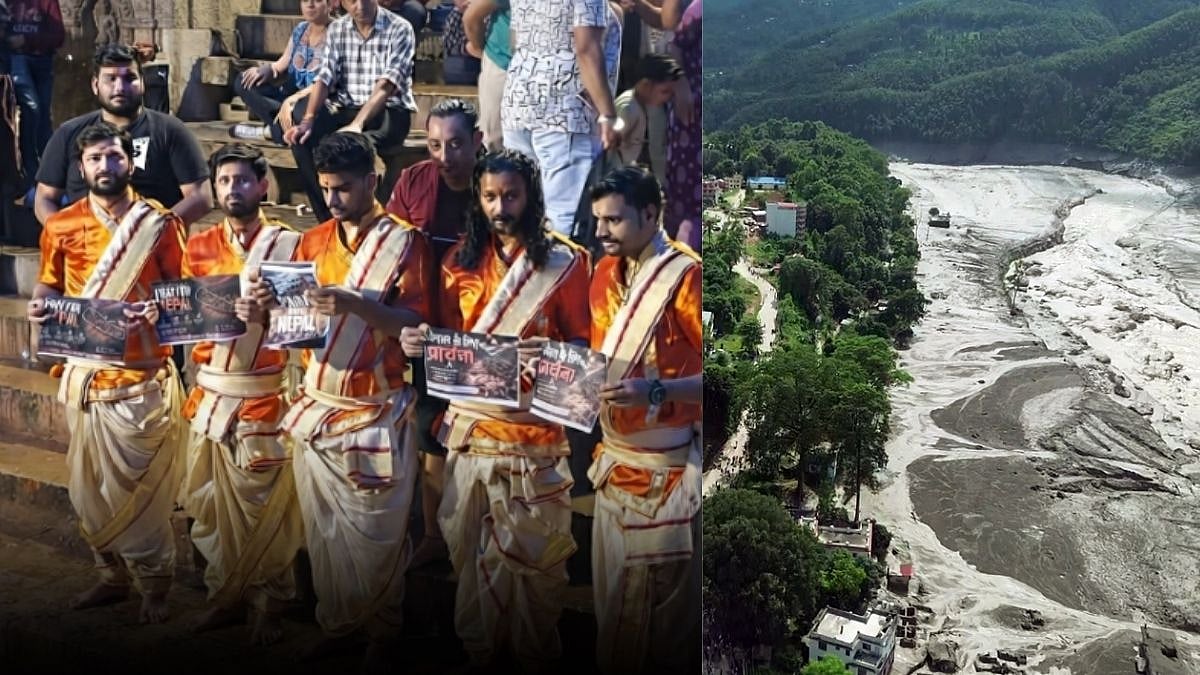
A special Ganga Aarti was performed in Kashi, Uttar Pradesh on Thursday to honour the victims of the devastating flash floods in Nepal. The ceremony, organised by the Gangotri Seva Samiti, was held at the ancient Dashashwamedh Ghat and brought devotees and members of the local community together to pray for those who lost their lives in the tragedy.
The event was dedicated to the people affected by the floods in Nepal and Tibet, and prayers were offered to Ganga and Baba Vishwanath for the safety of the flood victims, the speedy recovery of the injured, and peace for the souls of the deceased. A two-minute silence was also observed at the ghat in memory of the deceased, followed by lighting lamps and worshipping the Ganga on the banks of the river.
The flash floods in Nepal have caused widespread destruction, damaging roads, bridges, and other infrastructure, and disrupting travel and daily life. The disaster has raised concerns among authorities and travellers, particularly in areas located along routes leading towards popular pilgrimage destinations.
Kashi, one of India's most revered spiritual cities, is known for its traditional Ganga Aarti performed on the banks of the River Ganga. The special prayer ceremony for the Nepal flood victims carried a message of peace, compassion, and solidarity.
The ritual involved prayers and offerings to the sacred river, with participants remembering those affected by the natural disaster. Such ceremonies hold deep cultural and spiritual significance in Kashi, where the Ganga is considered sacred and the evening aarti attracts devotees and visitors from across the country.
The flash floods in Nepal have highlighted the vulnerability of Himalayan regions to extreme weather events. Heavy rainfall can rapidly trigger floods and landslides in mountainous areas, posing risks to communities as well as travellers.
The ceremony in Kashi was a gesture of solidarity with the people of Nepal and a reminder of the importance of compassion and support in times of crisis. It also underscored the significance of the Ganga Aarti as a symbol of hope and resilience in the face of adversity.
In the aftermath of the floods, Nepal has suspended rescue operations, and a fresh flood threat has emerged as a barrier lake bursts again on the Tibet side. The situation remains precarious, and the international community is watching with concern.
The Ganga Aarti in Kashi was a poignant reminder of the human cost of natural disasters and the need for collective action to mitigate their impact. As the people of Nepal struggle to come to terms with the devastation, the ceremony in Kashi served as a beacon of hope and solidarity, transcending borders and boundaries.
In conclusion, the special Ganga Aarti performed in Kashi, Uttar Pradesh, was a heartfelt tribute to the victims of the Nepal floods, and a testament to the power of compassion and solidarity in the face of adversity. It highlighted the importance of coming together to support those affected by natural disasters and underscored the significance of the Ganga Aarti as a symbol of hope and resilience.
The ceremony also served as a reminder of the vulnerability of Himalayan regions to extreme weather events and the need for collective action to mitigate their impact. As the situation in Nepal continues to unfold, the international community remains vigilant, and the people of Kashi stand in solidarity with those affected by the floods.
The Ganga Aarti in Kashi will be remembered as a poignant gesture of solidarity with the people of Nepal, and a testament to the enduring power of compassion and hope in the face of adversity.
Frequently asked questions
What was the purpose of the Ganga Aarti in Kashi?
The Ganga Aarti was performed to honour the victims of the Nepal floods and to pray for their safety and recovery.
Where was the Ganga Aarti held?
The ceremony was held at the ancient Dashashwamedh Ghat in Kashi, Uttar Pradesh.