Cabinet To Clear New Urea Policy Today
India aims to cut import dependence, reduce subsidy burden. New policy to increase domestic urea production.
'%3E%3Crect%20width%3D'96'%20height%3D'96'%20fill%3D'%230B6E4F'%2F%3E%3Ccircle%20cx%3D'30'%20cy%3D'24'%20r%3D'44'%20fill%3D'%23fff'%20opacity%3D'.12'%2F%3E%3Ccircle%20cx%3D'60'%20cy%3D'74'%20r%3D'40'%20fill%3D'%23000'%20opacity%3D'.10'%2F%3E%3C%2Fg%3E%3Cg%20fill%3D'none'%20stroke%3D'%23fff'%20stroke-width%3D'3.2'%20stroke-linecap%3D'round'%20stroke-linejoin%3D'round'%3E%3Cpolyline%20points%3D'31%2C59%2041%2C49%2049%2C54%2063%2C37'%2F%3E%3Cpolyline%20points%3D'55%2C37%2063%2C37%2063%2C45'%2F%3E%3C%2Fg%3E%3C%2Fsvg%3E)
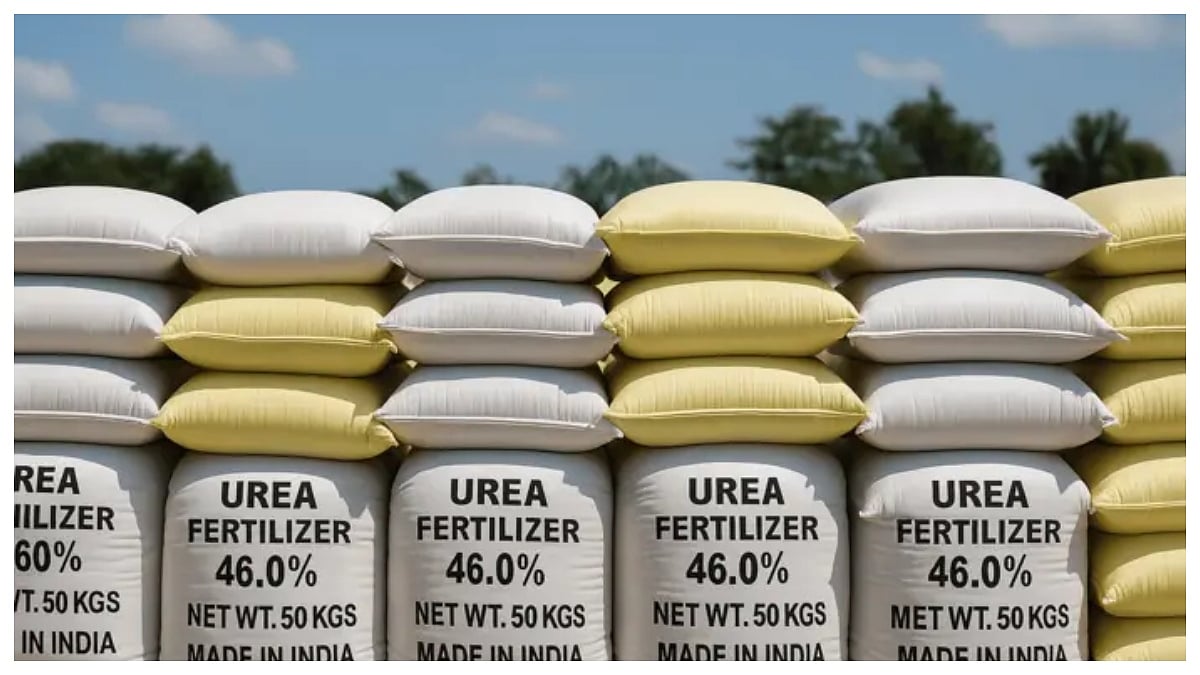
The Union Cabinet is set to consider a major overhaul of India's urea sector today, with a new investment policy, revised production norms, and continued fertiliser subsidy support for FY26. The proposed policy aims to address long-standing challenges in the fertiliser sector, including dependence on imports, rising costs, and supply disruptions caused by geopolitical tensions.
India's heavy reliance on imported urea and raw materials from regions affected by global conflicts has raised concerns. To mitigate this, the proposed framework seeks to increase domestic urea production by around 9-10 million tonnes over the next eight years. This will be achieved through the establishment of seven new manufacturing units, including both greenfield and brownfield plants.
Each facility is estimated to have an annual production capacity of nearly 1.27 million tonnes. The expansion is expected to reduce the government's subsidy burden significantly, with conservative estimates suggesting that the policy could help save more than Rs 10,500 crore annually in subsidies. This assumes imported urea prices remain around $345 per tonne.
The new policy may provide guaranteed buyback support to new plants for eight years from the start of commercial production. The government is also examining the possibility of using ammonia produced through coal gasification as a feedstock instead of relying heavily on imported liquefied natural gas (LNG). This move is aimed at reducing vulnerability to supply disruptions, especially as a large share of India's LNG imports come from Gulf countries.
In FY25, India imported nearly 27 million tonnes of LNG, with around 61 per cent sourced from Gulf nations such as Qatar, the UAE, and Oman. Nearly 85 per cent of gas used in domestic urea production is imported. The proposed investment policy estimates project costs at around Rs 11,000 crore for greenfield plants and Rs 9,000 crore for brownfield expansions.
Currently, India imports around 26 per cent of its annual urea requirement, creating significant pressure on government finances. During the West Asia crisis, fertiliser subsidy estimates for FY27 had risen sharply, with projections suggesting they could have touched nearly Rs 3 trillion. However, subsidy projections have recently moderated after China eased export restrictions and India improved fertiliser inventories to meet domestic demand.
The proposed reforms are expected to strengthen domestic production capacity, reduce import dependence, and improve India's long-term fertiliser security. The move is part of the government's efforts to reduce dependence on imports and promote self-sufficiency in the fertiliser sector.
The new urea policy is a significant step towards achieving this goal. With the establishment of new manufacturing units and the use of coal gasification, India aims to reduce its reliance on imported urea and LNG. This will not only help reduce the subsidy burden but also improve the country's energy security.
In the long run, the proposed policy is expected to have a positive impact on India's fertiliser sector. It will help increase domestic production, reduce import dependence, and promote self-sufficiency. This will also help reduce the pressure on government finances and improve the country's overall energy security.
The approval of the new urea policy is a significant development for India's fertiliser sector. It is expected to have a positive impact on the country's economy and energy security. With the government's efforts to promote self-sufficiency and reduce dependence on imports, India is taking a significant step towards achieving its goal of becoming a major player in the global fertiliser market.
The new policy is also expected to create new opportunities for investment and job creation in the fertiliser sector. With the establishment of new manufacturing units, there will be a need for skilled workers and professionals to manage and operate these facilities. This will help create new employment opportunities and stimulate economic growth in the region.
In conclusion, the proposed new urea policy is a significant development for India's fertiliser sector. It aims to reduce import dependence, promote self-sufficiency, and improve the country's energy security. With the government's efforts to promote investment and job creation, the policy is expected to have a positive impact on the country's economy and fertiliser sector.
The policy's impact will be closely watched by stakeholders in the fertiliser sector, including farmers, manufacturers, and policymakers. As India continues to promote self-sufficiency and reduce dependence on imports, the new urea policy is expected to play a significant role in achieving this goal. With its focus on increasing domestic production, reducing import dependence, and promoting energy security, the policy is a major step towards creating a more sustainable and self-sufficient fertiliser sector in India.
The government's decision to approve the new urea policy is a significant step towards achieving its goal of promoting self-sufficiency and reducing dependence on imports. As the policy is implemented, it is expected to have a positive impact on India's fertiliser sector, economy, and energy security. With its focus on increasing domestic production, reducing import dependence, and promoting energy security, the policy is a major step towards creating a more sustainable and self-sufficient fertiliser sector in India.
The new urea policy is a significant development for India's fertiliser sector, and its impact will be closely watched by stakeholders in the sector. As the policy is implemented, it is expected to have a positive impact on the country's economy, energy security, and fertiliser sector. With the government's efforts to promote self-sufficiency and reduce dependence on imports, the policy is a major step towards achieving this goal.
In the coming years, the new urea policy is expected to play a significant role in shaping India's fertiliser sector. With its focus on increasing domestic production, reducing import dependence, and promoting energy security, the policy is a major step towards creating a more sustainable and self-sufficient fertiliser sector in India. As the policy is implemented, it is expected to have a positive impact on the country's economy, energy security, and fertiliser sector.
The significance of the new urea policy cannot be overstated. It is a major step towards achieving India's goal of promoting self-sufficiency and reducing dependence on imports. With the government's efforts to promote investment and job creation, the policy is expected to have a positive impact on the country's economy and fertiliser sector. As the policy is implemented, it is expected to have a lasting impact on India's fertiliser sector, economy, and energy security.
The new urea policy is a significant development for India's fertiliser sector, and its impact will be felt for years to come. With the government's efforts to promote self-sufficiency and reduce dependence on imports, the policy is a major step towards achieving this goal. As the policy is implemented, it is expected to have a positive impact on the country's economy, energy security, and fertiliser sector.
In conclusion, the proposed new urea policy is a significant development for India's fertiliser sector. It aims to reduce import dependence, promote self-sufficiency, and improve the country's energy security. With the government's efforts to promote investment and job creation, the policy is expected to have a positive impact on the country's economy and fertiliser sector. The policy's impact will be closely watched by stakeholders in the fertiliser sector, and it is expected to have a lasting impact on India's fertiliser sector, economy, and energy security.
What it means for India is that the new urea policy will help reduce the country's dependence on imported urea and LNG, improve energy security, and promote self-sufficiency in the fertiliser sector. This will have a positive impact on the country's economy, as it will reduce the pressure on government finances and improve the overall energy security. The policy is a significant step towards achieving India's goal of promoting self-sufficiency and reducing dependence on imports, and its impact will be felt for years to come.