Tamil Nadu CM Opposes NEET-Based BVSc Admissions
Tamil Nadu CM urges PM Modi to retain Class XII marks-based admissions
'%3E%3Crect%20width%3D'96'%20height%3D'96'%20fill%3D'%231A5276'%2F%3E%3Ccircle%20cx%3D'30'%20cy%3D'24'%20r%3D'44'%20fill%3D'%23fff'%20opacity%3D'.12'%2F%3E%3Ccircle%20cx%3D'60'%20cy%3D'74'%20r%3D'40'%20fill%3D'%23000'%20opacity%3D'.10'%2F%3E%3C%2Fg%3E%3Cg%20fill%3D'%23fff'%3E%3Cpath%20d%3D'M31%2041%20L48%2031%20L65%2041%20Z'%2F%3E%3Crect%20x%3D'33'%20y%3D'43'%20width%3D'4'%20height%3D'17'%2F%3E%3Crect%20x%3D'41'%20y%3D'43'%20width%3D'4'%20height%3D'17'%2F%3E%3Crect%20x%3D'51'%20y%3D'43'%20width%3D'4'%20height%3D'17'%2F%3E%3Crect%20x%3D'59'%20y%3D'43'%20width%3D'4'%20height%3D'17'%2F%3E%3Crect%20x%3D'30'%20y%3D'62'%20width%3D'36'%20height%3D'4'%20rx%3D'1'%2F%3E%3C%2Fg%3E%3C%2Fsvg%3E)
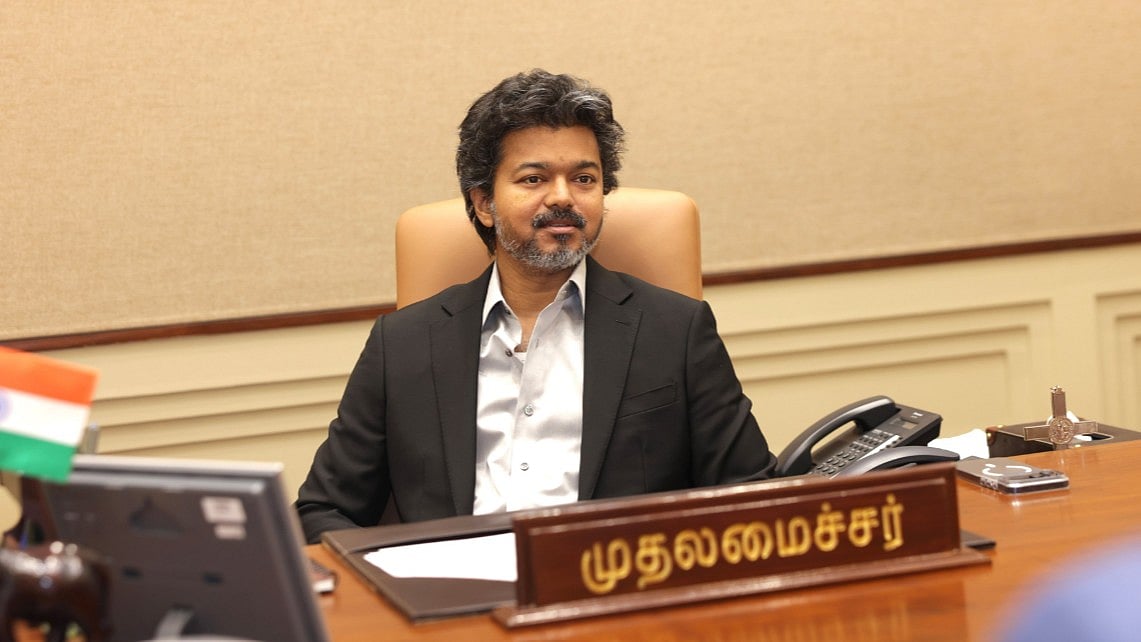
Tamil Nadu Chief Minister C Joseph Vijay has written to Prime Minister Narendra Modi, urging him to intervene and ensure that admissions to the Bachelor of Veterinary Science and Animal Husbandry (BVSc & AH) course continue to be based on Class XII marks or admission criteria determined by individual State governments.
The Chief Minister's letter, dated August 6, opposes the Veterinary Council of India's proposal to introduce a Common Entrance Examination or use the NEET (UG)-2026 merit list for BVSc & AH admissions from the 2026-27 academic year onwards. Vijay argues that this move would have serious implications for Tamil Nadu's long-standing admission policy, which has ensured equitable access to professional education for students from rural areas, government schools, economically weaker sections, and socially disadvantaged communities.
Tamil Nadu abolished the Common Entrance Examination for professional courses in 2007-08 and has consistently opposed centralized entrance tests such as NEET, contending that they favor students with access to coaching and greater financial resources. The Chief Minister also cited past concerns over the conduct of NEET, including alleged irregularities and the 2024 question paper leak that led to a CBI investigation.
Vijay maintains that veterinary education is closely linked to the agricultural and rural economy of each State and that State governments should retain the authority to frame admission policies suited to their socio-economic conditions while upholding academic standards. He requested the Prime Minister to direct the Veterinary Council of India to review its decision and allow admissions to continue on the basis of Higher Secondary marks or criteria prescribed by the respective States.
The proposal to introduce NEET-based admissions for BVSc & AH courses has sparked concern among students and educators in Tamil Nadu, who fear that it will limit opportunities for students from disadvantaged backgrounds. The Chief Minister's letter to the Prime Minister is seen as an attempt to protect the interests of these students and ensure that they have access to professional education.
The Veterinary Council of India's proposal is part of a larger effort to standardize admissions to professional courses across the country. However, opponents of the proposal argue that it will lead to a one-size-fits-all approach that ignores the unique needs and circumstances of different States.
The issue is likely to be debated further in the coming weeks, with educators, students, and policymakers weighing in on the merits of the proposal. For now, the Chief Minister's letter to the Prime Minister has highlighted the concerns of Tamil Nadu and other States that oppose the introduction of NEET-based admissions for BVSc & AH courses.
In conclusion, the Tamil Nadu Chief Minister's opposition to NEET-based admissions for BVSc & AH courses reflects the State's commitment to ensuring equitable access to professional education for all students, regardless of their background or socio-economic status. The issue is likely to have significant implications for the future of veterinary education in India and will be closely watched by educators, students, and policymakers across the country.
The decision on whether to introduce NEET-based admissions for BVSc & AH courses will have far-reaching consequences for the education sector in India. It is essential to consider the concerns of all stakeholders, including students, educators, and State governments, before making a decision on this critical issue.
Ultimately, the goal of any admission policy should be to ensure that students have access to quality education, regardless of their background or socio-economic status. The Tamil Nadu Chief Minister's opposition to NEET-based admissions for BVSc & AH courses is a step in this direction, and it is hoped that the Prime Minister and the Veterinary Council of India will consider his concerns and work towards a solution that benefits all students.
Frequently asked questions
Why is the Tamil Nadu CM opposing NEET-based BVSc admissions?
The CM argues that the current system ensures equitable access to professional education for students from rural areas, government schools, economically weaker sections, and socially disadvantaged communities.
What is the proposed alternative to NEET-based admissions?
The CM has suggested that admissions continue to be based on Class XII marks or criteria prescribed by the respective States.