Turkmenistan's 'Door to Hell' Fades
Turkmenistan's fiery landmark weakens, tourist draw fades, environmental concerns rise
'%3E%3Crect%20width%3D'96'%20height%3D'96'%20fill%3D'%23B3261E'%2F%3E%3Ccircle%20cx%3D'30'%20cy%3D'24'%20r%3D'44'%20fill%3D'%23fff'%20opacity%3D'.12'%2F%3E%3Ccircle%20cx%3D'60'%20cy%3D'74'%20r%3D'40'%20fill%3D'%23000'%20opacity%3D'.10'%2F%3E%3C%2Fg%3E%3Cg%20fill%3D'%23fff'%3E%3Crect%20x%3D'29'%20y%3D'49'%20width%3D'8'%20height%3D'19'%20rx%3D'1'%2F%3E%3Crect%20x%3D'39'%20y%3D'40'%20width%3D'9'%20height%3D'28'%20rx%3D'1'%2F%3E%3Crect%20x%3D'50'%20y%3D'45'%20width%3D'8'%20height%3D'23'%20rx%3D'1'%2F%3E%3Crect%20x%3D'60'%20y%3D'53'%20width%3D'7'%20height%3D'15'%20rx%3D'1'%2F%3E%3Crect%20x%3D'41'%20y%3D'34'%20width%3D'5'%20height%3D'6'%2F%3E%3C%2Fg%3E%3C%2Fsvg%3E)
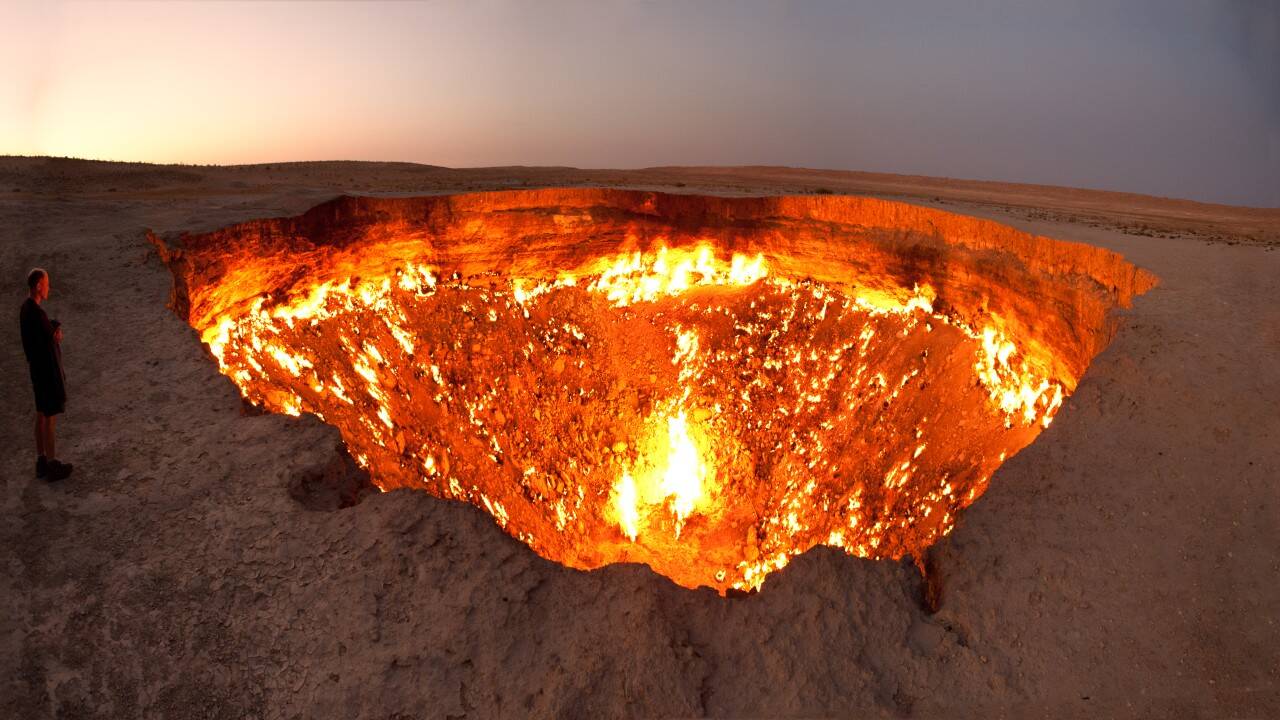
A significant change is underway in Turkmenistan, where the infamous 'door to hell' crater, a burning landmark for decades, is weakening. The crater, which has been a major tourist attraction, is now seeing a reduction in the natural gas flow that has been feeding its persistent flames.
This development comes as authorities in the country take steps to address environmental concerns related to the site. The 'door to hell' crater, which is located in the heart of Turkmenistan's desert, has been burning continuously since it was accidentally created in 1971 during a drilling operation.
The crater's fiery spectacle has been a source of fascination for tourists and scientists alike, with many visiting the site to witness its unique beauty. However, in recent years, the site has become a cause for concern due to its significant methane emissions, which contribute to climate change.
Scientists have been actively monitoring the methane emissions from the site, using it as a valuable source of data for climate research. The reduction in gas flow is expected to have a positive impact on the environment, although it remains to be seen what the future holds for the crater.
The 'door to hell' crater has been a major part of Turkmenistan's tourism industry, with many visitors traveling to the country specifically to see the site. However, as the crater's flames diminish, it is likely that its appeal as a tourist destination will also fade.
The decision to reduce the gas flow to the crater is a significant one, and it highlights the growing concern about environmental issues in the region. As the world becomes increasingly aware of the need to address climate change, it is likely that more measures will be taken to reduce emissions and protect the environment.
In the case of the 'door to hell' crater, the reduction in gas flow is a positive step towards mitigating its environmental impact. However, it also marks the end of an era for a site that has been a source of fascination for so many people.
The future of the crater is uncertain, and it remains to be seen what will happen to the site as the flames continue to fade. One thing is clear, however: the 'door to hell' crater will never be the same again.
As the world continues to grapple with the challenges of climate change, the story of the 'door to hell' crater serves as a reminder of the importance of taking action to protect the environment. Whether or not the crater continues to burn, its legacy as a unique and fascinating landmark will live on, and it will remain an important part of Turkmenistan's history and identity.
In conclusion, the weakening of the 'door to hell' crater is a significant development that highlights the growing concern about environmental issues in the region. As the world becomes increasingly aware of the need to address climate change, it is likely that more measures will be taken to reduce emissions and protect the environment, and the story of the 'door to hell' crater will serve as an important reminder of the importance of taking action to protect the planet.