Iran Approves Bill To Jail Citizens For Talking To Foreign Media
Iran's parliament has approved a bill that could put citizens in jail for talking to foreign media. The bill is meant to counter foreign infiltration.
'%3E%3Crect%20width%3D'96'%20height%3D'96'%20fill%3D'%234A235A'%2F%3E%3Ccircle%20cx%3D'30'%20cy%3D'24'%20r%3D'44'%20fill%3D'%23fff'%20opacity%3D'.12'%2F%3E%3Ccircle%20cx%3D'60'%20cy%3D'74'%20r%3D'40'%20fill%3D'%23000'%20opacity%3D'.10'%2F%3E%3C%2Fg%3E%3Cg%20fill%3D'none'%20stroke%3D'%23fff'%20stroke-width%3D'3'%3E%3Ccircle%20cx%3D'48'%20cy%3D'48'%20r%3D'16'%2F%3E%3Cellipse%20cx%3D'48'%20cy%3D'48'%20rx%3D'6.5'%20ry%3D'16'%2F%3E%3Cline%20x1%3D'32'%20y1%3D'42'%20x2%3D'64'%20y2%3D'42'%2F%3E%3Cline%20x1%3D'32'%20y1%3D'54'%20x2%3D'64'%20y2%3D'54'%2F%3E%3C%2Fg%3E%3C%2Fsvg%3E)
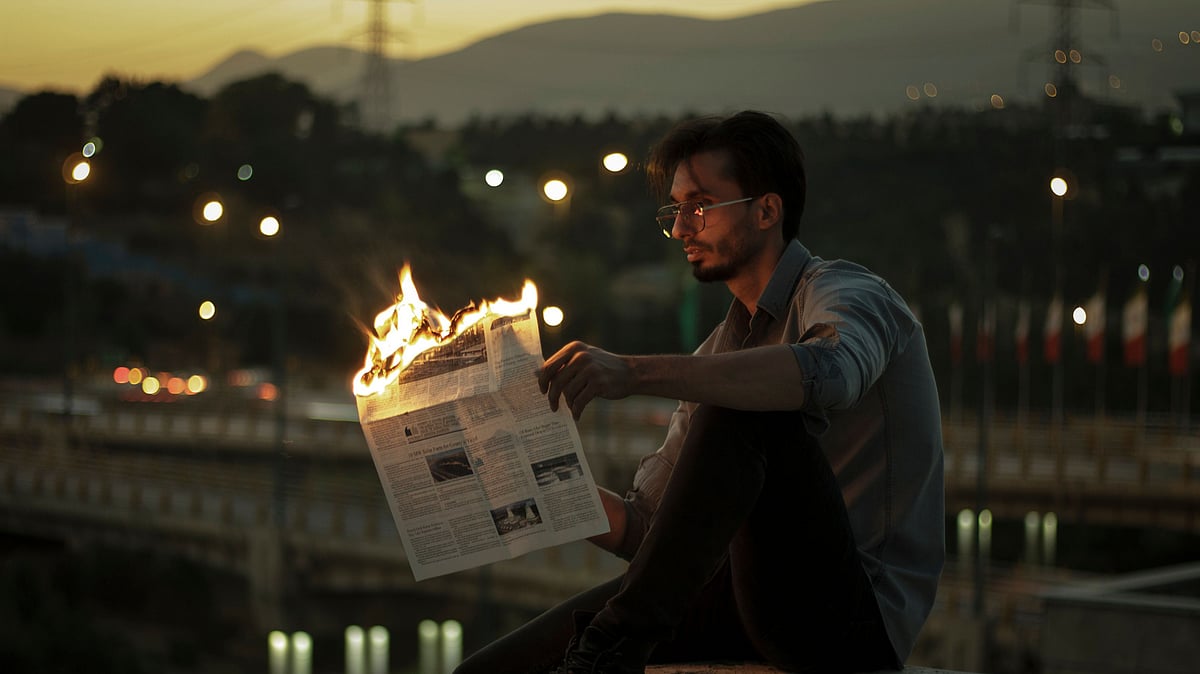
Iran's parliament has given preliminary approval to a sweeping bill that would criminalise unauthorised communication with foreign media outlets deemed 'hostile'. The legislation, approved in principle on August 16, is being presented by Iranian authorities as a national-security measure aimed at countering alleged 'infiltration' by foreign intelligence services, governments and organisations.
However, rights groups and press-freedom advocates warn that its broad provisions could extend well beyond conventional espionage cases, potentially putting journalists, academics, researchers and ordinary citizens at risk for routine communication with people or organisations abroad. The bill is not yet law, and parliament must still debate and approve its individual articles before the legislation is sent to the Guardian Council for review.
One of the most contentious provisions concerns communication with foreign news organisations classified by Iranian authorities as hostile. Under the proposed legislation, interviews, discussions and other forms of communication with such outlets could become criminal offences. Media organisations affiliated with or financed by the United States or Israel could fall within the category.
Those convicted of prohibited communication could face between six months and two years in prison, according to the Organized Crime and Corruption Reporting Project (OCCRP). The draft would also restrict the transfer of photographs, videos, audio recordings and other information to foreign media. The potential impact could extend beyond professional journalists, with people who provide information, images or other material to overseas news organisations facing prosecution, particularly during periods of political unrest, conflict or heightened tensions.
The proposed framework would reportedly require prior notification to Iran's Intelligence Ministry for certain forms of communication with foreign media. Failure to comply could result in criminal penalties. It also covers communication with foreign embassies, institutions and organisations, with unauthorised contact potentially leading to fines and the loss of certain social rights.
The legislation further addresses areas including scientific and academic cooperation outside approved channels, economic offences involving foreigners and policy proposals allegedly influenced by foreign intelligence services. Some offences under the broader framework could carry significantly heavier sentences, with penalties of up to 30 years in certain circumstances. Cases involving the proposed offences would reportedly be handled by Iran's Revolutionary Courts, which rights groups have long criticised for their role in national-security prosecutions.
The proposed restrictions could also affect social media, with users potentially facing greater scrutiny for their online activities. The bill's impact on press freedom, access to information and dissent in Iran is likely to be significant, with many fearing that it could lead to a further crackdown on free speech and independent media.
The Iranian government's move to restrict communication with foreign media outlets is seen as a bid to exert greater control over the flow of information and to suppress dissenting voices. However, the move is likely to be met with widespread criticism from rights groups and press-freedom advocates, who argue that it is a blatant attempt to stifle free speech and independent media.
In conclusion, the proposed bill in Iran has significant implications for press freedom, access to information and dissent in the country. The legislation's broad provisions could put journalists, academics, researchers and ordinary citizens at risk for routine communication with people or organisations abroad, and its impact on social media and online activities is likely to be significant. As the bill makes its way through the Iranian parliament, it is likely to be closely watched by rights groups and press-freedom advocates around the world.
Frequently asked questions
What is the proposed bill in Iran about?
The proposed bill in Iran would criminalise unauthorised communication with foreign media outlets deemed 'hostile'.
What are the potential penalties for violating the proposed bill?
Those convicted of prohibited communication could face between six months and two years in prison, with some offences carrying penalties of up to 30 years.