Delhi HC Asks DU To Respond To Refugee's Plea
Myanmar refugee challenges DU's passport requirement. Court seeks university's response.

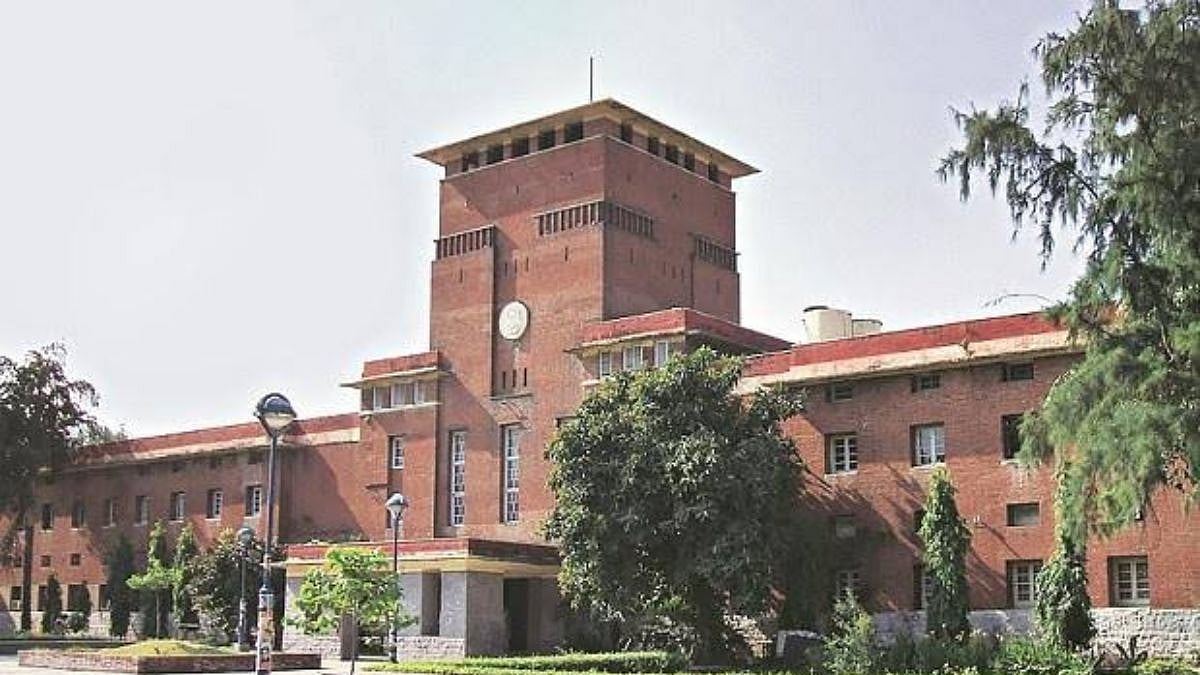
The Delhi High Court has sought the response of the University of Delhi (DU) on a petition filed by a Myanmar refugee who is challenging the university's requirement that foreign students must possess a valid non-Indian passport for admission to undergraduate courses.
The petition was filed by Henry Htoo Aung Lin, a UNHCR-recognised Myanmar refugee, through his advocates. During the hearing, Justice Jasmeet Singh questioned the university's stand, asking how a refugee could be expected to possess a passport.
The court has granted time to the university to obtain instructions and has listed the matter for further hearing on July 13, 2026. The petitioner has sought directions to either strike down or read down the impugned condition and to direct the university to consider his application for admission under the Foreign Students' Category without insisting on production of a passport.
According to the petition, Henry and his family fled Myanmar in 2022 due to political instability, violence, and fear of persecution, and have since been residing in India under the protection of the United Nations High Commissioner for Refugees (UNHCR). After completing his schooling in India, he applied for admission to Delhi University for the 2026-27 academic session through the Foreign Students' Registry.
However, the university informed him that his application was incomplete as he had not submitted a passport. Despite making representations requesting that his UNHCR refugee documentation be accepted in place of a passport, no relief was granted.
The petition argues that the university's insistence on a passport imposes an impossible condition on recognised refugees, who cannot safely approach the authorities of the very country from which they have sought refuge. It submits that such a requirement violates Articles 14 and 21 of the Constitution by treating refugees on par with ordinary foreign nationals despite their fundamentally different legal and humanitarian status.
The plea also points out that the university's own FSR Admission Bulletin recognises a UNHCR Refugee Certificate as one of the prescribed documents, making the simultaneous insistence on a national passport self-contradictory and arbitrary. It also highlights that the university's admission framework permits Tibetan nationals to rely on alternative documentation such as a Registration Certificate where passports are unavailable.
The university's response to the petition is awaited, and the court will hear the matter further on July 13, 2026. The outcome of this case may have significant implications for refugees seeking admission to Indian universities.
The issue of refugee admission to Indian universities is a complex one, with many refugees facing difficulties in accessing higher education due to documentation requirements. The Delhi High Court's decision in this case may provide clarity on the issue and potentially pave the way for more refugees to access higher education in India.
In recent years, India has seen an influx of refugees from various countries, including Myanmar, due to political instability and persecution. The Indian government has provided protection to these refugees, but many still face challenges in accessing basic services, including education.
The University of Delhi is one of the premier universities in India, and its admission policies have a significant impact on the higher education landscape in the country. The court's decision in this case may have far-reaching implications for the university's admission policies and may potentially lead to changes in the way refugees are treated in the Indian higher education system.
Overall, the Delhi High Court's decision to seek the university's response to the petition is a significant development in the case, and the outcome of the case will be closely watched by refugee rights activists and educators in India.
The case highlights the need for Indian universities to have policies in place that cater to the unique needs of refugees, who often face significant challenges in accessing higher education due to documentation requirements. It also underscores the importance of ensuring that refugees have equal access to education, regardless of their nationality or immigration status.
In conclusion, the Delhi High Court's decision to hear the petition filed by the Myanmar refugee is a significant step towards ensuring that refugees have access to higher education in India. The outcome of the case will have significant implications for refugees seeking admission to Indian universities, and may potentially lead to changes in the way refugees are treated in the Indian higher education system.