Sheikh Hasina To Be Arrested Upon Return To Bangladesh
Bangladesh Law Minister says Hasina will be arrested before court surrender. She faces death penalty for crimes against humanity.
'%3E%3Crect%20width%3D'96'%20height%3D'96'%20fill%3D'%234A235A'%2F%3E%3Ccircle%20cx%3D'30'%20cy%3D'24'%20r%3D'44'%20fill%3D'%23fff'%20opacity%3D'.12'%2F%3E%3Ccircle%20cx%3D'60'%20cy%3D'74'%20r%3D'40'%20fill%3D'%23000'%20opacity%3D'.10'%2F%3E%3C%2Fg%3E%3Cg%20fill%3D'none'%20stroke%3D'%23fff'%20stroke-width%3D'3'%3E%3Ccircle%20cx%3D'48'%20cy%3D'48'%20r%3D'16'%2F%3E%3Cellipse%20cx%3D'48'%20cy%3D'48'%20rx%3D'6.5'%20ry%3D'16'%2F%3E%3Cline%20x1%3D'32'%20y1%3D'42'%20x2%3D'64'%20y2%3D'42'%2F%3E%3Cline%20x1%3D'32'%20y1%3D'54'%20x2%3D'64'%20y2%3D'54'%2F%3E%3C%2Fg%3E%3C%2Fsvg%3E)
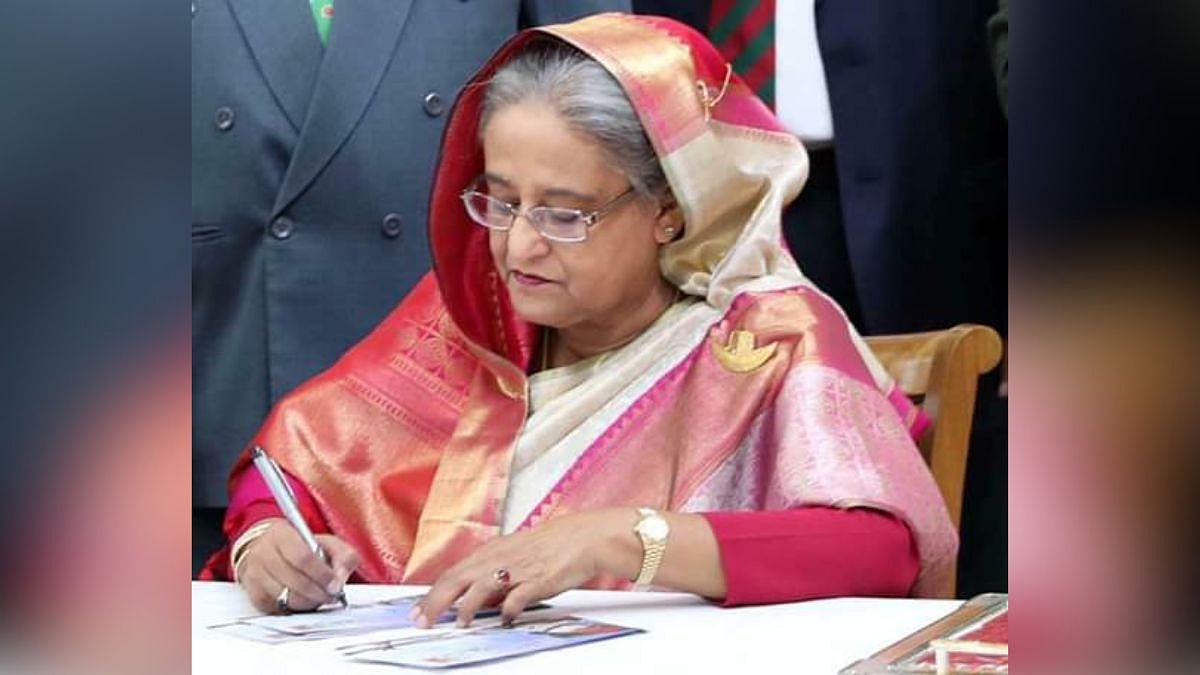
Bangladesh's deposed Prime Minister Sheikh Hasina will likely be arrested immediately upon her return from India, according to Law Minister M Asaduzzaman. This comes before she can surrender to a court, as she has expressed intentions to do.
Hasina, who has been living in India since her government was toppled in August 2024, has stated that she plans to return to Bangladesh by December despite fearing for her life. In a recent interview, she said, 'I may be killed. I may be arrested. I may be sent to prison … I am fully aware of my fate. Still, I want to go back because my people are calling me.'
The Law Minister's remarks suggest that the government will follow the law and take action against Hasina, who was sentenced to death in absentia in November 2025 for crimes against humanity. Asaduzzaman stated that as a Bangladeshi citizen, Hasina has the right to return, but the law will be enforced.
The case against Hasina stems from her role in the crackdown on student-led protests in 2024. International human rights organizations, including Amnesty International and Human Rights Watch, have criticized the proceedings as 'flawed' and questioned the fairness of the trial.
Hasina's return to Bangladesh is uncertain, given that her passport was revoked by the interim government. When asked about this, Asaduzzaman replied that it was her problem, not his. However, he emphasized that whenever she enters Bangladeshi territory, he will enforce the law.
The Bangladesh government has been seeking Hasina's extradition from India, which has acknowledged receiving the request and is considering it under legal review. The country held elections earlier this year, resulting in the formation of a new government led by the Bangladesh Nationalist Party, with Tarique Rahman as the prime minister.
The situation highlights the complex and sensitive nature of Bangladesh's political landscape. As the country navigates its internal conflicts and external relationships, the fate of Sheikh Hasina remains a pressing concern.
The implications of Hasina's potential return and arrest are significant, not only for her personally but also for the political stability of Bangladesh. The international community will be watching closely as the situation unfolds, given the concerns raised about the fairness of the trial and the human rights implications.
In conclusion, the potential arrest of Sheikh Hasina upon her return to Bangladesh underscores the ongoing tensions and challenges facing the country. As the situation continues to evolve, it is essential to consider the broader context and the potential consequences for Bangladesh's political future.
The case of Sheikh Hasina serves as a reminder of the complexities and challenges inherent in navigating political conflicts and upholding the rule of law. As Bangladesh moves forward, it is crucial to prioritize transparency, accountability, and human rights, ensuring that the country's democratic institutions are strengthened and its citizens' rights are protected.
Ultimately, the outcome of Sheikh Hasina's case will have far-reaching implications for Bangladesh, its people, and the international community. It is essential to approach this situation with caution, careful consideration, and a commitment to upholding the principles of justice and human rights.
Frequently asked questions
What is the current status of Sheikh Hasina's extradition request?
The extradition request is under legal consideration in India.
What are the charges against Sheikh Hasina?
She was sentenced to death in absentia for crimes against humanity related to the crackdown on student-led protests in 2024.