Oil Tankers Attacked In Strait Of Hormuz Amid US-Iran Tensions
Two oil tankers hit, concerns over energy shipping route safety grow
'%3E%3Crect%20width%3D'96'%20height%3D'96'%20fill%3D'%234A235A'%2F%3E%3Ccircle%20cx%3D'30'%20cy%3D'24'%20r%3D'44'%20fill%3D'%23fff'%20opacity%3D'.12'%2F%3E%3Ccircle%20cx%3D'60'%20cy%3D'74'%20r%3D'40'%20fill%3D'%23000'%20opacity%3D'.10'%2F%3E%3C%2Fg%3E%3Cg%20fill%3D'none'%20stroke%3D'%23fff'%20stroke-width%3D'3'%3E%3Ccircle%20cx%3D'48'%20cy%3D'48'%20r%3D'16'%2F%3E%3Cellipse%20cx%3D'48'%20cy%3D'48'%20rx%3D'6.5'%20ry%3D'16'%2F%3E%3Cline%20x1%3D'32'%20y1%3D'42'%20x2%3D'64'%20y2%3D'42'%2F%3E%3Cline%20x1%3D'32'%20y1%3D'54'%20x2%3D'64'%20y2%3D'54'%2F%3E%3C%2Fg%3E%3C%2Fsvg%3E)
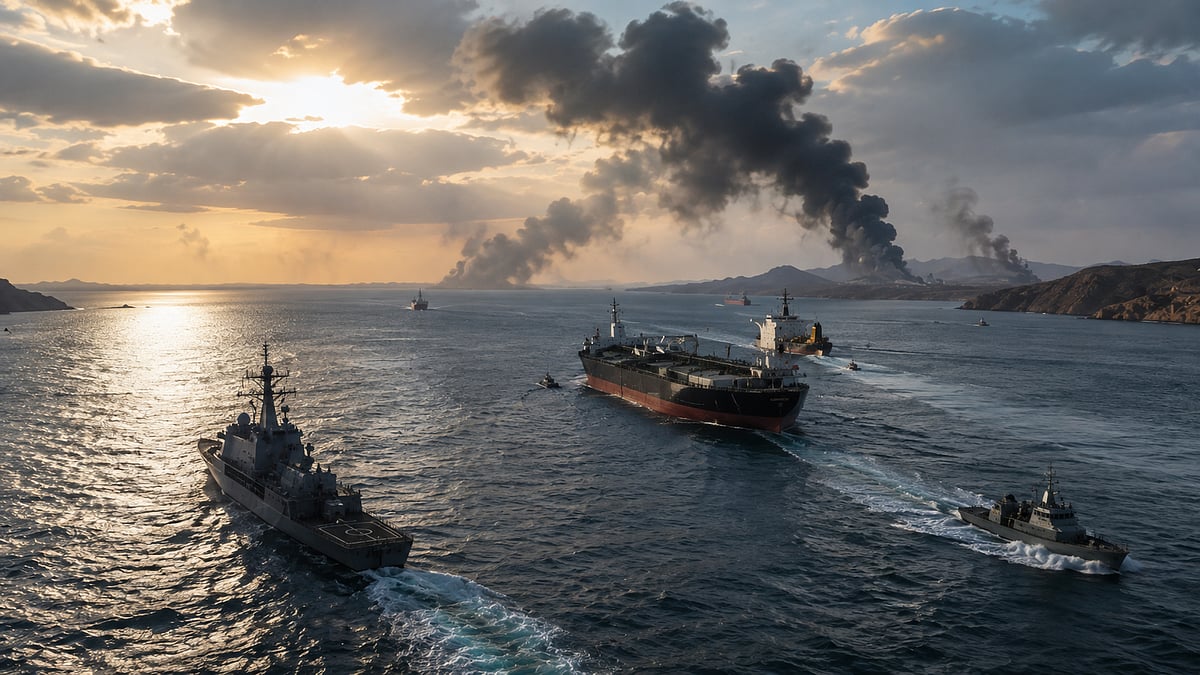
Two oil tankers were attacked by unidentified projectiles while traveling through the Strait of Hormuz, a critical global energy route, amid escalating tensions between the United States and Iran. The incidents occurred northeast of Khasab in Oman and east of Oman, with one vessel, Sidr, operated by Saudi Arabia's Bahri shipping company, and another tanker, Senegal Prosperity, managed by Sinokor, being struck by three projectiles.
The attacks on the oil tankers have increased concerns over the safety of the Strait of Hormuz, which is a vital shipping route for global energy supplies. According to maritime security consultancy Marisks, the two crude carriers were targeted in separate incidents within a short period. Both vessels were reportedly leaving the Persian Gulf when they came under attack.
The UK Maritime Trade Operations (UKMTO) reported that a tanker had been hit by three unknown projectiles during an outbound transit of the Strait of Hormuz, with the incident occurring around 17 nautical miles east of Khasab. No casualties or environmental damage were reported, and the crew of the affected vessel, the Liberia-flagged Senegal Prosperity, remained safe despite damage to parts of the ship.
The decline in shipping activity in the Strait of Hormuz has been evident, with ship-tracking data showing that around five commodity vessels passed through the waterway on Monday, below the 10-day average of about 14 vessels. The reduction in shipping activity is attributed to the rising tensions between Iran, the US, and Israel, which have disrupted traffic in the region.
The Strait of Hormuz is a critical global energy route, with nearly one-fifth of the world's oil and gas supplies passing through the waterway. The latest incidents have revived concerns that further hostilities could disrupt crude shipments and increase pressure on global energy markets. US President Donald Trump has warned Iran of a strong response following renewed exchanges of fire between the two sides.
The attacks on the oil tankers have significant implications for global energy markets, with crude oil futures rising for the fourth straight day. The escalation of tensions between the US and Iran has raised concerns over the safety of energy shipping routes and the potential disruption of crude supplies.
In recent years, the Strait of Hormuz has been a flashpoint for tensions between Iran and the US, with both countries engaging in a series of military exchanges. The waterway is a vital route for global energy supplies, and any disruption to shipping activity could have significant consequences for the global economy.
The international community is closely monitoring the situation in the Strait of Hormuz, with many countries expressing concern over the escalating tensions between the US and Iran. The attacks on the oil tankers have highlighted the need for a peaceful resolution to the conflict, and the importance of maintaining the safety and security of global energy shipping routes.
In conclusion, the attacks on the oil tankers in the Strait of Hormuz have significant implications for global energy markets and the safety of energy shipping routes. The escalation of tensions between the US and Iran has raised concerns over the potential disruption of crude supplies and the impact on the global economy. It is essential for the international community to work towards a peaceful resolution to the conflict and to maintain the safety and security of global energy shipping routes.
Frequently asked questions
What happened to the oil tankers in the Strait of Hormuz?
Two oil tankers were attacked by unidentified projectiles while traveling through the Strait of Hormuz.
Why are the attacks on the oil tankers significant?
The attacks have raised concerns over the safety of global energy shipping routes and the potential disruption of crude supplies, which could impact the global economy.