Sonam Wangchuk Ends 26-Day Hunger Strike
Sonam Wangchuk ends hunger strike, wife defends decision, protests to continue
'%3E%3Crect%20width%3D'96'%20height%3D'96'%20fill%3D'%231A5276'%2F%3E%3Ccircle%20cx%3D'30'%20cy%3D'24'%20r%3D'44'%20fill%3D'%23fff'%20opacity%3D'.12'%2F%3E%3Ccircle%20cx%3D'60'%20cy%3D'74'%20r%3D'40'%20fill%3D'%23000'%20opacity%3D'.10'%2F%3E%3C%2Fg%3E%3Cg%20fill%3D'%23fff'%3E%3Cpath%20d%3D'M31%2041%20L48%2031%20L65%2041%20Z'%2F%3E%3Crect%20x%3D'33'%20y%3D'43'%20width%3D'4'%20height%3D'17'%2F%3E%3Crect%20x%3D'41'%20y%3D'43'%20width%3D'4'%20height%3D'17'%2F%3E%3Crect%20x%3D'51'%20y%3D'43'%20width%3D'4'%20height%3D'17'%2F%3E%3Crect%20x%3D'59'%20y%3D'43'%20width%3D'4'%20height%3D'17'%2F%3E%3Crect%20x%3D'30'%20y%3D'62'%20width%3D'36'%20height%3D'4'%20rx%3D'1'%2F%3E%3C%2Fg%3E%3C%2Fsvg%3E)
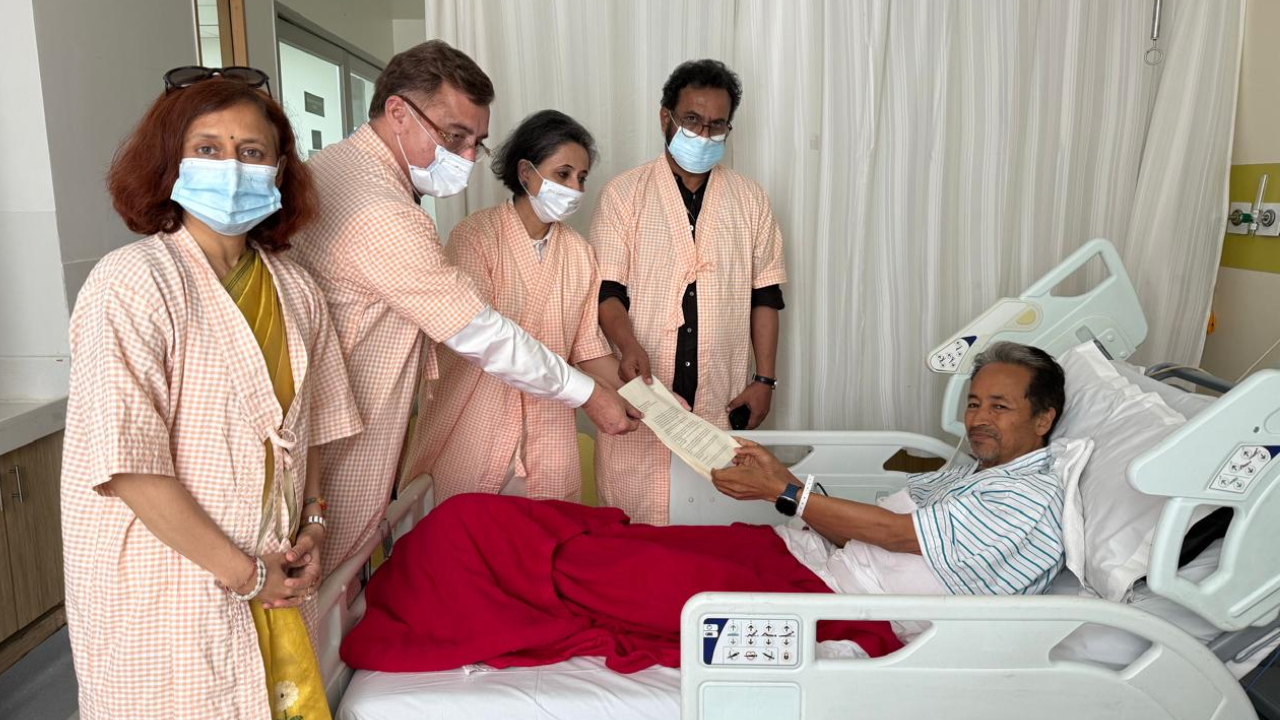
Sonam Wangchuk, a prominent figure, has ended his 26-day hunger strike after prolonged negotiations with Union ministers. The decision to end the fast was taken to prevent potential violence across the nation.
Wangchuk's wife, Gitanjali Angmo, defended his decision, responding to critics who questioned the conclusion of the hunger strike. She emphasized the importance of understanding the reasoning behind Wangchuk's actions.
The hunger strike was called in response to the alleged NEET paper leak, with protesters demanding the resignation of the education minister. Despite Wangchuk ending his fast, the Cockroach Janata Party has vowed to continue its peaceful protests, pushing for the minister's resignation.
The NEET paper leak has sparked widespread outrage, with many calling for accountability and action against those responsible. The protests have been largely peaceful, but there are concerns about the potential for violence if the demands are not met.
Wangchuk's decision to end his hunger strike has been seen as a move to prevent escalation and promote dialogue. However, the Cockroach Janata Party remains committed to its cause, seeking justice and transparency in the education system.
The issue of the NEET paper leak has highlighted the need for reform and accountability in the education sector. The protests and hunger strike have brought attention to the matter, and it remains to be seen how the government will respond to the demands.
In the meantime, the Cockroach Janata Party will continue its peaceful protests, seeking to bring about change and ensure that those responsible for the leak are held accountable. The party's commitment to non-violent protest is a testament to the power of peaceful activism in bringing about social change.
The outcome of the protests and the government's response will have significant implications for the education system and the country as a whole. It is crucial that the government takes the demands of the protesters seriously and works towards creating a more transparent and accountable education system.
In conclusion, Sonam Wangchuk's decision to end his hunger strike marks a significant development in the protests against the NEET paper leak. While the Cockroach Janata Party will continue its peaceful protests, it is essential that the government engages with the protesters and works towards addressing their concerns.
The education system is a critical component of any country's development, and it is essential that it is free from corruption and leakages. The protests and hunger strike have highlighted the need for reform, and it is crucial that the government takes concrete steps to address the issue.
The future of the education system and the country's development depends on the government's response to the protests and the demands of the protesters. It is essential that the government takes a proactive approach to addressing the concerns and works towards creating a more transparent and accountable education system.
The protests have also highlighted the importance of peaceful activism in bringing about social change. The Cockroach Janata Party's commitment to non-violent protest is a testament to the power of peaceful activism, and it is essential that the government engages with the protesters and works towards addressing their concerns.
In the end, the outcome of the protests and the government's response will have significant implications for the education system and the country as a whole. It is crucial that the government takes the demands of the protesters seriously and works towards creating a more transparent and accountable education system.
Frequently asked questions
Why did Sonam Wangchuk end his hunger strike?
Sonam Wangchuk ended his hunger strike to prevent potential violence across the nation.
What are the protesters demanding?
The protesters are demanding the resignation of the education minister over the alleged NEET paper leak.