Thane Woman Diagnosed With Rare Autoimmune Encephalitis At KIMS Hospitals
35-year-old woman's seizures diagnosed as rare brain disorder, treated with immunotherapy
'%3E%3Crect%20width%3D'96'%20height%3D'96'%20fill%3D'%23B3261E'%2F%3E%3Ccircle%20cx%3D'30'%20cy%3D'24'%20r%3D'44'%20fill%3D'%23fff'%20opacity%3D'.12'%2F%3E%3Ccircle%20cx%3D'60'%20cy%3D'74'%20r%3D'40'%20fill%3D'%23000'%20opacity%3D'.10'%2F%3E%3C%2Fg%3E%3Cg%20fill%3D'%23fff'%3E%3Crect%20x%3D'29'%20y%3D'49'%20width%3D'8'%20height%3D'19'%20rx%3D'1'%2F%3E%3Crect%20x%3D'39'%20y%3D'40'%20width%3D'9'%20height%3D'28'%20rx%3D'1'%2F%3E%3Crect%20x%3D'50'%20y%3D'45'%20width%3D'8'%20height%3D'23'%20rx%3D'1'%2F%3E%3Crect%20x%3D'60'%20y%3D'53'%20width%3D'7'%20height%3D'15'%20rx%3D'1'%2F%3E%3Crect%20x%3D'41'%20y%3D'34'%20width%3D'5'%20height%3D'6'%2F%3E%3C%2Fg%3E%3C%2Fsvg%3E)
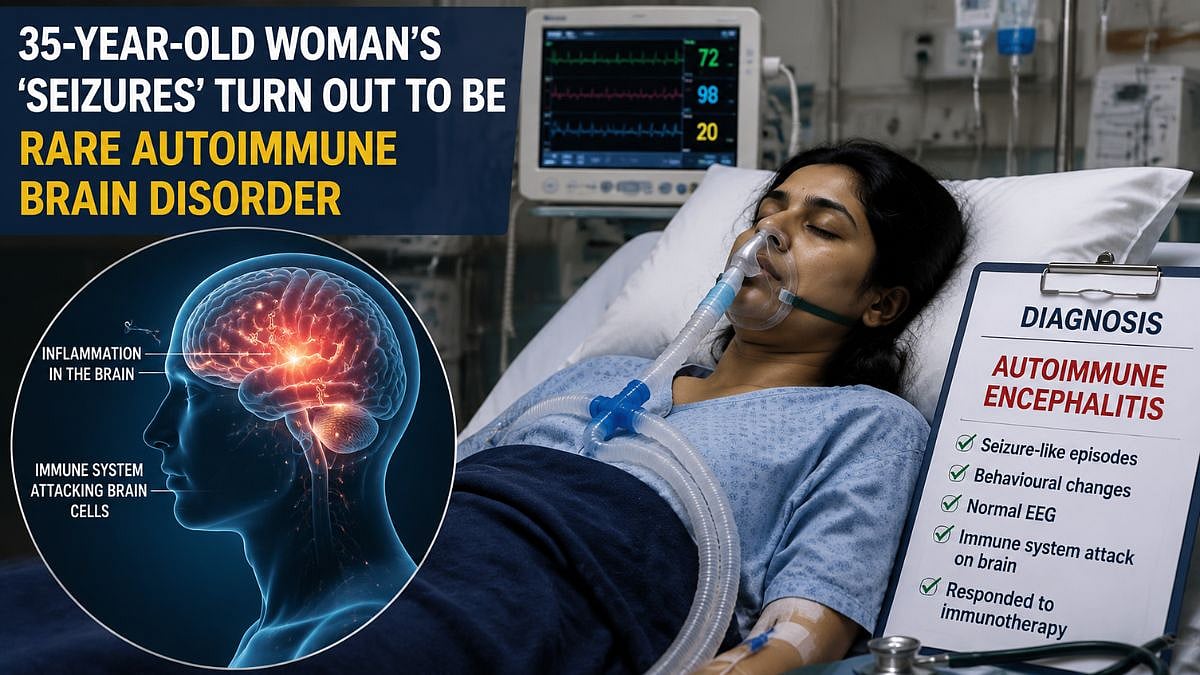
A 35-year-old woman from Thane, who had been experiencing recurrent seizure-like episodes for nearly three months, was diagnosed with a rare autoimmune brain disorder at KIMS Hospitals.
The woman had consulted multiple hospitals and was being treated for seizures, as well as evaluated for psychiatric symptoms. However, her abnormal movements continued despite medication.
At KIMS Hospitals, she developed severe convulsions during an MRI and required emergency intubation, ventilatory support, and intensive care. Doctors suspected autoimmune encephalitis after finding that her seizure-like episodes were accompanied by behavioral symptoms, and repeated EEG monitoring did not show the electrical changes usually associated with epilepsy.
Dr. Dipesh Pimple, Consultant Neurologist at KIMS Hospitals, suspected autoimmune encephalitis on the first day of admission. He explained that the woman's immune system was mistakenly attacking her brain, causing inflammation and producing movements that looked like seizures.
According to Dr. Pimple, autoimmune encephalitis is one of the most challenging neurological conditions because it can closely resemble epilepsy or even primary psychiatric illness. He said that the team relied on careful clinical assessment and initiated immunotherapy early, rather than waiting for every investigation to confirm the diagnosis.
Doctors immediately started high-dose intravenous steroids to control the immune attack. As some abnormal movements persisted, the team subsequently administered intravenous immunoglobulin (IVIG). The response was rapid, with a significant reduction in abnormal movements within two days of IVIG treatment.
The patient was gradually taken off ventilatory support and shifted out of the ICU. With neurological rehabilitation, she regained her strength, began walking independently, resumed eating without assistance, and gradually returned to her daily activities.
At follow-up, she continued to show sustained improvement with only occasional residual episodes. The case highlights how autoimmune encephalitis can mimic epilepsy and psychiatric illness, potentially delaying diagnosis.
Doctors stressed that unexplained seizure-like episodes, particularly those that do not respond to routine treatment or are accompanied by behavioral changes, warrant detailed neurological evaluation.
Autoimmune encephalitis is a rare but treatable brain disorder in which the immune system mistakenly attacks brain cells, causing inflammation and damage.
The timely diagnosis and treatment of this condition can significantly improve the patient's quality of life.
In this case, the patient's diagnosis and treatment at KIMS Hospitals demonstrate the importance of careful clinical assessment and early initiation of immunotherapy in managing autoimmune encephalitis.
The case also highlights the need for increased awareness about this rare but treatable condition, which can help prevent delayed diagnosis and improve patient outcomes.
Overall, the successful treatment of this patient at KIMS Hospitals serves as a reminder of the importance of timely and accurate diagnosis in managing complex neurological conditions.
The patient's recovery is a testament to the effectiveness of immunotherapy in treating autoimmune encephalitis, and it underscores the need for further research into this rare but significant condition.
As the medical community continues to learn more about autoimmune encephalitis, it is essential to raise awareness about its symptoms, diagnosis, and treatment options to ensure that patients receive the best possible care.
In conclusion, the diagnosis and treatment of autoimmune encephalitis at KIMS Hospitals demonstrate the hospital's commitment to providing high-quality patient care and its dedication to advancing medical knowledge in the field of neurology.
Frequently asked questions
What is autoimmune encephalitis?
Autoimmune encephalitis is a rare brain disorder in which the immune system mistakenly attacks brain cells, causing inflammation and damage.
What are the symptoms of autoimmune encephalitis?
Symptoms of autoimmune encephalitis can include seizure-like episodes, behavioral changes, and abnormal movements, which can be mistaken for epilepsy or psychiatric illness.