Female Gangsters Evolve in India
India's female gangsters transform, new operators emerge, and law enforcement adapts.
'%3E%3Crect%20width%3D'96'%20height%3D'96'%20fill%3D'%23B3261E'%2F%3E%3Ccircle%20cx%3D'30'%20cy%3D'24'%20r%3D'44'%20fill%3D'%23fff'%20opacity%3D'.12'%2F%3E%3Ccircle%20cx%3D'60'%20cy%3D'74'%20r%3D'40'%20fill%3D'%23000'%20opacity%3D'.10'%2F%3E%3C%2Fg%3E%3Cg%20fill%3D'%23fff'%3E%3Crect%20x%3D'29'%20y%3D'49'%20width%3D'8'%20height%3D'19'%20rx%3D'1'%2F%3E%3Crect%20x%3D'39'%20y%3D'40'%20width%3D'9'%20height%3D'28'%20rx%3D'1'%2F%3E%3Crect%20x%3D'50'%20y%3D'45'%20width%3D'8'%20height%3D'23'%20rx%3D'1'%2F%3E%3Crect%20x%3D'60'%20y%3D'53'%20width%3D'7'%20height%3D'15'%20rx%3D'1'%2F%3E%3Crect%20x%3D'41'%20y%3D'34'%20width%3D'5'%20height%3D'6'%2F%3E%3C%2Fg%3E%3C%2Fsvg%3E)
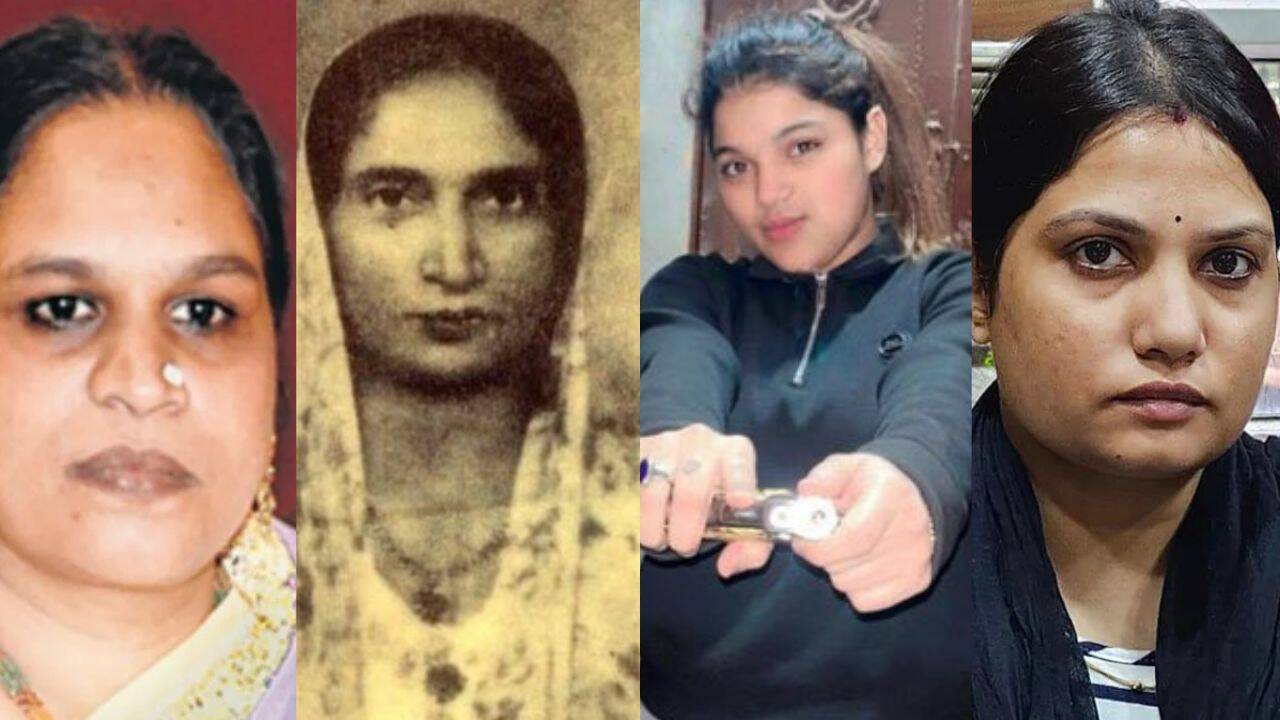
India's female gangsters have undergone a significant transformation over time, shifting from traditional mafia empires to younger, more tech-savvy operators. This change is evident in the way they operate, with a focus on hyper-local activities and a strong online presence.
These new female gangsters are highly visible on social media platforms, using them to project fear and recruit impressionable youngsters. This evolution is a reflection of the broader changes in organised crime across the country, with criminal networks becoming increasingly sophisticated and adaptable.
The traditional mafia empires that once dominated India's criminal landscape are giving way to newer, more agile operators. These women are often the driving force behind these changes, using their charisma and cunning to build and maintain their criminal networks.
Law enforcement agencies are struggling to keep pace with these evolving criminal networks. As the female gangsters become more adept at using digital tools to further their interests, the police are being forced to adapt and develop new strategies to combat them.
The rise of female gangsters in India is a complex phenomenon, driven by a range of factors including social and economic change. As the country continues to urbanise and modernise, new opportunities are emerging for women to take on leadership roles in criminal networks.
Despite the challenges they pose, the female gangsters are also a reflection of the changing face of Indian society. As women become more empowered and confident, they are taking on new roles and challenging traditional norms and expectations.
The Indian authorities are taking steps to address the issue, with a focus on disrupting the criminal networks and bringing the perpetrators to justice. However, it is a complex and ongoing challenge, requiring a coordinated effort from law enforcement agencies and other stakeholders.
In conclusion, the evolution of India's female gangsters is a significant development, reflecting the changing face of organised crime in the country. As the authorities continue to adapt and respond to these changes, it is clear that the phenomenon of female gangsters is here to stay, and will require a sustained and coordinated effort to combat.
The transformation of female gangsters in India is a story of how crime is evolving in the country, and how law enforcement agencies are working to keep pace. It is a complex and ongoing challenge, but one that is essential to ensuring the safety and security of Indian citizens.
The changing face of organised crime in India is a reflection of the broader social and economic changes taking place in the country. As the country continues to modernise and urbanise, new challenges are emerging, and the authorities are being forced to adapt and respond.
In the end, the story of India's female gangsters is one of evolution and adaptation, as both the criminals and the authorities seek to outmanoeuvre each other in a complex and ever-changing landscape.