Shiv Sena Faces Political Extinction
Shiv Sena struggles to survive, Uddhav Thackeray faces challenges, party's future uncertain

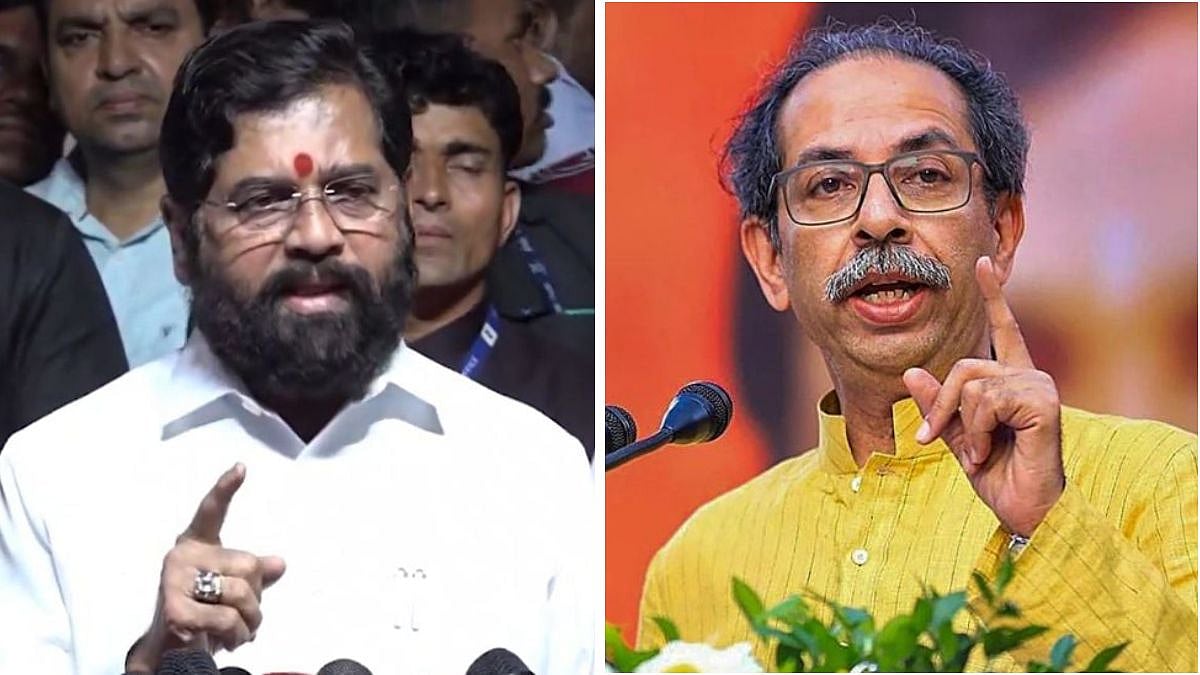
The Shiv Sena, once a dominant force in Maharashtra's politics, is now facing a battle for survival. Founded by Bal Thackeray on June 19, 1966, the party has been a major player in the state's politics for over six decades. However, the recent rebellion led by Eknath Shinde in 2022 has dealt a significant blow to the party, leaving it divided and weakened.
The split has resulted in two competing factions, with one controlling the organization and government machinery, and the other claiming the legacy and ideological inheritance of Balasaheb. This has led to confusion among traditional Shiv Sena supporters, who are now torn between the two factions. The party's decline began before the split, with the transformation of Maharashtra's political landscape being a major factor. The BJP, which was once a junior partner to the Shiv Sena, has now become a dominant national force with superior resources and electoral reach.
As a result, the Shiv Sena has lost its monopoly over the Hindutva movement, with voters increasingly turning to the BJP as a larger and more powerful alternative. Additionally, Uddhav Thackeray's decision to form the Maha Vikas Aghadi government with Congress and the NCP has created ideological confusion among the party's traditional support base. Many core supporters have struggled to reconcile the party's decades-long anti-Congress rhetoric with its dependence on Congress support.
The BJP's long-term strategy has also contributed to the Shiv Sena's decline. The party has been slowly weakening its regional allies, including the Shiv Sena, by poaching their leaders and undermining their support base. This has left the Shiv Sena vulnerable to further splits and defections, making its survival even more uncertain. The future of the Shiv Sena hangs in the balance, with the party facing a tough battle to regain its lost ground and survive in a rapidly changing political landscape.
The Shiv Sena's decline has significant implications for Maharashtra's politics, with the party's traditional support base being wooed by the BJP and other parties. The party's ability to survive and thrive will depend on its ability to adapt to the changing political landscape and regain the trust of its supporters. However, with the party's current state of division and weakness, its survival is far from certain.
In the coming months, the Shiv Sena will face significant challenges, including the need to rebuild its organization and regain the support of its traditional base. The party will also need to navigate the complex web of alliances and rivalries in Maharashtra's politics, all while facing a strong and dominant BJP. Whether the Shiv Sena can escape political extinction and regain its former glory remains to be seen, but one thing is certain - the party's future is uncertain and its survival is far from guaranteed.
The Shiv Sena's story is a cautionary tale of the dangers of complacency and the importance of adapting to changing circumstances. The party's decline serves as a reminder that even the most dominant and powerful parties can fall victim to internal divisions and external pressures. As the Shiv Sena navigates its current crisis, it must confront the challenges that have led to its decline and find a way to regain its lost ground and survive in a rapidly changing political landscape.
In conclusion, the Shiv Sena is facing a battle for survival, with the party's future hanging in the balance. The party's decline is a result of a combination of internal and external factors, including the transformation of Maharashtra's political landscape, the BJP's long-term strategy, and the party's own internal divisions. Whether the Shiv Sena can escape political extinction and regain its former glory remains to be seen, but one thing is certain - the party's survival is far from guaranteed.