Pilots' Union Flags 7 A321neo Tailstrike Incidents in India
ALPA India warns of systemic training failures, regulatory shortcomings. Seven tailstrike incidents in six years raise safety concerns.
'%3E%3Crect%20width%3D'96'%20height%3D'96'%20fill%3D'%23B3261E'%2F%3E%3Ccircle%20cx%3D'30'%20cy%3D'24'%20r%3D'44'%20fill%3D'%23fff'%20opacity%3D'.12'%2F%3E%3Ccircle%20cx%3D'60'%20cy%3D'74'%20r%3D'40'%20fill%3D'%23000'%20opacity%3D'.10'%2F%3E%3C%2Fg%3E%3Cg%20fill%3D'%23fff'%3E%3Crect%20x%3D'29'%20y%3D'49'%20width%3D'8'%20height%3D'19'%20rx%3D'1'%2F%3E%3Crect%20x%3D'39'%20y%3D'40'%20width%3D'9'%20height%3D'28'%20rx%3D'1'%2F%3E%3Crect%20x%3D'50'%20y%3D'45'%20width%3D'8'%20height%3D'23'%20rx%3D'1'%2F%3E%3Crect%20x%3D'60'%20y%3D'53'%20width%3D'7'%20height%3D'15'%20rx%3D'1'%2F%3E%3Crect%20x%3D'41'%20y%3D'34'%20width%3D'5'%20height%3D'6'%2F%3E%3C%2Fg%3E%3C%2Fsvg%3E)
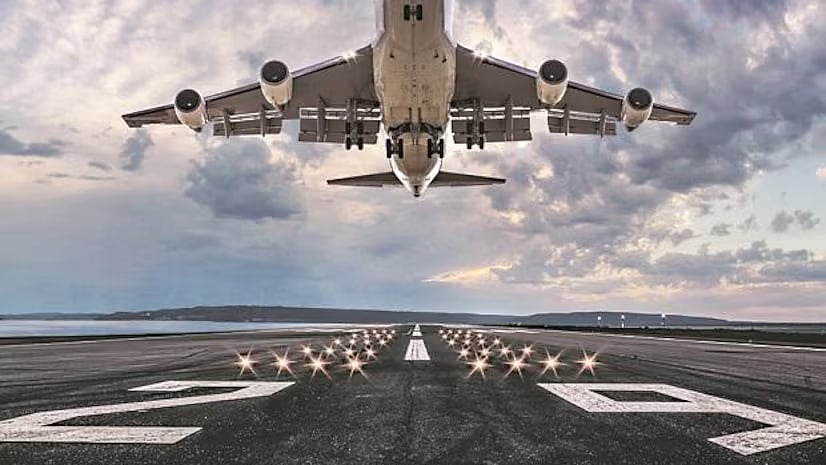
The Airline Pilots’ Association of India (ALPA India) has warned the Aircraft Accident Investigation Bureau (AAIB) of systemic training failures and regulatory shortcomings following seven confirmed tailstrike incidents involving Airbus A321neo aircraft in India over six years.
While five of these incidents happened on IndiGo flights, the union has also raised concerns against the airline's introduction of A321XLR. The latest tailstrike event was recorded on August 21, when an IndiGo Airbus A321neo suffered a tailstrike during touchdown at Gorakhpur Airport in Uttar Pradesh.
The incident led to the immediate grounding of the aircraft and the de-rostering of its flight crew pending an investigation. The union highlighted that this marks the seventh A321-family tailstrike since 2020 and the second at a tier-2 airfield in 2026 alone.
Similar incidents occurred previously, including two tailstrikes at Bengaluru airport, one by Air India in May this year during a go-around and another with IndiGo in September 2024 while landing. Similarly, IndiGo suffered two tailstrikes at Chennai airport during landings in March and June.
Earlier incidents include IndiGo at Ahmedabad during landing in June 2023 and Air India at Pune airport during takeoff in February 2020. In all the cases, the crew were taken off-roster till the inquiry continued.
ALPA India’s letter to AAIB Director General G.V.G. Yugandhar argued that repeated tailstrikes stem from institutional deficiencies rather than isolated pilot errors. The union highlighted the absence of any A321neo-specific full flight simulator facility, adding that pilots are trained on A321ceo simulators, which fail to replicate the distinct pitch dynamics of the NEO variant during the landing flare.
The union also raised concerns against the widespread commercial use of ‘Flap 3’ landings to reduce fuel consumption, claiming that it narrows pitch attitude margins during flare, compounding operational risks in hot weather and at short regional airfields like Gorakhpur.
Furthermore, the union expressed grave concerns regarding the imminent introduction of the extra long-range A321XLR into Indian fleets. Notably, IndiGo has ordered 69 units of this model, followed by Air India, which awaits delivery of 15 XLRs.
The union highlighted that the aircraft integrates a 12,900-litre rear centre tank located just 1.2 metres forward of the tail, which could increase the risk of tailstrikes. The penalty worth Rs 20 lakh imposed on IndiGo by Directorate General of Civil Aviation (DGCA) following a cluster of incidents in 2023 is inadequate and represents less than 0.3% of the airline's daily revenue, which have failed to deter recurring incidents.
The repeated tailstrike incidents have raised concerns over the safety of air travel in India. The DGCA has flagged safety concerns in IndiGo, Air India, and other airlines, and the AAIB is investigating the incidents.
In conclusion, the Airline Pilots’ Association of India has raised serious concerns over the safety of air travel in India, citing systemic training failures and regulatory shortcomings. The repeated tailstrike incidents involving Airbus A321neo aircraft have highlighted the need for improved training and safety measures to prevent such incidents in the future.
The introduction of the A321XLR into Indian fleets has also raised concerns, and the union has called for increased scrutiny and regulation to ensure the safety of air travel. The DGCA and AAIB must take immediate action to address these concerns and prevent further incidents.
The safety of air travel is of paramount importance, and it is the responsibility of the regulatory bodies and airlines to ensure that all necessary measures are taken to prevent accidents and incidents. The Airline Pilots’ Association of India has raised important concerns, and it is essential that these concerns are addressed promptly to ensure the safety of air travel in India.
The incident has also highlighted the need for increased transparency and accountability in the aviation sector. The regulatory bodies and airlines must be held accountable for their actions, and the public must be informed about the safety measures in place to prevent such incidents.
In the end, the safety of air travel is a collective responsibility, and it requires the cooperation and efforts of all stakeholders, including the regulatory bodies, airlines, and pilots. The Airline Pilots’ Association of India has raised important concerns, and it is essential that these concerns are addressed promptly to ensure the safety of air travel in India.
Frequently asked questions
What is the main concern of the Airline Pilots’ Association of India?
The main concern is the repeated tailstrike incidents involving Airbus A321neo aircraft, which raises safety concerns.
How many A321XLR units has IndiGo ordered?
IndiGo has ordered 69 units of the A321XLR model.