Delhi HC Rejects PIL Against Jantar Mantar Protesters
Delhi High Court refuses PIL seeking action against protesters, cites existing legal framework.
'%3E%3Crect%20width%3D'96'%20height%3D'96'%20fill%3D'%231A5276'%2F%3E%3Ccircle%20cx%3D'30'%20cy%3D'24'%20r%3D'44'%20fill%3D'%23fff'%20opacity%3D'.12'%2F%3E%3Ccircle%20cx%3D'60'%20cy%3D'74'%20r%3D'40'%20fill%3D'%23000'%20opacity%3D'.10'%2F%3E%3C%2Fg%3E%3Cg%20fill%3D'%23fff'%3E%3Cpath%20d%3D'M31%2041%20L48%2031%20L65%2041%20Z'%2F%3E%3Crect%20x%3D'33'%20y%3D'43'%20width%3D'4'%20height%3D'17'%2F%3E%3Crect%20x%3D'41'%20y%3D'43'%20width%3D'4'%20height%3D'17'%2F%3E%3Crect%20x%3D'51'%20y%3D'43'%20width%3D'4'%20height%3D'17'%2F%3E%3Crect%20x%3D'59'%20y%3D'43'%20width%3D'4'%20height%3D'17'%2F%3E%3Crect%20x%3D'30'%20y%3D'62'%20width%3D'36'%20height%3D'4'%20rx%3D'1'%2F%3E%3C%2Fg%3E%3C%2Fsvg%3E)
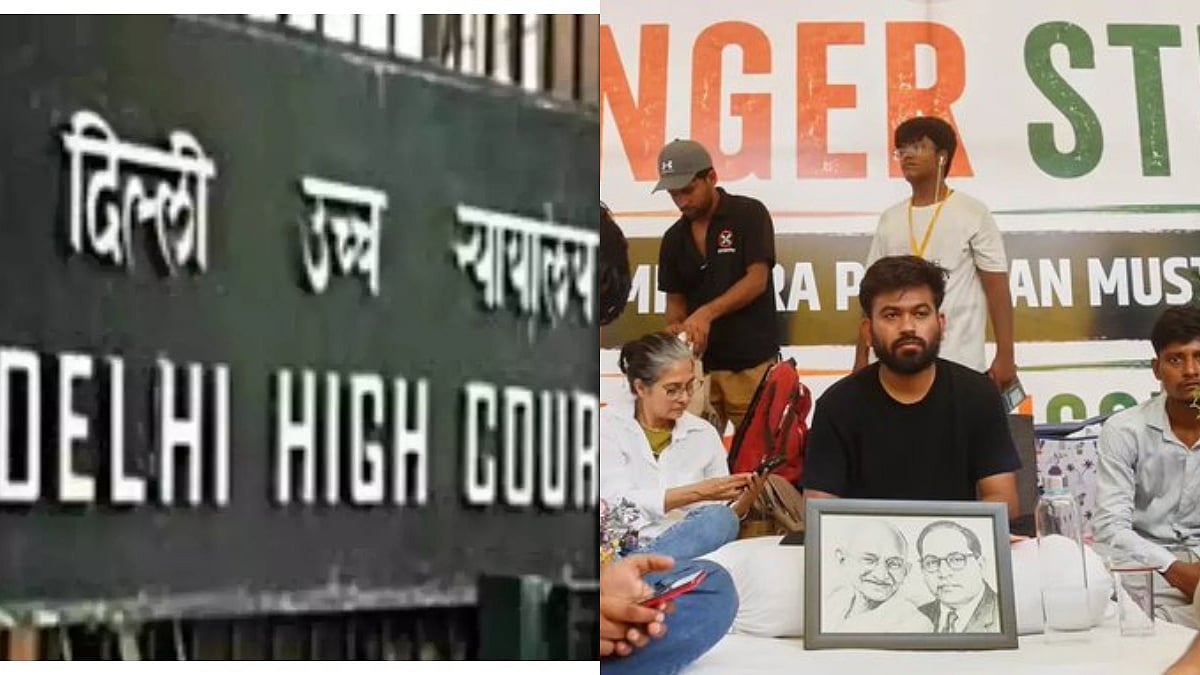
The Delhi High Court on Friday rejected a public interest litigation (PIL) seeking criminal action against those involved in violence and damage to public property during a student protest at Jantar Mantar on July 20.
A Division Bench of Chief Justice Devendra Kumar Upadhyaya and Justice Tejas Karia advised the petitioner, NGO Save India Foundation, to approach the concerned authorities, who would take appropriate action under the law.
The Court observed that the Supreme Court has already laid down the legal mechanism for dealing with cases involving damage to public and private property. The Bench told the petitioner's counsel that the legal position in such matters is well settled and the mechanism mandated by the Supreme Court is already in place.
The petition had sought directions to the Delhi Police to identify those responsible for violence during the protest, prosecute them under applicable criminal laws, and recover the cost of damage caused to public property. According to the plea, the protesters assaulted police personnel, vandalised public property, and disrupted normal life in central Delhi.
The petition alleged that the protest was organised by a group identified as the 'Cockroach Janta Party' (CJP) and claimed that social media campaigns linked to the group encouraged unlawful acts and mobilisation. The petition also alleged that videos and online material incited participants to defy law enforcement and engage in disruptive activities.
The NGO further alleged that the protesters were following a pattern of civil unrest seen in neighbouring countries such as Sri Lanka, Bangladesh, and Nepal by using social media to mobilise people against the government. It also claimed that certain lawyers were offering free legal aid to protesters, encouraging them to violate the law without fear of consequences.
The Delhi High Court's decision is significant as it relies on the existing legal framework to deal with cases involving damage to public and private property. The Court's observation that the petitioner can approach the concerned authorities, who would take appropriate action under the law, indicates that the judiciary is confident in the ability of the executive to handle such situations.
The incident at Jantar Mantar has sparked a wider debate about the role of social media in mobilising protests and the limits of free speech. The allegations of hate speech, calls to topple the democratically elected government, and ultimatums have raised concerns about the potential for civil unrest in the country.
In a separate development, the Delhi High Court has deferred to July 27 the hearing on a petition alleging surveillance at Jantar Mantar. The Centre argued that there is no right to privacy in public places, while the petitioner cited the Puttaswamy judgment, saying privacy applies even during protests.
The Delhi High Court's decision to reject the PIL seeking action against the protesters is a significant development in the ongoing debate about the balance between free speech and public order. The Court's reliance on the existing legal framework and its advice to the petitioner to approach the concerned authorities indicate that the judiciary is committed to upholding the rule of law and protecting the rights of citizens.
In conclusion, the Delhi High Court's decision to reject the PIL seeking action against the protesters at Jantar Mantar is a significant development in the ongoing debate about the balance between free speech and public order. The Court's reliance on the existing legal framework and its advice to the petitioner to approach the concerned authorities indicate that the judiciary is committed to upholding the rule of law and protecting the rights of citizens.
The incident at Jantar Mantar has highlighted the need for a nuanced approach to dealing with protests and civil unrest. The allegations of hate speech, calls to topple the democratically elected government, and ultimatums have raised concerns about the potential for civil unrest in the country. The Delhi High Court's decision is a significant step towards addressing these concerns and upholding the rule of law.
The decision also highlights the importance of the existing legal framework in dealing with cases involving damage to public and private property. The Court's observation that the petitioner can approach the concerned authorities, who would take appropriate action under the law, indicates that the judiciary is confident in the ability of the executive to handle such situations.
Overall, the Delhi High Court's decision to reject the PIL seeking action against the protesters at Jantar Mantar is a significant development in the ongoing debate about the balance between free speech and public order. The Court's reliance on the existing legal framework and its advice to the petitioner to approach the concerned authorities indicate that the judiciary is committed to upholding the rule of law and protecting the rights of citizens.
Frequently asked questions
What was the Delhi High Court's decision on the PIL seeking action against Jantar Mantar protesters?
The Delhi High Court rejected the PIL, citing the existing legal framework and advising the petitioner to approach the concerned authorities.
What were the allegations made in the petition?
The petition alleged that the protesters assaulted police personnel, vandalised public property, and disrupted normal life in central Delhi, and that social media campaigns linked to the group encouraged unlawful acts and mobilisation.