Ex-Congress MP Sajjan Kumar Dies At 80 In Tihar Jail
Former Congress MP Sajjan Kumar dies at 80, was serving life sentence for 1984 anti-Sikh riots role.
'%3E%3Crect%20width%3D'96'%20height%3D'96'%20fill%3D'%231A5276'%2F%3E%3Ccircle%20cx%3D'30'%20cy%3D'24'%20r%3D'44'%20fill%3D'%23fff'%20opacity%3D'.12'%2F%3E%3Ccircle%20cx%3D'60'%20cy%3D'74'%20r%3D'40'%20fill%3D'%23000'%20opacity%3D'.10'%2F%3E%3C%2Fg%3E%3Cg%20fill%3D'%23fff'%3E%3Cpath%20d%3D'M31%2041%20L48%2031%20L65%2041%20Z'%2F%3E%3Crect%20x%3D'33'%20y%3D'43'%20width%3D'4'%20height%3D'17'%2F%3E%3Crect%20x%3D'41'%20y%3D'43'%20width%3D'4'%20height%3D'17'%2F%3E%3Crect%20x%3D'51'%20y%3D'43'%20width%3D'4'%20height%3D'17'%2F%3E%3Crect%20x%3D'59'%20y%3D'43'%20width%3D'4'%20height%3D'17'%2F%3E%3Crect%20x%3D'30'%20y%3D'62'%20width%3D'36'%20height%3D'4'%20rx%3D'1'%2F%3E%3C%2Fg%3E%3C%2Fsvg%3E)
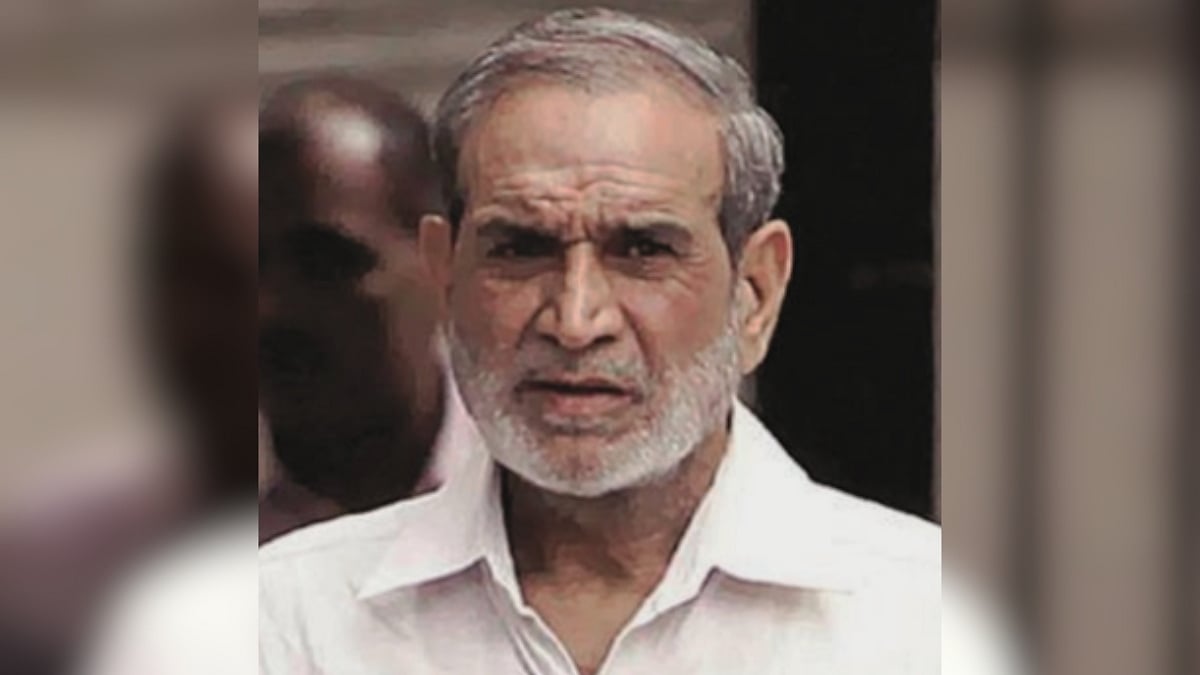
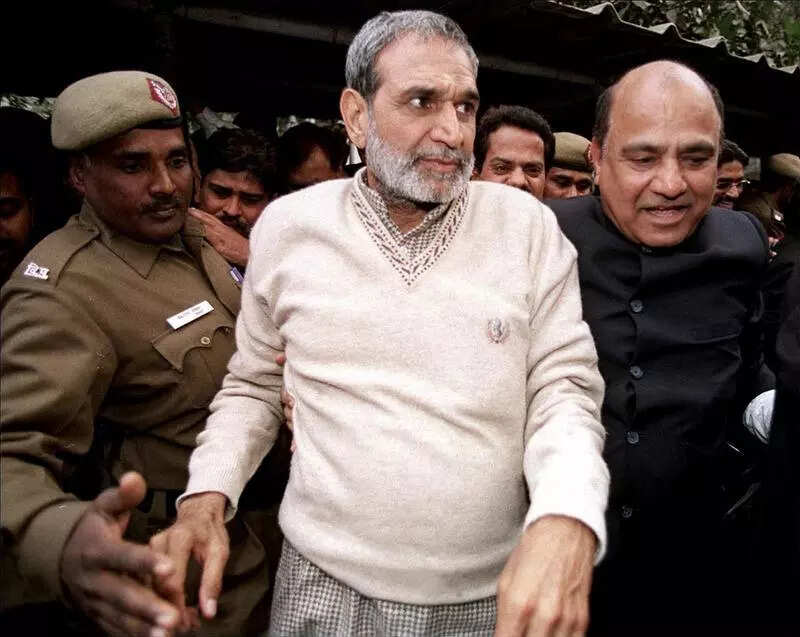
Former Congress MP Sajjan Kumar died on Thursday at the age of 80 while serving a life sentence in Tihar Jail. He was brought dead to Delhi's Safdarjung Hospital, according to hospital sources.
Kumar was a former Member of Parliament and leader of the Indian National Congress. He was convicted in two cases linked to the 1984 anti-Sikh riots and was serving a life term.
In one of the cases, Kumar was convicted for the killing of five Sikhs in Delhi Cantonment's Palam Colony. A gurdwara was also set ablaze in the incident. The Delhi High Court had sentenced him to life imprisonment on December 17, 2018.
In another case, Kumar was convicted in February 2025 for the killings of two Sikhs, Sardar Jaswant Singh and his son Tarundeep Singh, in Saraswati Vihar on November 1, 1984. The two men were attacked with iron rods and sticks by a mob before being burnt alive. Kumar was sentenced to life imprisonment on February 25, 2025.
The 1984 anti-Sikh riots were a series of violent attacks against Sikhs in India, particularly in Delhi, following the assassination of Prime Minister Indira Gandhi. The riots resulted in the deaths of thousands of Sikhs and widespread destruction of property.
Kumar's conviction was seen as a significant step towards justice for the victims of the 1984 anti-Sikh riots. However, in September 2023, a Rouse Avenue court acquitted Kumar in a case concerning the killing of three Sikhs in Delhi's Sultanpuri during the riots.
Kumar's death brings an end to a long and complex legal battle. His conviction and sentencing were seen as a rare instance of accountability for those responsible for the 1984 anti-Sikh riots.
The 1984 anti-Sikh riots remain a sensitive and contentious issue in India, with many still seeking justice and closure for the victims and their families. Kumar's death serves as a reminder of the ongoing struggle for justice and accountability in India.
In the context of Indian politics, Kumar's death is a significant development. The Indian National Congress, to which Kumar belonged, has faced criticism for its handling of the 1984 anti-Sikh riots. The party's response to the riots has been widely criticized, and Kumar's conviction was seen as a rare instance of accountability.
Kumar's death also raises questions about the state of India's justice system. The conviction and sentencing of Kumar were seen as a significant step towards justice, but the acquittal in the Sultanpuri case highlights the complexities and challenges of seeking justice in India.
In conclusion, the death of Sajjan Kumar serves as a reminder of the ongoing struggle for justice and accountability in India. The 1984 anti-Sikh riots remain a sensitive and contentious issue, and Kumar's conviction and sentencing were seen as a significant step towards justice. However, the acquittal in the Sultanpuri case highlights the complexities and challenges of seeking justice in India.
Frequently asked questions
What was Sajjan Kumar convicted of?
Kumar was convicted of killing five Sikhs in Delhi Cantonment's Palam Colony and two Sikhs in Saraswati Vihar during the 1984 anti-Sikh riots.
What was the sentence given to Sajjan Kumar?
Kumar was sentenced to life imprisonment in both cases.